Categories
blog

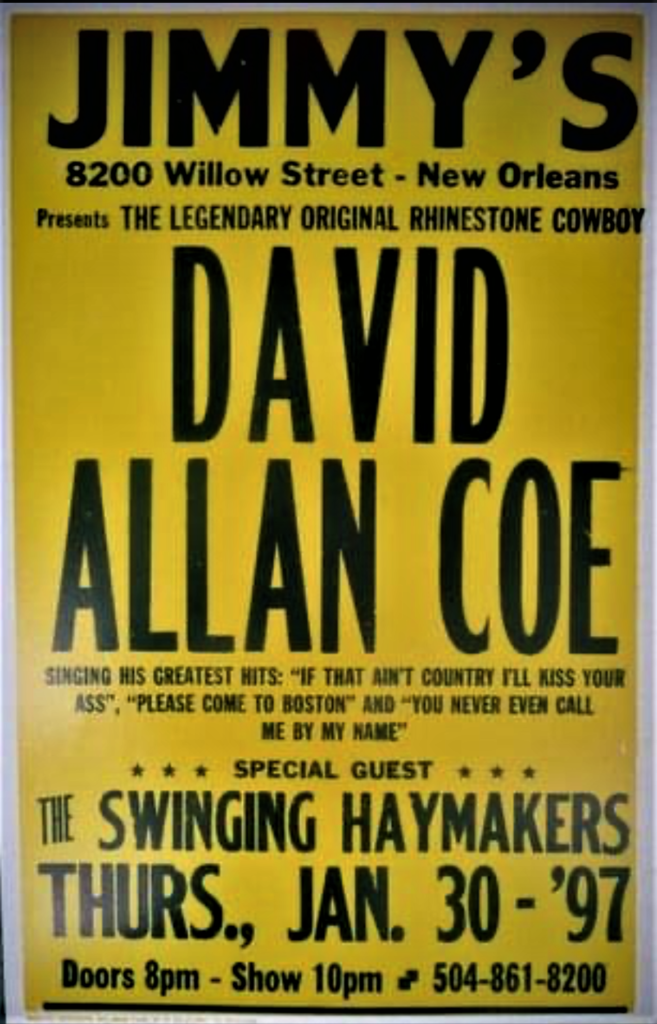
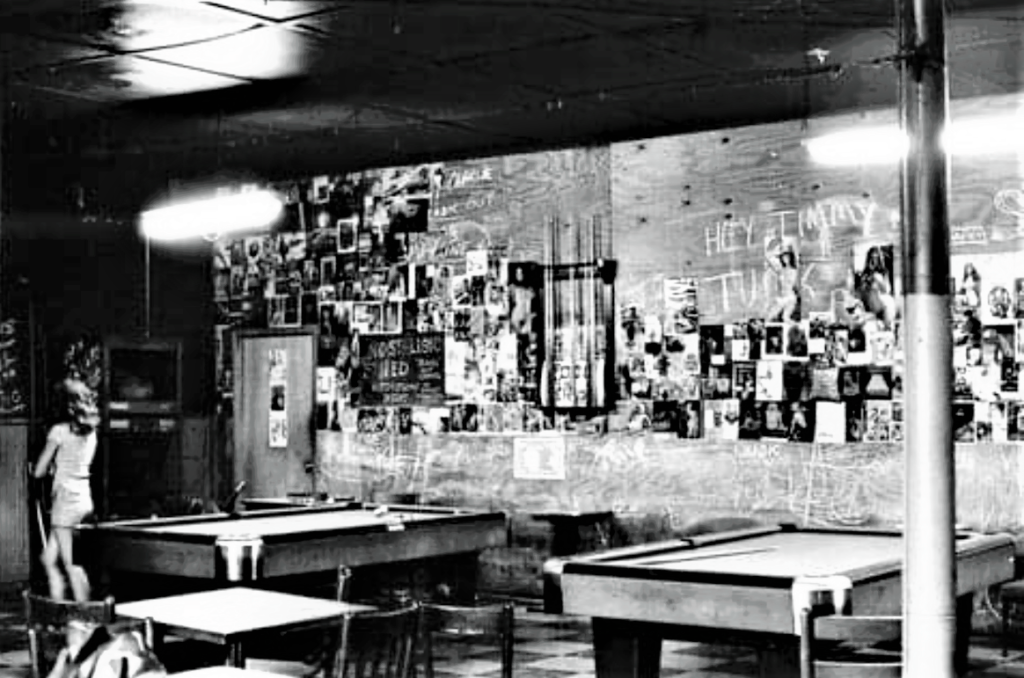
Jimmy’s Music Club

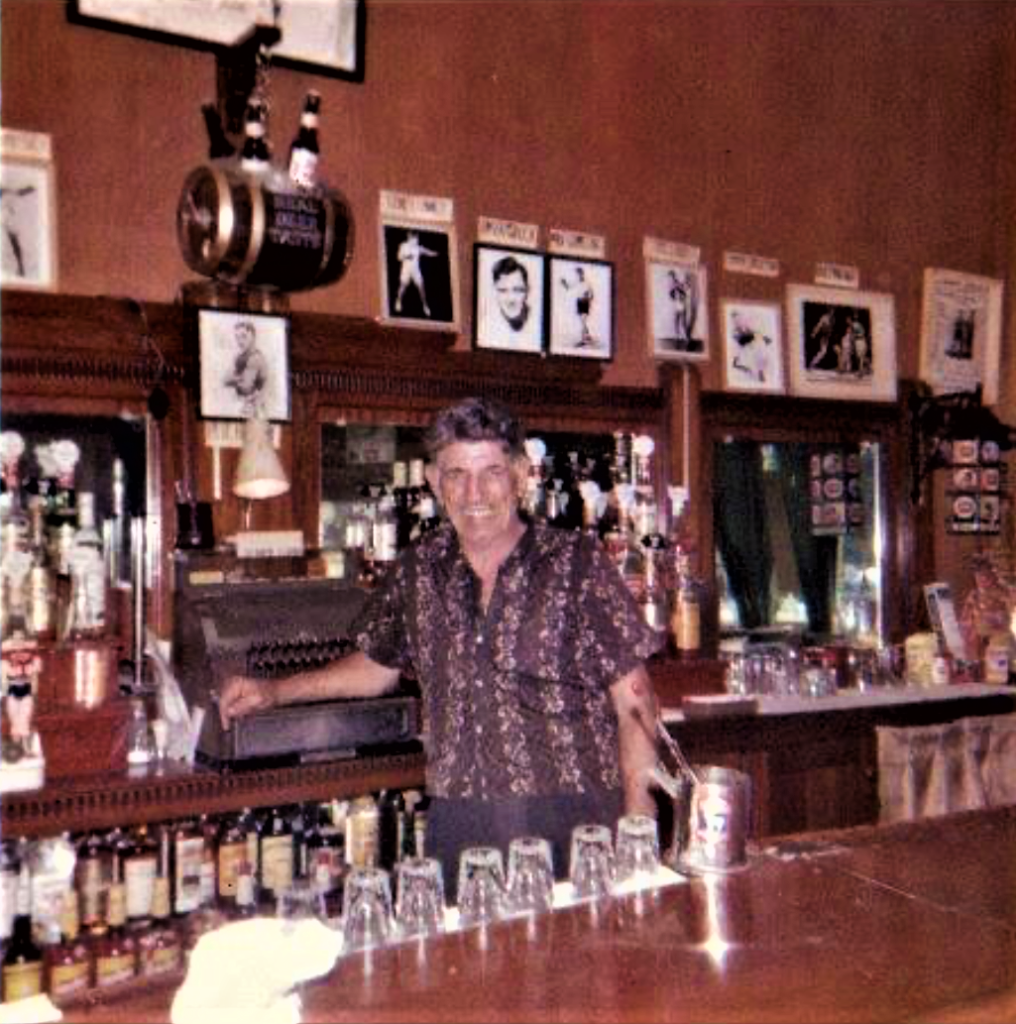
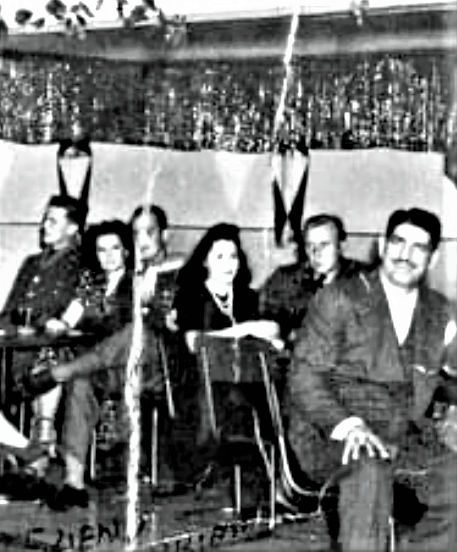
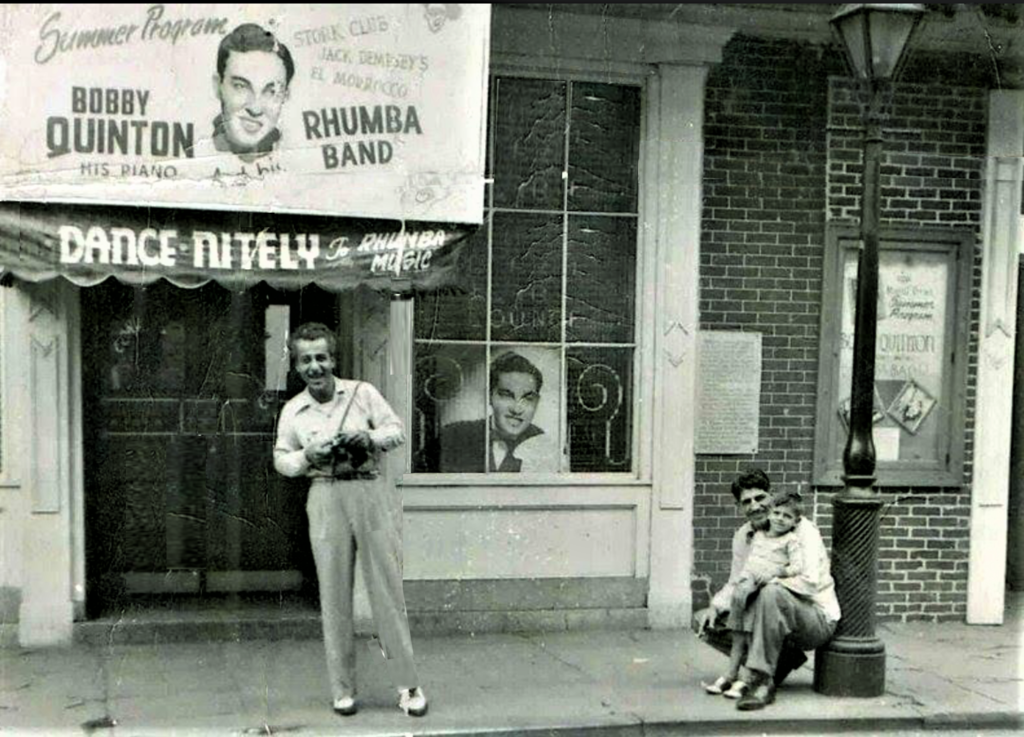
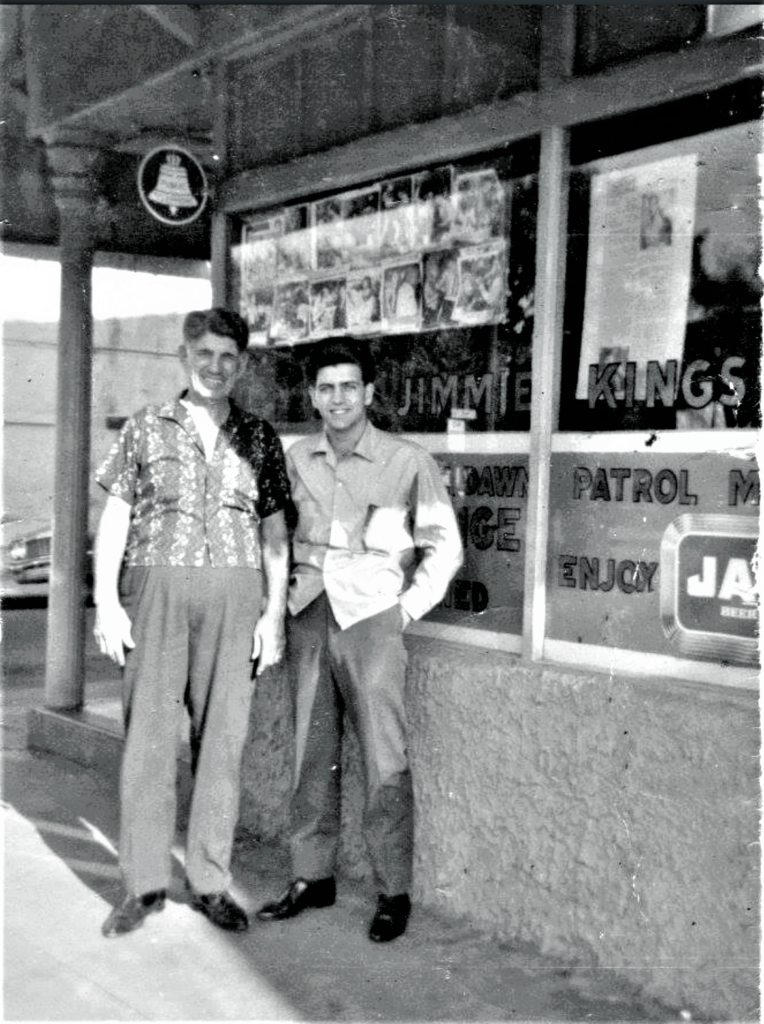
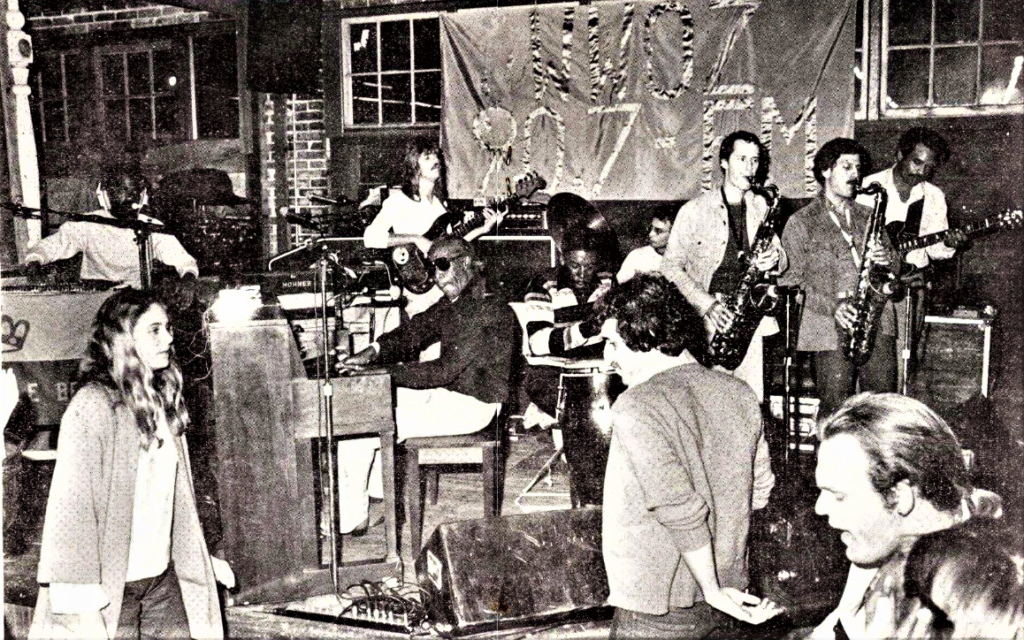
Nearing the end of 1944 Roosevelt was in office. And the United States, fueled by a recent victory over the Nazi’s in north-western France, was still entrenched in World War II. Back home in New Orleans, though the city had struggled through a depression and rationing of resources, many locals enjoyed full-time employment at military bases and factories in the area. On the heels of a successful career in boxing, James Anselmo Sr. was there to serve these men and women. He ran The Little Blue Room on Bienville Street and The Jimmy King’s Mardi Gras Lounge on Bourbon Street. And on September 19th of that same year, ”he” became “we” when James and Mary gave birth to James (Jimmy) Anselmo Jr.

As a child Jimmy Jr. was always by his father’s side. One of Jimmy’s earliest memories with his father was at the Mardi Gras Lounge. At age five he can recall crawling up on the band stand to play with the drum sticks. His father would exclaim, “If that drummer sees you up there, he’ll kick your ass boy!” Entering his teenage years, Jimmy could still be found close by. He would work as a delivery boy at his father’s restaurant, The King’s Barbeque, also on Bourbon Street. This was a fun time for Jimmy because at the age of 14, he was able to walk inside places most kids could not. The classmates at his school would beg for a job with him upon hearing tales of what he saw delivering sandwiches to businesses like a local strip club. This would mark the first time Jimmy met Mac Rebbenack, a.k.a. Dr. John. But more on that later.

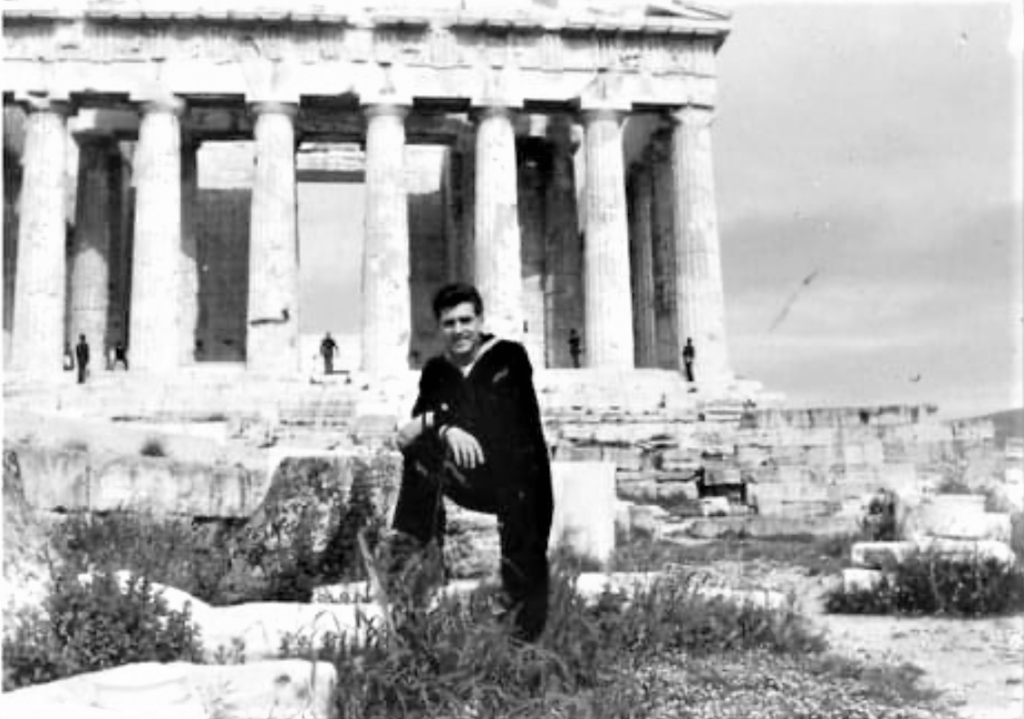
As did many kids of the time, Jimmy would attend dances at places like Sacred Heart and Germania Hall. Armed with a fake I.D., money from wages, and a car gifted to him by his father, Jimmy was able to see many live music acts at these places as well as local bars in New Orleans. With so much at his fingertips Jimmy was still able to remain a grounded, responsible young man. He joined the Navy Reserves when he was just a Junior in high school. And in following through with his commitment, found himself aboard the U.S.S. Saratoga directly after his graduation from Francis T. Nichols High School in 1963. Working the flight deck in and out of ports, this was his chance to see the world; France, Spain, Italy, Greece… making friends and memories along the way.

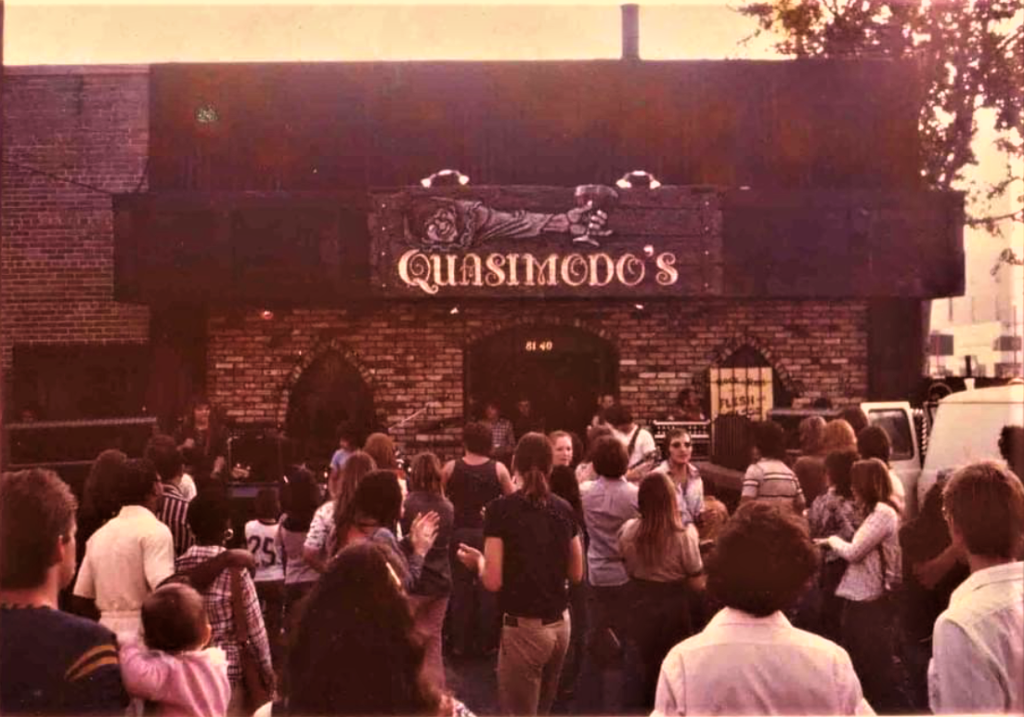
Following his time in the Navy Jimmy returned to New Orleans and began working for his brother-in-law Bobby Blanchard at a club called Papa Joes. He would bar tend during the jam sessions by a house band. Freddy Fender was on bass, Little Joe Lambert on drums, Joey Long on guitar, and Skip Esterland on the Hammond B-3. With good wages and great music, and the ability to now get his first apartment and a new car, Jimmy was at a good place in his life. It was at this time in 1967 Jimmy got married and bought his first club in Uptown New Orleans called Co-eds. With this night club he was able to get his feet wet as an independent business owner. And within five years, he was ready to expand. In 1972 Jimmy had his eye on an empty space just a block away and decided to build another night club, naming it Quasimodo’s.

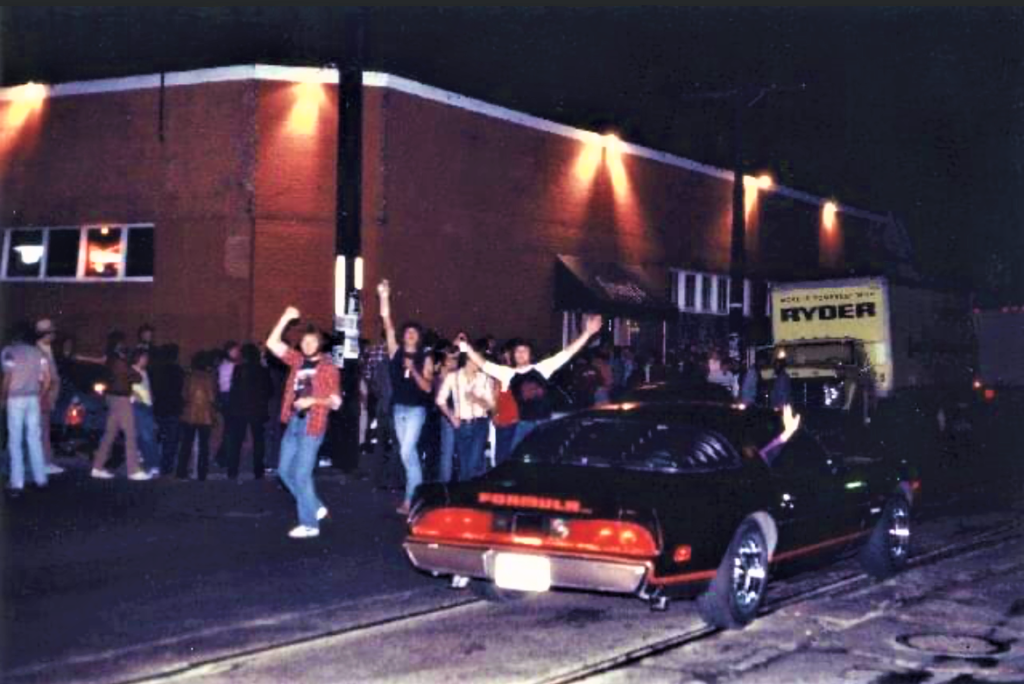
Outside Quasimodo’s, 1973.

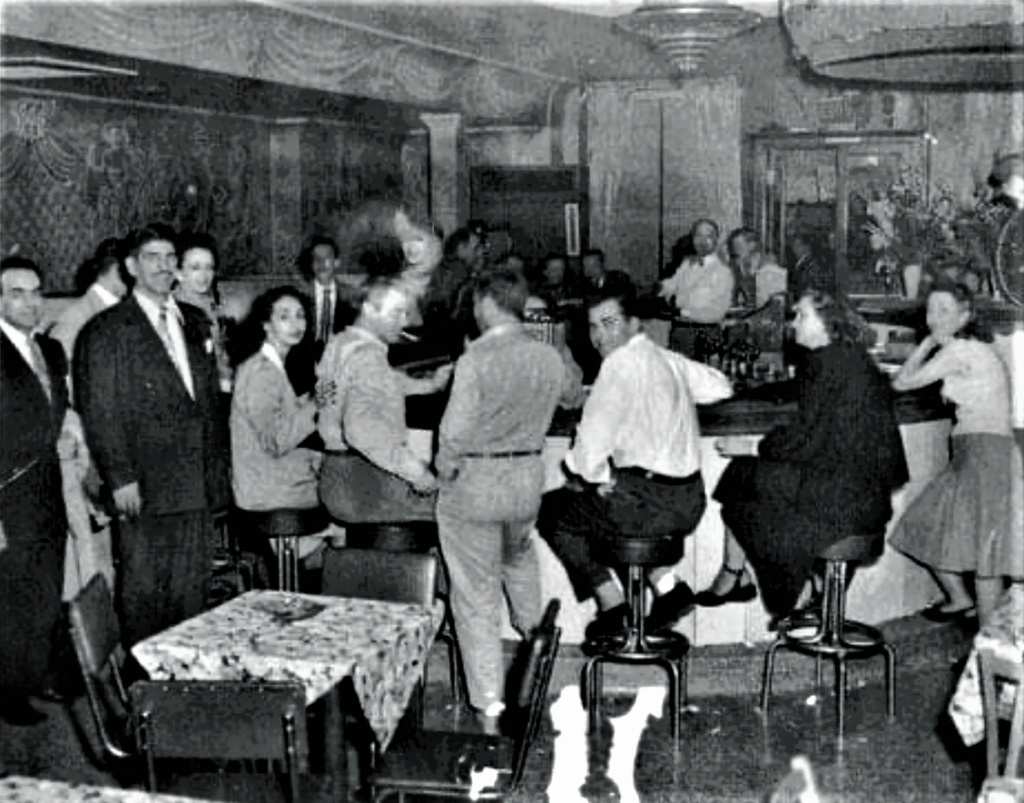
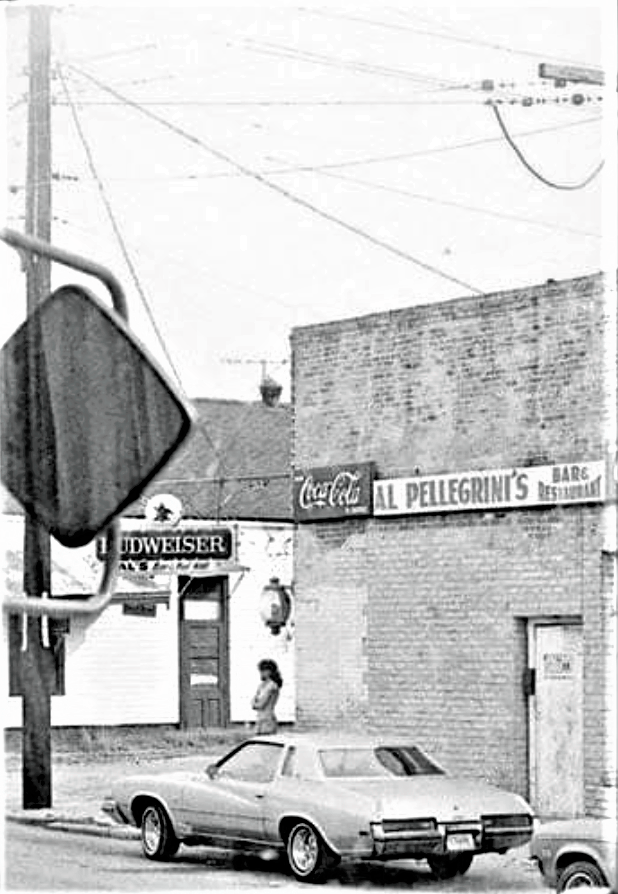
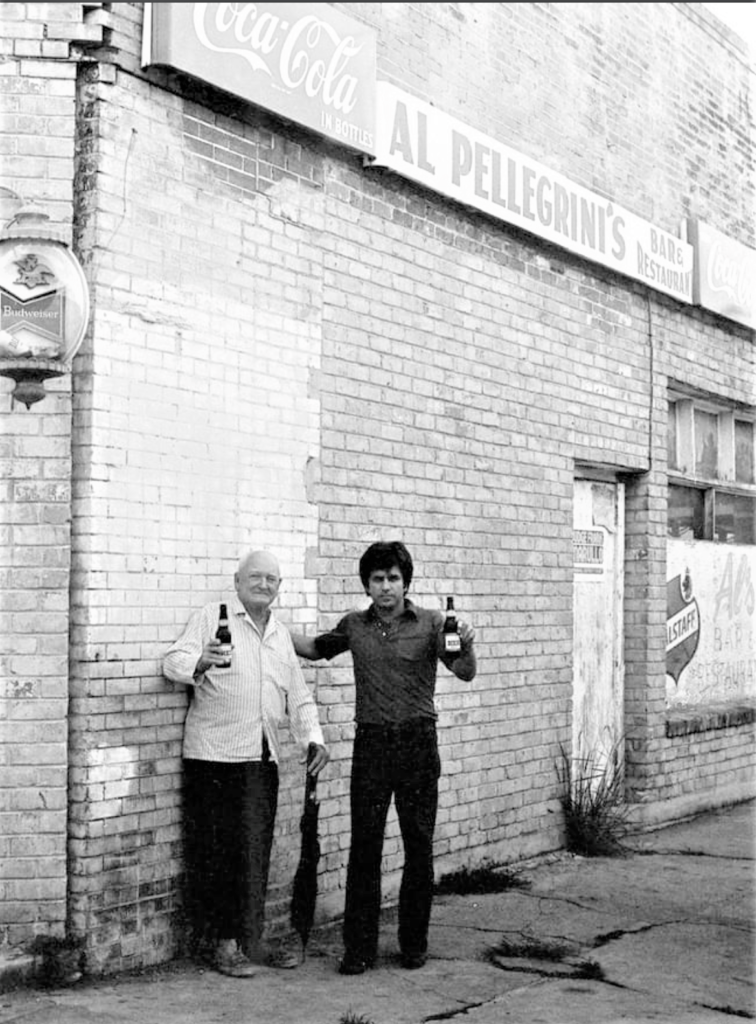
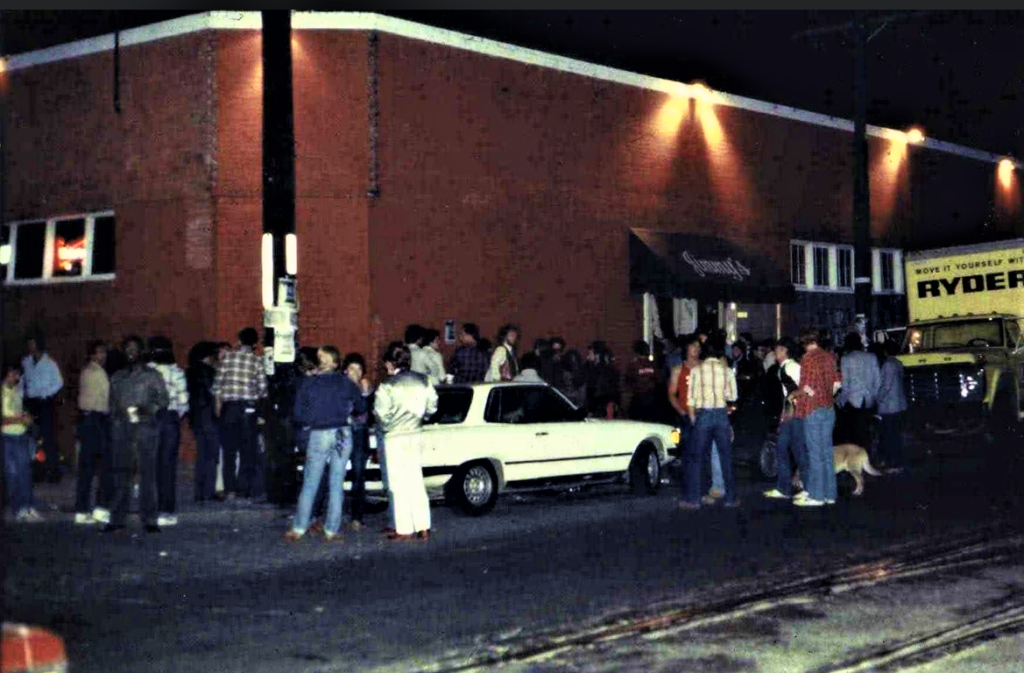
The next four years would treat Jimmy well. And although capacity at both locations was limited, both night clubs were successful in gaining quite a following. There was one customer in particular that would stop in Quasimodo’s from time to time, Al. He was the owner of Al Pelligrini’s Pool Hall over on Willow St. Uptown. The two would talk and the notion that Al was interested in selling would come up. As Jimmy explains, “I was successful there (at Co-eds and Quasimodo’s) but I wouldn’t have the success that I would have at Jimmy’s Music Club. I was limited in what I could do because capacity might be 100 at each place. So, I was getting anxious and I wanted to move on. I told myself; where are you gonna be in the next five years?” Between Jimmy’s current success and his ever-present ambition, he decided to seize this opportunity and take Al up on his offer. Al’s pool hall was somewhat of an ailing operation at the time. The building it was housed in was built circa 1915 and the business had become a local destination for run off from the methadone clinic nearby. But Jimmy had visions of turning things around and opening a music venue. So, in September of 1976 he bought Al Pelligrini’s Pool Hall, closing it down just two weeks later. 

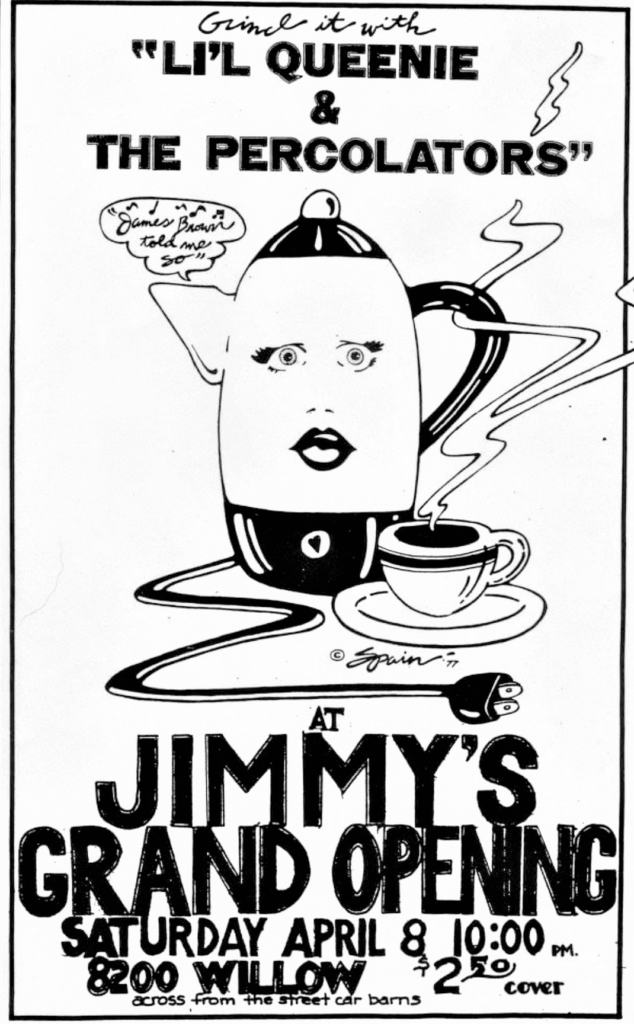
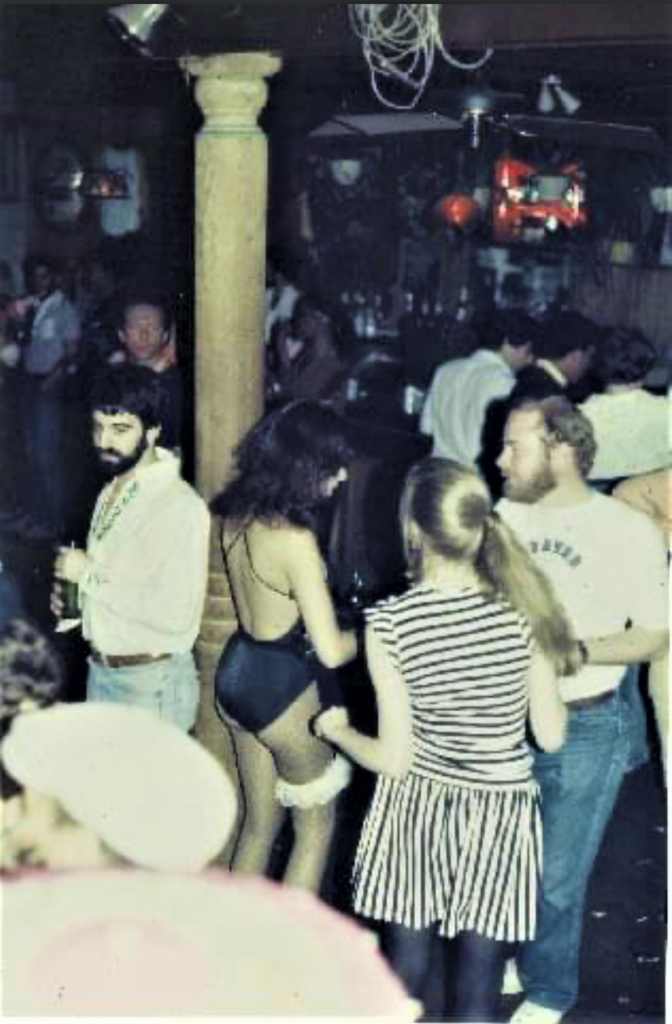
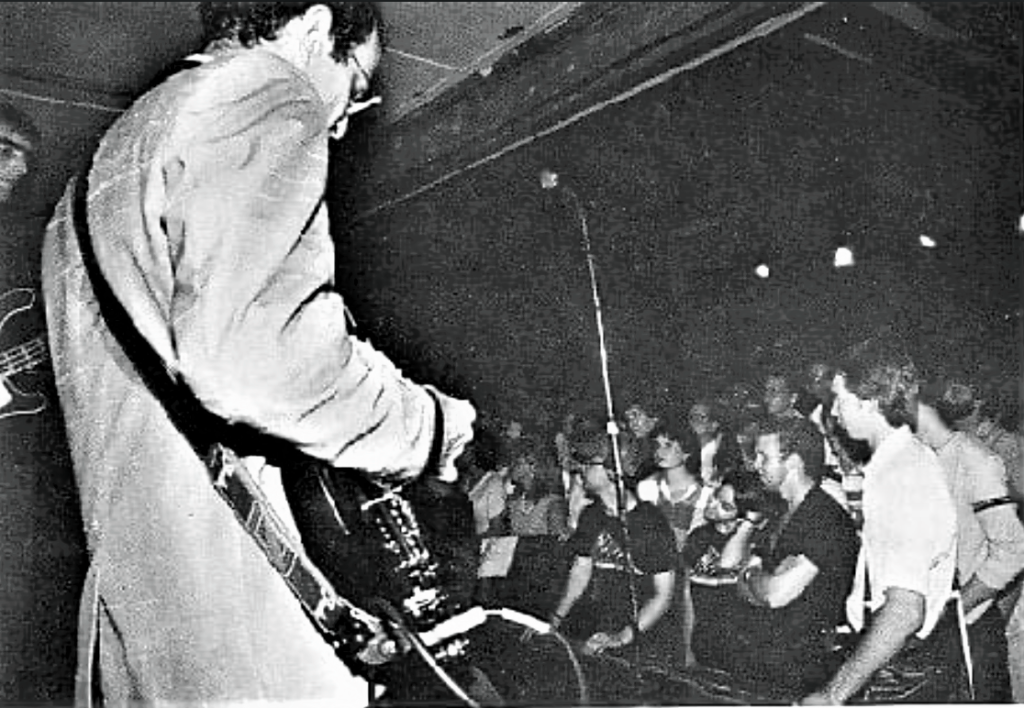
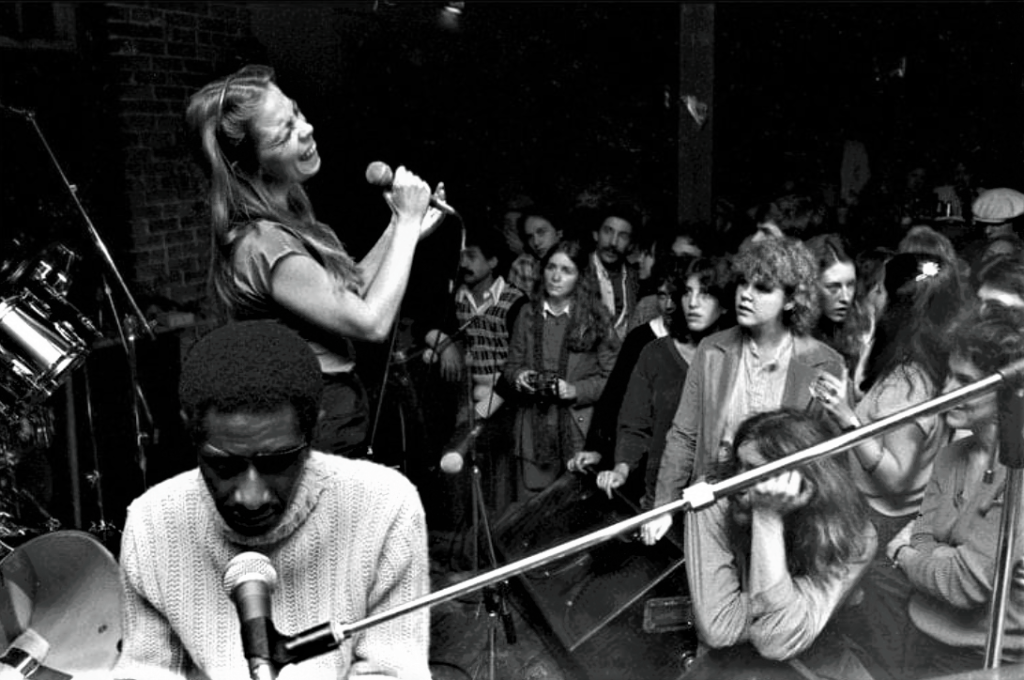
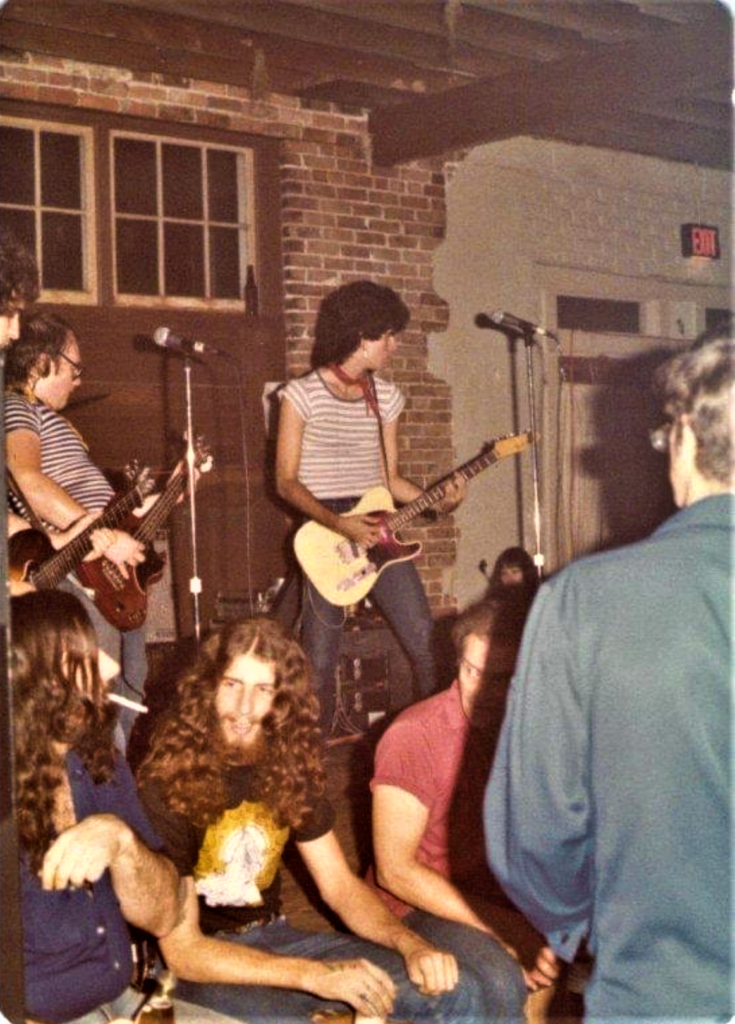
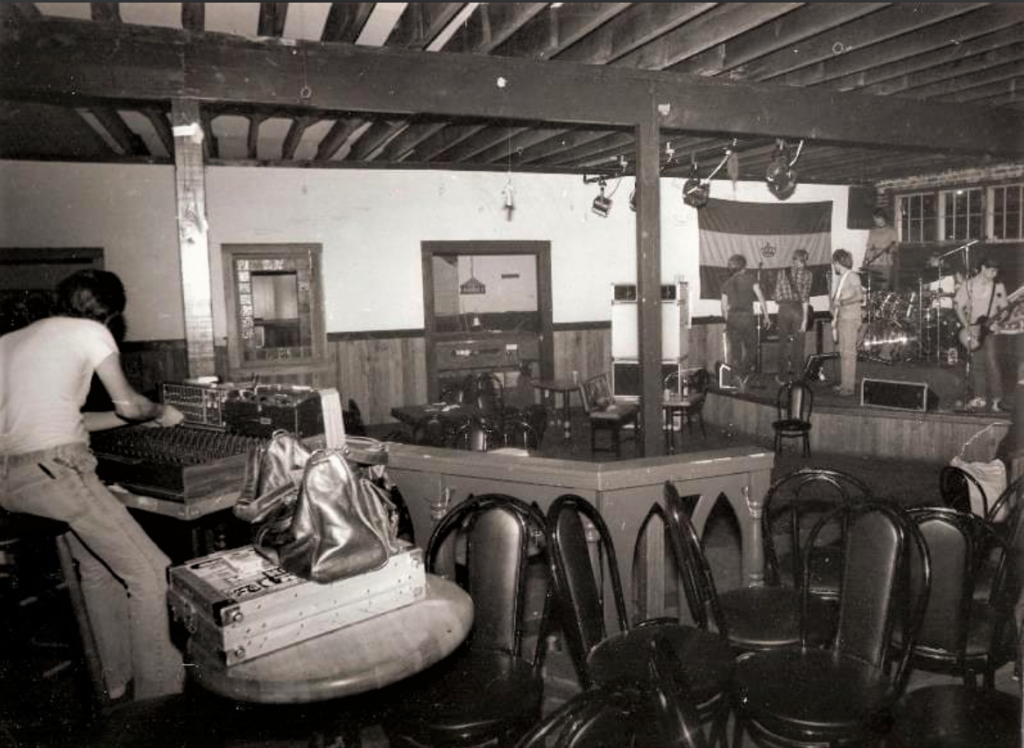
At this point in time, he hadn’t even thought of a name for his new club. One possible name that stuck with him was The Depot, being that it was across the street from the street car station. But in pursuit of something greater, closing the pool hall would mark the start of an almost two-year renovation process. The sale of Co-eds and Quasimodo’s helped fund this enormous undertaking. In order to achieve the vision Jimmy had in mind, it was going to take more financing. He would approach three banks, being turned down each time, before finding hope through the Small Business Administration. Initially he was even turned down there. He was able to resubmit his original proposal at a lower cost, choosing to eliminate the kitchen from his plans. And luckily his mother, Mary, was able to secure a loan to show the SBA Jimmy had the necessary funds in his account. In the end, all of the effort paid off! Plumbers, electricians and carpenters were all put to work on this extensive project. And on April 8th 1978, Jimmy’s Music Club was opened for business. But not before his mother lent him the money to put in the registers. Things were that tight! His first act was Little Queenie and the Percolators. The following weekend, The Neville Brothers took the stage and would be no stranger to the budding venue in the future.

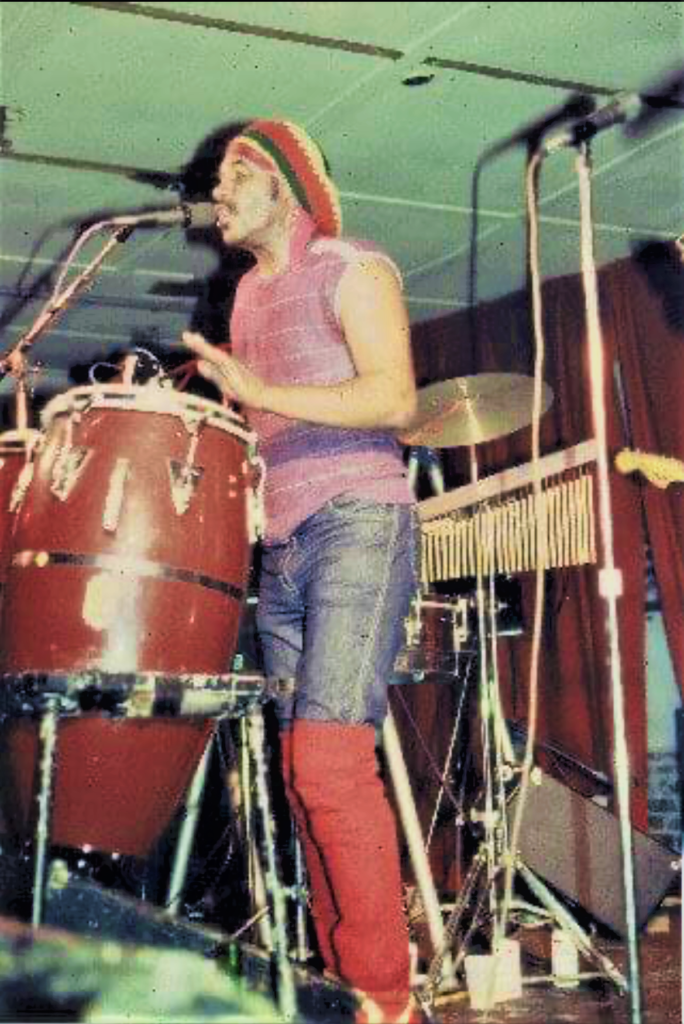
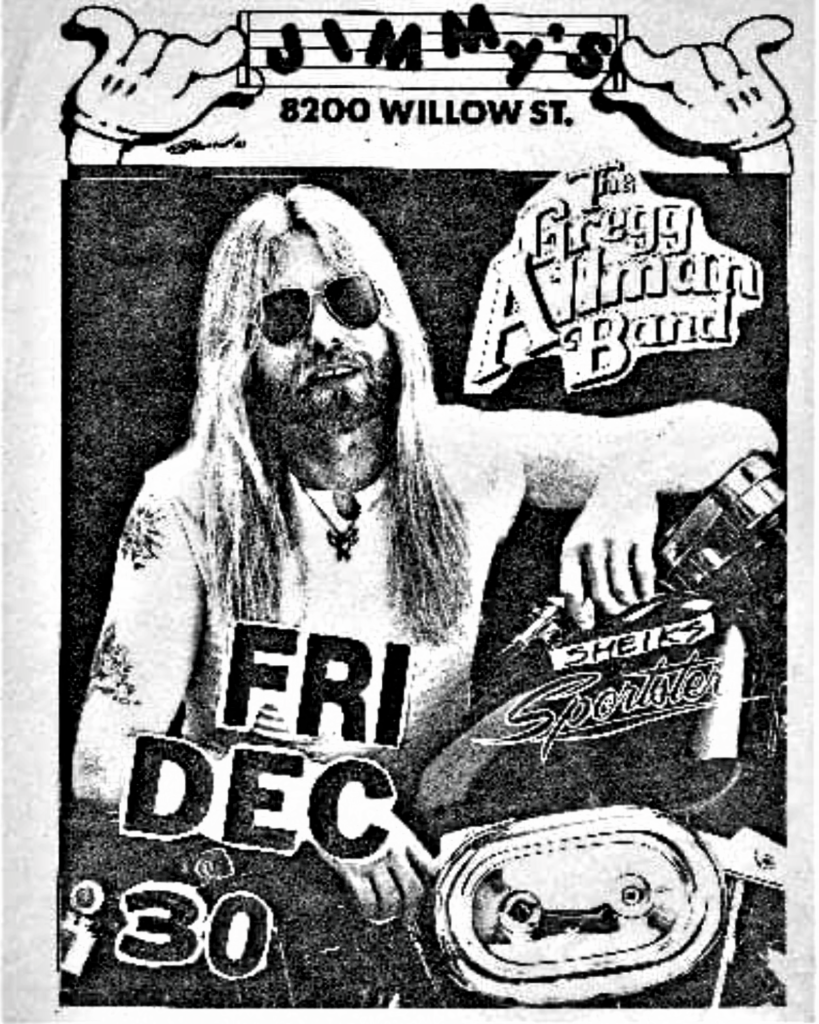
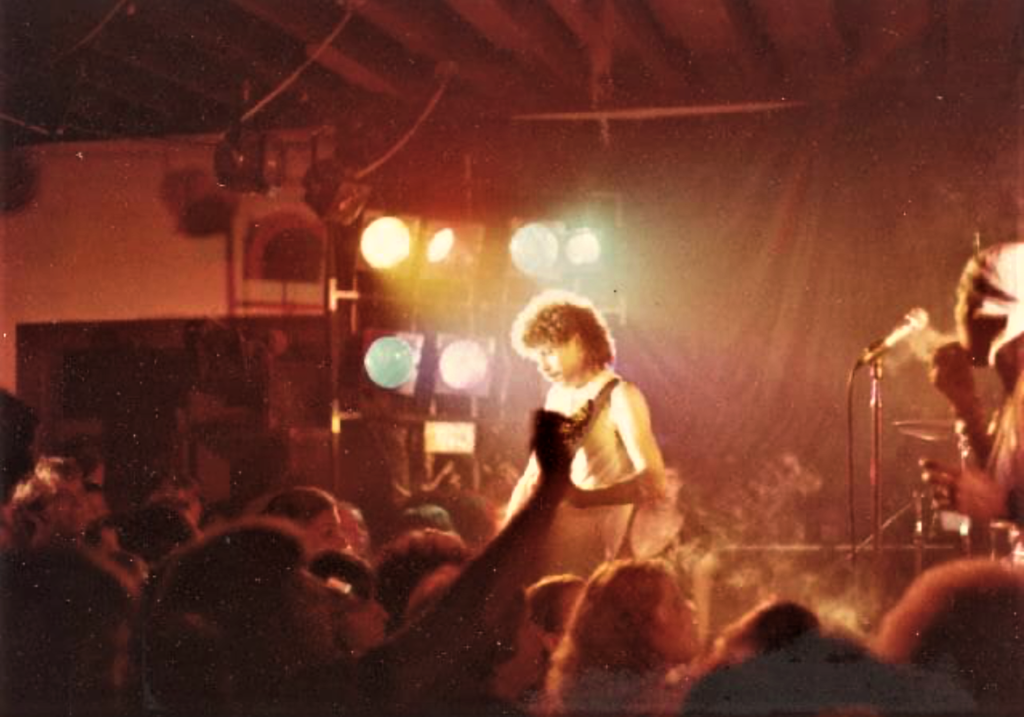
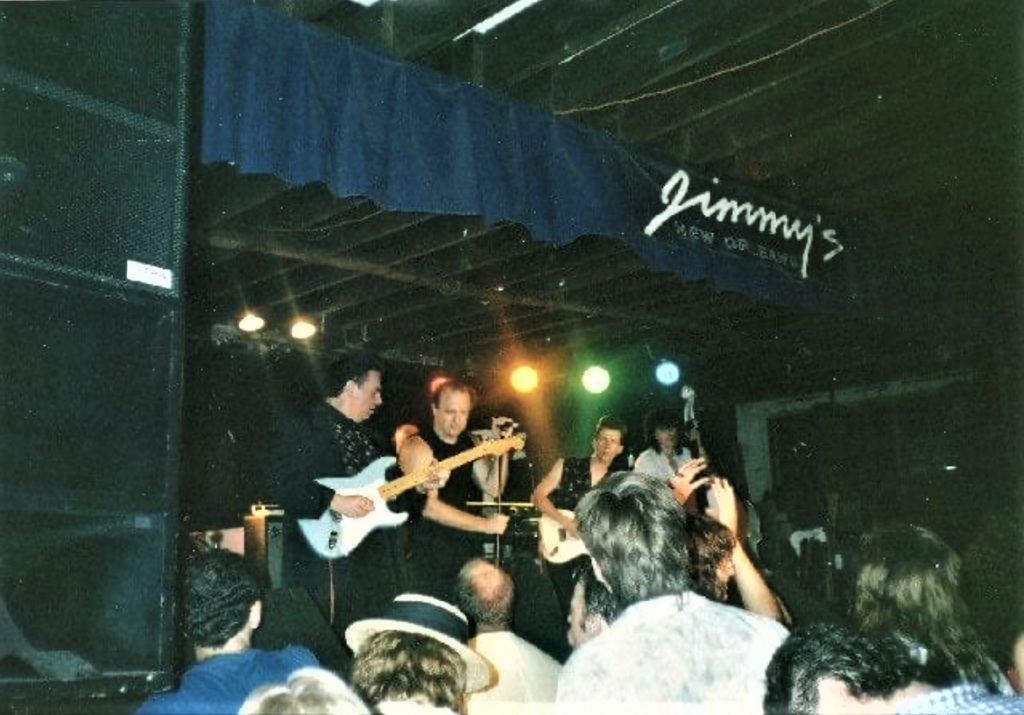
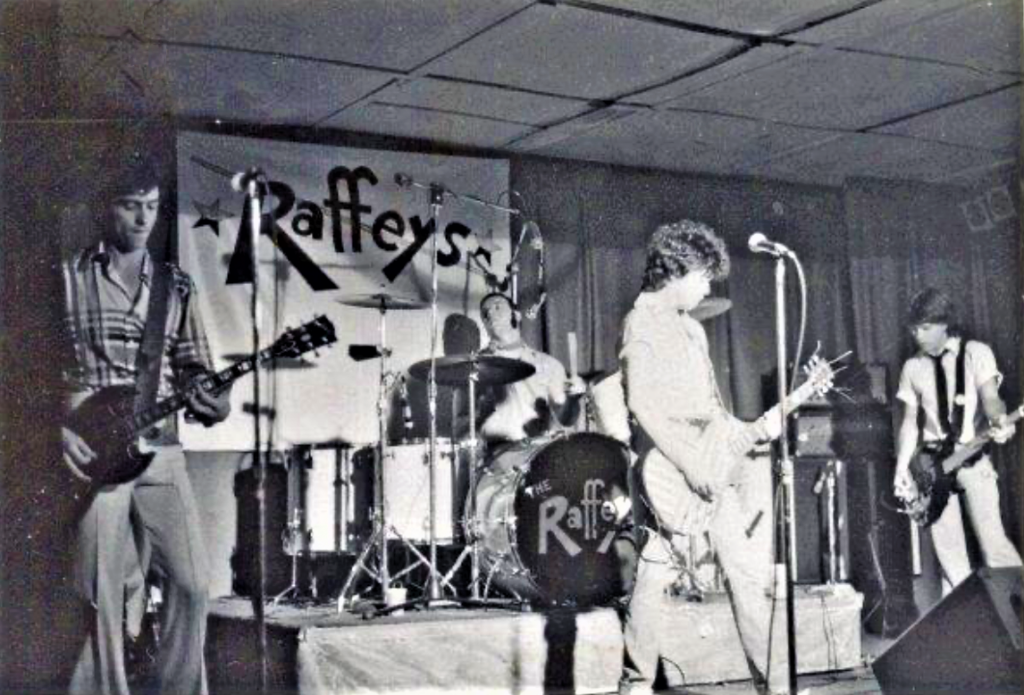
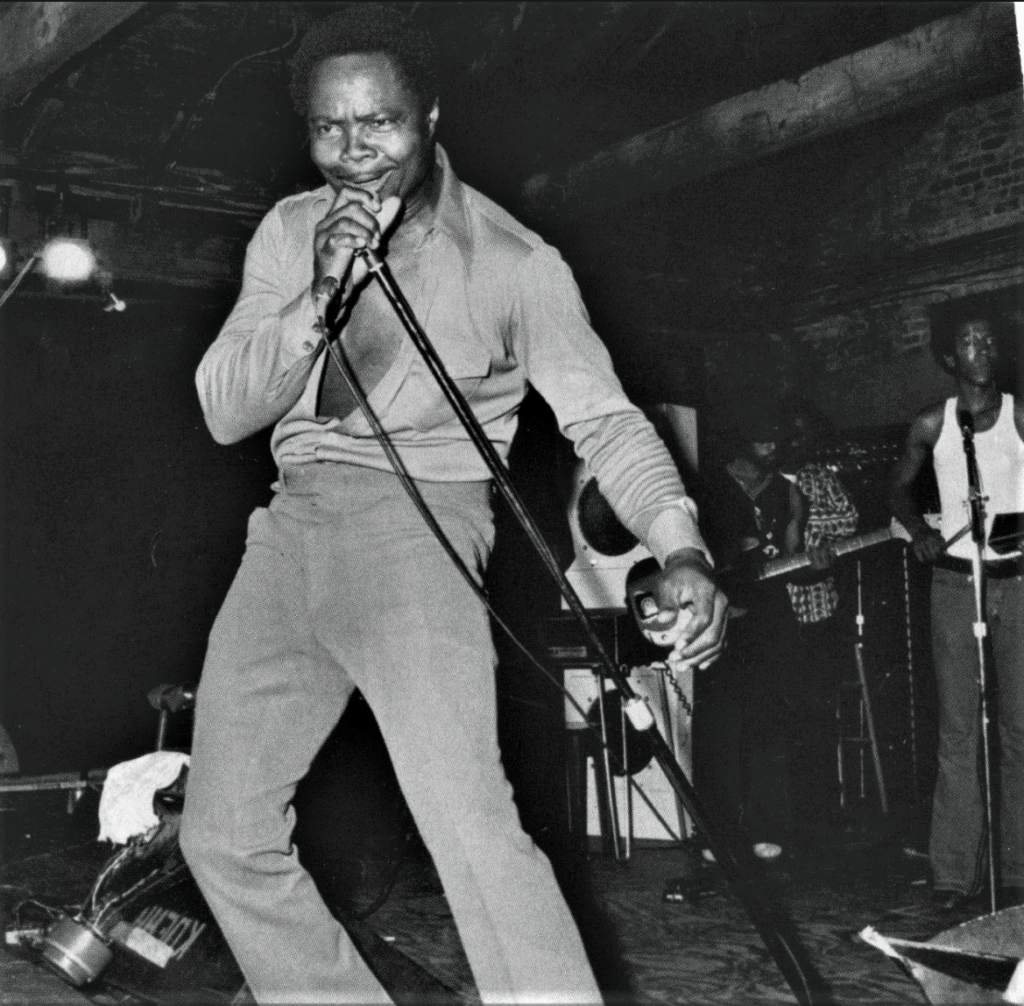
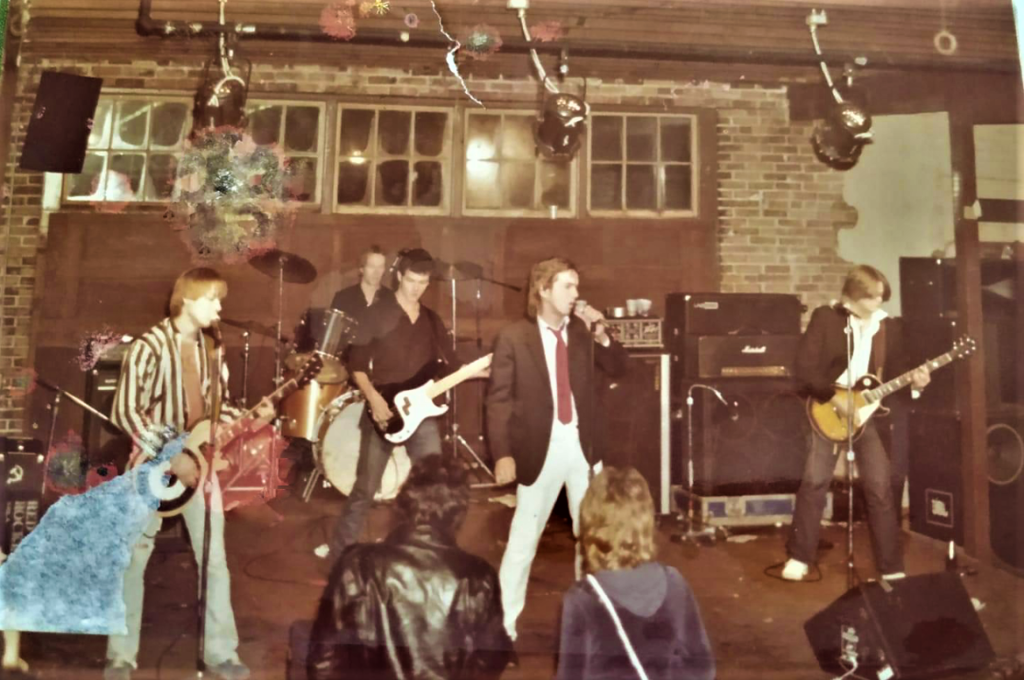
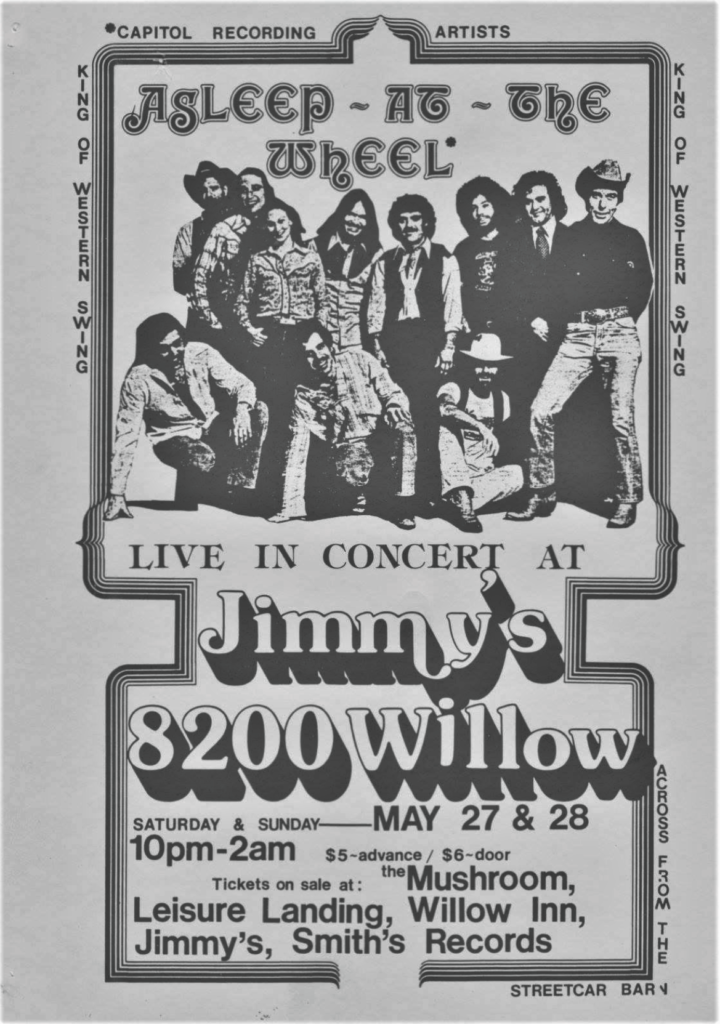
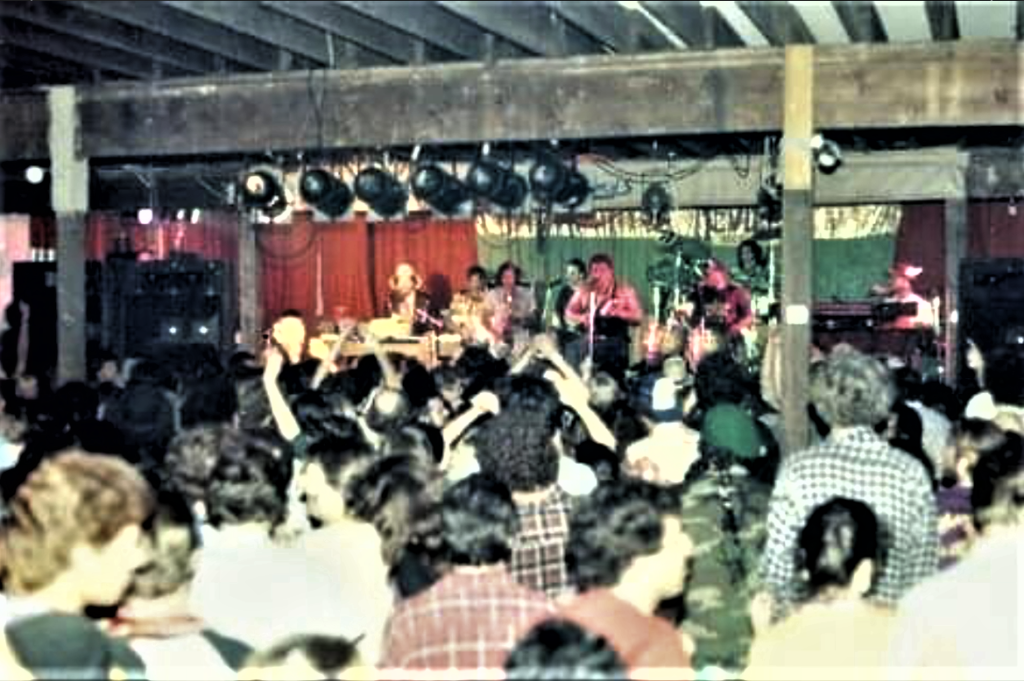
Throughout the years owning Jimmy’s Music Club, he didn’t always have success. For instance, the money he made from his first and second weekends with Little Queenie and The Neville Brothers was lost on his third weekend with a jazz act that flopped. Unless he knew for sure they could draw a large crowd, jazz acts wouldn’t be found at Jimmy’s too often due to this. But he learned a lot and pivoted when counted. At the outset he knew he couldn’t afford the up-front money national acts required. And although some local acts in New Orleans were of national quality in their own right, they were a necessity in order for this music club to survive. Looking back, the relationship Jimmy shared with his performers was both beautiful and mutualistic if you think about it. His first national act was Asleep at the Wheel who performed there on May 27th, 1978. Admittedly booking a national act this soon after opening was a big gamble for Jimmy. But it shouldn’t have happened in the first place. While the band was requesting the deposit, Jimmy was stalling for time. Yet they showed up on that night and rocked the crowd. Some other things he did to save money was to come in and bartend, not carry an extensive selection of liquors, and always negotiate a lower asking price for bands. He even put a trailer out back and lived in it at one time. Jimmy recalls a time in 1984 when he was approached by agents for Gregg Allman just before New Year’s. They were asking for $14,000 to do a show. But relying on leverage due to the recent closure of Tipitina’s, Jimmy’s main competitor, Jimmy stood tall and refused the offer, explaining he didn’t give guarantees (flat rates). Now mind you, this is Gregg Allman of the Allman Brothers, the same Allman Brothers that had performed at the opening of the Superdome. And the agents would remind Jimmy of who he was dealing with throughout negotiations. As Gregg was, at this point in time, very much enjoying immense success with his solo career. The two negotiated back and forth until alas, on Friday December 30th of ’84, Gregg Allman performed for just a percentage of the door, still raking in more than his initial demand. Between Jimmy’s business savvy and his venue’s growing reputation, he was able to play host to many bands throughout the years on his own terms. Countless New Orleanians came to see bands like The Gaboans Gang featuring Ziggy “Zigaboo” Modeliste (founding member of The Meters), The Neville Brothers, The Sheiks, The Cold, Professor Longhair and his Scholars, James Booker, Rickie Lee Jones, Brad Orgeron, The Fabulous Thunderbirds, Joan Baez, The Raffeys, Ernie K-Doe, Wayward Youth, The Red Rockers, The Red Hot Chili Peppers, Dr. John, Muddy Waters, Black Flag, The Psychedelic Furs, Huey Lewis and the News and the list went on.

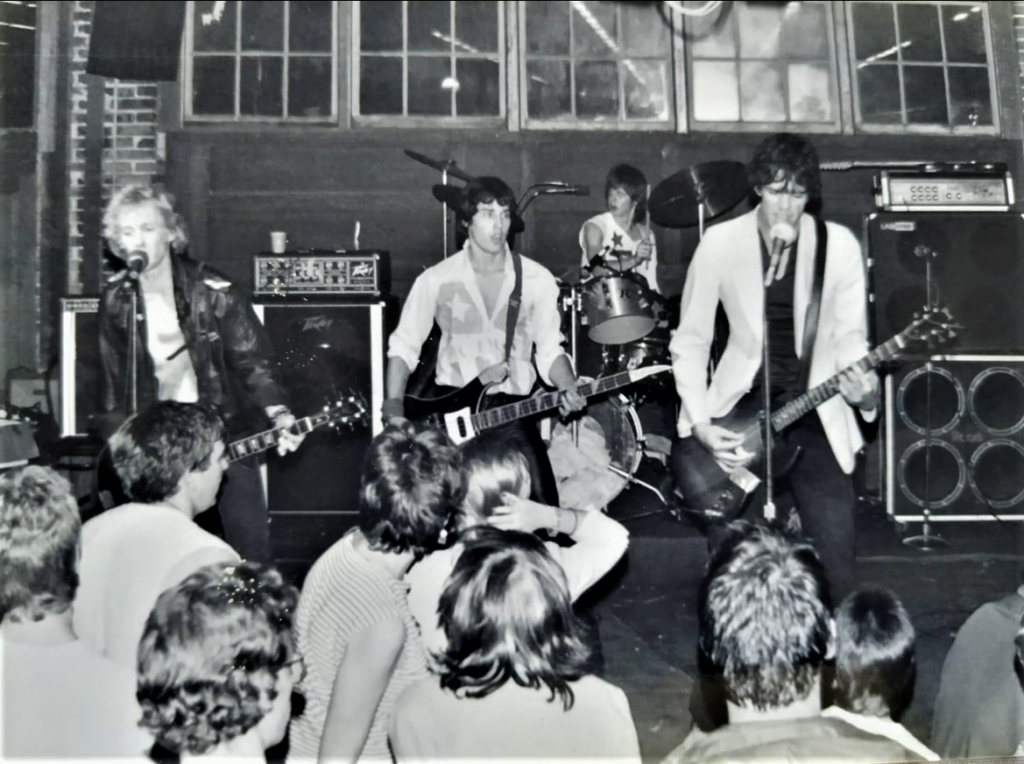
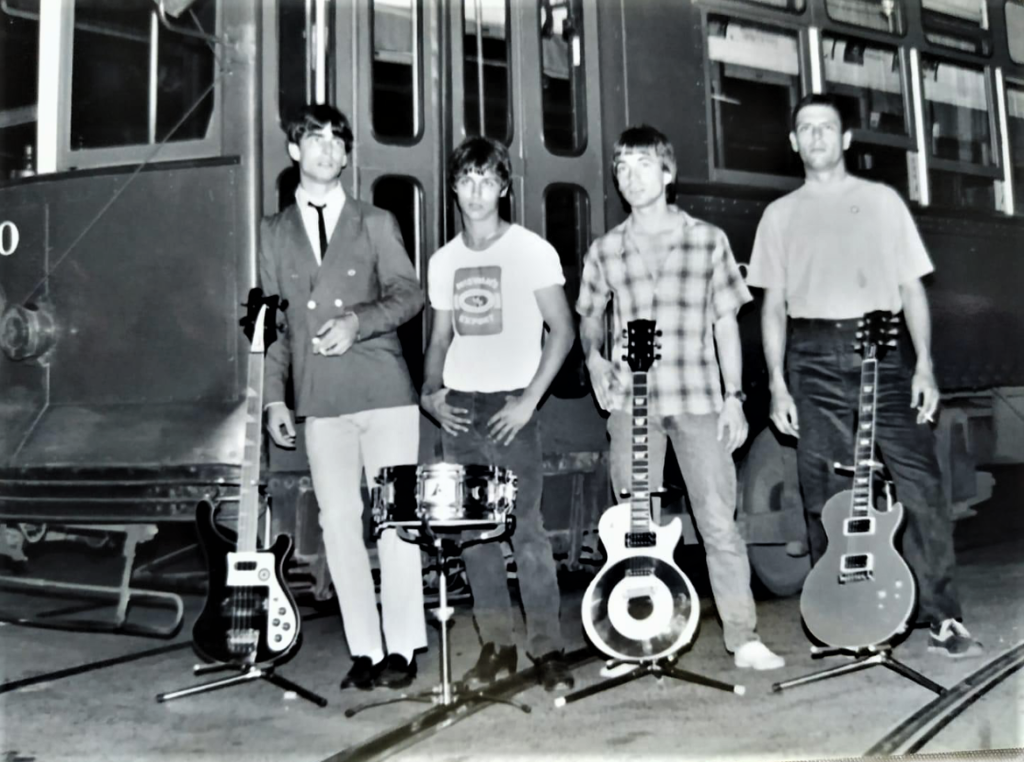
The Wayward Youth, across the street from Jimmy’s at the street car depot. Photo credit Edward Kalil.

From the start Jimmy didn’t just open a music venue to expand commerce. True enough, the end result was a consolidation from two smaller clubs to one large club with greater capacity. And he couldn’t help but notice the opening of other music venues in New Orleans over the years. But he had a love of music and wanted to learn the business. This is why at his own club you could find him behind the bar, or behind a desk booking bands himself. You might find him running sound or moving tables and chairs out back along-side his employees. He implemented little things like an ATM as opposed to a credit card machine because, at the time, it slowed business down. And the tables and chairs went out back to fit more people. His aim was to be the quickest, most efficient venue in town. Over the years his passion for excellence and his ability to succeed gained him a reputation, such to where national acts came calling, as opposed to the other way around. His love of music also compelled him to form long lasting relationships with these artists. He would hire a car and driver to cart performers like Dr. John around town. He befriended their families. He employed people to cook southern style meals for them as a show of hospitality. Most people loved him for it. But surprisingly he added, David Allen Coe didn’t exactly take to that last gesture. The man spent so much time in jail he refused the New Orleans dishes, instead requesting some “prison food”. So, Jimmy took him down the street to a pharmacy where he bought David a frozen Salisbury Steak meal. If that’s not passion, I don’t know what is.

There was a scuffle in downtown New Orleans that made the paper back in July of 1940 in which James Anselmo Sr was involved along with two n’er-do-wells. When all was said and done, he was still standing. And at least one of the aggressors would not live to see another day. Like his father, for his country and in business Jimmy Anselmo Jr. had guts. He knew an opportunity when he saw one and he never let it get away. In being this, he not only preserved our precious New Orleans music culture; he gave it a place to grow.  

Author: David Trahan

Neworleansmusicians.com

Neworleansmusicians.com Podcast can be found on these platforms.

Categories
blog

Blackwater Canal

“Spinning and turning and feeling alone. Understanding all the time. Forgetting things that are gone in the past. Facing the fate of time. Spinning and turning and feeling alone. Understanding all the time. Screaming and clawing and losing your soul. Digging a grave-less hole. Cause I, I stand alone, ashamed of this world. Now I’m feeding the wolf.”

Feeding the Wolf… Blackwater Canal
Resume of Blackwater Canal members

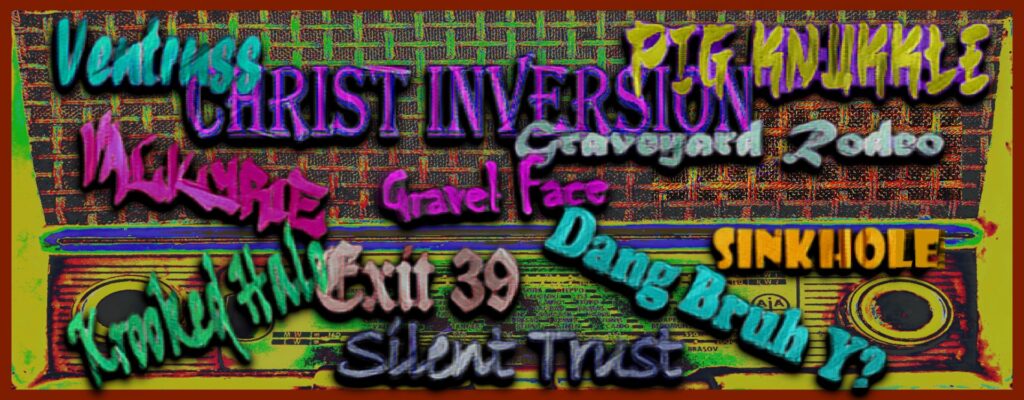
In the days of old you got together with a group of friends, worked out who was playing what instrument at the time, and started a band. The same holds true to this day. But now more than ever there is a thirst for new blood. The scene needs it, and the people want it. One of my favorite sayings has always been “stagnation is death”. And both lie right around the corner just waiting for things to go stale. You can pump as many bands as you want into a scene, but if they aren’t fresh; if they aren’t bringing anything new to the table, the rot starts to set in. What serves to complicate this concept is that there needs to be elements of the old within the new. Think single-malt scotch from a metal distillery called Louisiana. There’s always little bit of the last batch in the next. You down it, and exhale heritage. There’s a new band in the boot that aims to step up and man the still. And their name is Blackwater Canal. As Blake Lowery (vocals) pointed out in our interview, even to this day that old Fat City southern metal sound has never left the hearts and minds of the people that embraced it back then. But he feels as though it is dying. And combined with their fresh perspective, this band aims to breathe a little heritage back into the scene.

          Cemented in the tenets of the south has always been the blues. It is literally in every facet of our music culture and commands respect from all those intelligent enough to recognize its presence. Louisiana metal pays homage to, and draws inspiration from, the blues. I’m not saying metal in other places does not. I’m saying it is the mud in the waters for which we are famous. Another essential ingredient of this southern dish is the groove. As Jay Gracianette (guitar) puts it, “Groove is the biggest thing I found in all of the New Orleans (metal) bands. From Exhorder, to Crowbar, to Eyehategod, to Soilent. Everything has groove. And you can be heavy. You can be a ballet performer. It’s got to be memorable. It’s got to have some sort of groove…”

While the overall metal genre embraces multiple styles, many bands choose to remain in one lane and exploit the possibilities within to the fullest. Perhaps a little harder, maybe a little faster, but always remaining within bounds. The lesser common option is to use this multiplicate for a more comprehensive approach. Acid Bath was a gladiator in this arena. Take The Blue for example, one minute you heard blood curdling screams over what could best be described as the Amen Break (drum solo in Amen Brother by The Winstons), the next minute you heard harmonizing vocals over a simple 4/4 signature with rides and fills; back and forth with this, all in one song! And they exploded, sending shrapnel in every direction.

          The time has come to once again to embrace what’s on the other side of the dotted line. And as co-producer on this album Vinnie LaBella (Exhorder) put it, it’s a hard sell. But frankly the era of musicians “pushing the envelope” by using extreme violence or showing more ass on stage has me ready to vomit. Autotune, by now, has asphyxiated us all. And the majors long ago lost the audio-sizing chart to what we choose to wear. There’s a clear difference between demanding respect and commanding it. And all of the previously mentioned elements knocked themselves out the box in my opinion. Often times those who demand respect are undeserving. But by the way they have chosen to carry the torch, Blackwater Canal shall command repsect. Their torches are dipped in the fat of Sabbath, Crowbar, Pentagram and Eyehategod. You can smell the flesh of their predecessors burning through the speakers. Their style is evocative of the sweet southern blues, honed to a metal’s edge. And like my favorite black and white film noirs of the 50’s, their lyrics delve into the seedier side of life. Blake Lowery’s cavernous vocals deliver the message. And similar to Kirk Windstein’s (Crowbar) approach, harmonies lie within. Jay Gracianette (guitar) and Steven Sessum (bass) could change their names to Gritty and Domineering, respectively. And respectfully, they deliver the listener a remembrance of that southern metal sound we all grew to love, while forging ahead to inject their own brand of passion. All of this teetering on edge is balanced in good meter by the super solid foundation they have found in Brian Ordoyne (drums). Together, they form like Voltron to see what parts of space they can go f**k up.

          But these intergalactic pilots are far from teenagers. And this is where the roux gets thick. As we all know, nothing can substitute the knowledge gained from experience. For all the bands named before the start of this article, you’re looking at decades of just that, experience. By far, these words fail to convey the amount of time spent in the Louisiana metal scene by the members of Blackwater Canal. The realization of the proverbial 10,000 hours manifests itself in their design. In short, they’ve put in the work and it shows. But even considering how dope this sonic editorial has been, you need to go listen to these guys for yourself. Their album, titled Force Fed Lies, will be coming out on July 15th. It was produced by OCD Recordings and co-produced by Vinnie LaBella of Exhorder. Blackwater Canal will be performing live for the Album Release Party on July 15th at The Hideaway Den in Mandeville, at the foot of the Causeway Bridge on the North Shore. Thorn Prick and Gristnam will be there to fill the bill as well.

Listen to Shadows of Light by Blackwater Canal here.

Neworleansmusicians.com Podcast can be found on these platforms.

Categories
blog

Platform Status 10

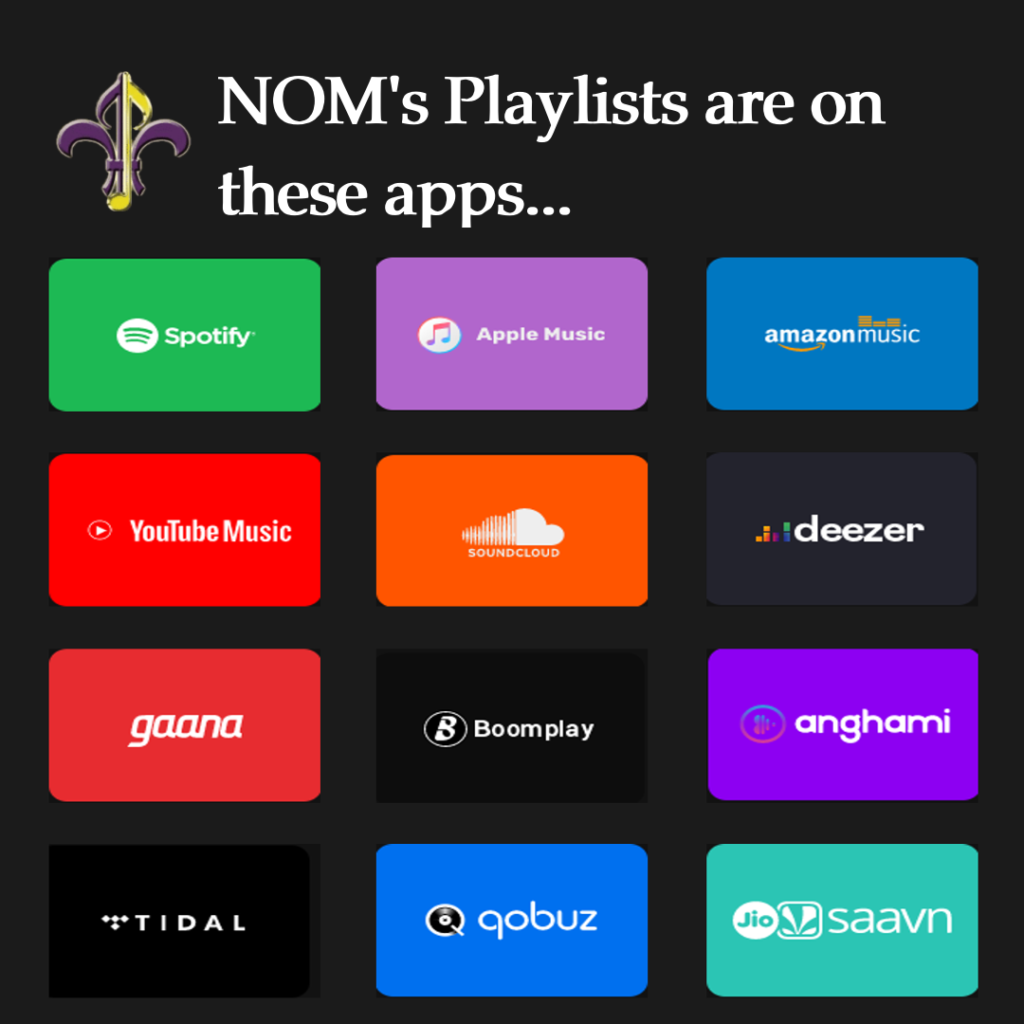
I’m always looking for creative ways to help our members promote their music. And in making this a constant quest, one idea I’ve arrived at is what I’m here to tell you about today. Neworleansmusicians.com has established accounts on nine streaming platforms, each with public playlists searchable by the platform’s users. There are 16 playlists in all, on every account, to correspond with the 16 genres on our site. When you join NOM we search for your material on these platforms and add it to the playlists on our accounts. The plays, credits, and payments all forward back to you. You are, of course, free to set up your own accounts on these platforms. In fact, we encourage that. Our program works in congruence with your presence in these places. In other words, whatever streaming platform you’re on, we’ll find and add you when you sign up with us on Neworleansmusicians.com.

Domestic and foreign popular streaming platforms

Spotify – 365 million monthly users

Apple Music – 78 million subscribers

Youtube music – 50 million subscribers

Amazon – 48.1 million monthly users

Tidal – 3 million subscribers

Deezer – 16 million monthly users

Soundcloud – 175 million monthly users

Qobuz – 200,000 subscribers

Anghami – 70 million users

Gaana – 185 million monthly users

JioSaavn – 100 million monthly users

Boomplay – 60 million monthly users

So, what’s the “ten” in “Platform Status 10”? Well, in another article I mentioned Reverbnation as the type of place we differentiated ourselves from, being that unlike them we only serve Louisiana musicians. So, it may seem a bit ironic that I mention them now in this light. But any way that we can push our artists is game in my opinion. So, when you join our site and upload music to your profile, we can add it to our Reverbnation account playlist. This account is also searchable which will allow your work more plays.

That’s it kids! I can’t promise you the world. But with Neworleansmusicians.com I can promise you creative promotional tactics from a reputable resource and a trusted brand. As Louisiana bands, I hope to see you sign on with us and elevate your streaming platform status to ten!

Author: David Trahan

Neworleansmusicians.com

Neworleansmusicians.com Podcast can be found on these platforms.

Categories
blog

Our Reviewer Lingo Starr

While one might not be able to accuse him of being too friendly, he speaks his mind. And that’s brisk, baby.

Ice-T

Second cousin to a chemotherapist that stumbled upon the formula for Nair, Lingo had the discourse of being lost several times abroad due to his family’s constant vacationing. It was often rumored, but never confirmed, that these instances were intentional. As a small boy, he was suspected of having cerebral palsy when it was discovered that his mother had been putting (too much) whiskey in his bottle. Still, he managed to forge his own way in life, letting music be his guide. Though he was born   from a family of means, his family mismanaged their coffers. Because of this, Lingo did not in fact attend college. Instead, he attended college parties, pilfering the text books of others whenever possible. Sadly, he would be present at many graduations, only never on stage.

     Lingo’s exceptional writing skills were first formally recognized by the First Circuit Court of Appeals in Baton Rouge, Louisiana when he successfully forged a letter of pardon from the governor. Their embarrassment is the only reason he is still free today. After this brief stint in a “college” of his own, he fabricated an exceptional resume and sent it to Neworleansmusicians.com. We were unaware of the incredibly bogus nature of the document and jumped at the opportunity to have him in for an interview. To be fair, we did finally come to realize that he was not awarded the position of “Ketergantungan Kimiawi” during his residency in Indonesia. He didn’t even go to Indonesia. And Ketergantungan Kimiawi in English means chemically dependent. But this made it apparent that we had a clever one on our hands. And I like to believe that everyone has their strongpoints. So, we hired him.

     He doesn’t show up on time, if ever. And he seems to have an aversion to personal hygiene. Those that meet him are usually turned off by this and his boisterous nature. He has a passion for music though. And at times he unknowingly reveals an emotionable consciousness that wraps itself in melody and articulates that into beautiful, literal sonic expansions. In other words, the kid’s a damn good music writer and we’re keeping him. I hope you all look out for his pieces in the future because I know I will. I have to fact check our little fabricator and act as a purifier to the hot air he so graciously pumps out to the masses. Until then, he goes by many titles; some of them quite insulting. But his name is Lingo Starr. And for all you local Louisiana bands out there, if you’d like your single reviewed and written about, he’s your man. You MUST be a member of Neworleansmusicians.com for your submissions to be considered. And while we get him set up, you can submit your single to neworleansmusicians@gmail.com and I’ll make sure he gets his ass to the office (hopefully on time) and starts these reviews!

Author: David Trahan

Neworleansmusicians.com

Neworleansmusicians.com Podcast can be found on these platforms.

Categories
blog

The What is the Why

      So, maybe you saw us online. Or maybe you heard about us by word of mouth. But seriously, what is Neworleansmusicians.com, or NOM as it’s sometimes called? How do I register register? What are they doing that can’t already be done on Facebook, or Reverbnation, or any other website with bands on it? I’m glad you asked. First let’s look into the good stuff… what can they do for my band? Here’s the breakdown:

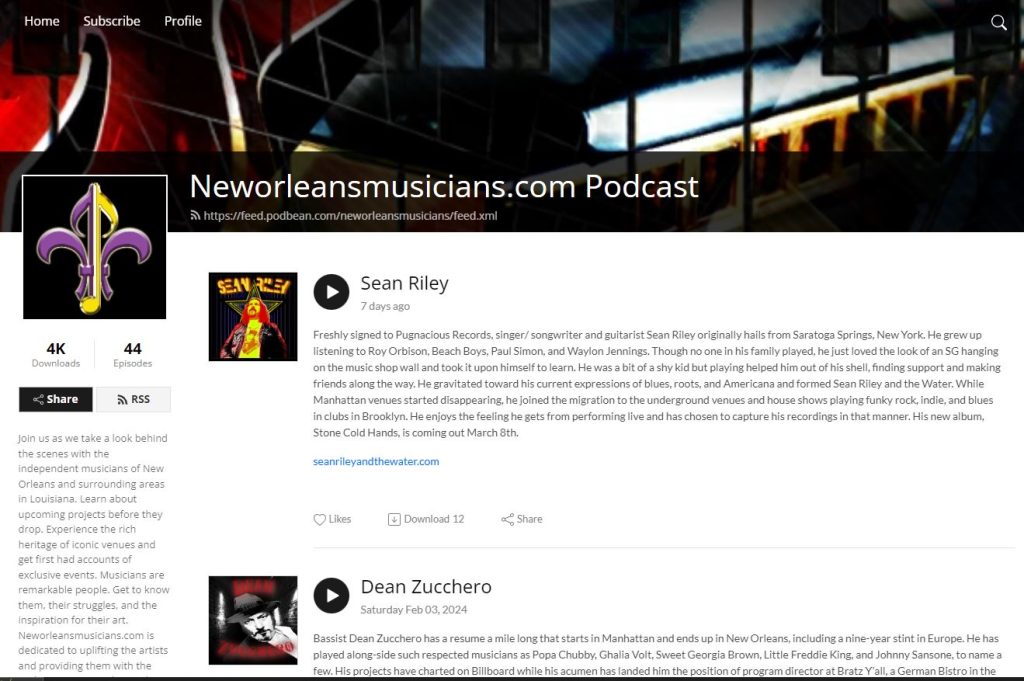
NOM’s podcast home page

Podcast feature – NOM publishes regularly on every podcast platform available. The content is music-based and covers bands and the music business in Louisiana. When you register on the site, you automatically get dibs on a slot on the show where we talk about new members and play a snip of their work. It starts with a mention, giving you free, immediate promotion. And being a site member, you are part of a pool of members that is used to select actual future guests.

NOM’s streaming platform presence
  • Playlist feature – NOM has set up its own public playlists on all the major streaming platforms. There are eighteen playlists, organized by genre, on each platform. If you have any music on streaming platforms when you register with NOM, they find you, pick one of your tracks and add it to their playlists. Pretty cool huh? Good luck trying to get placement on some of these “Hot Summer Mix” type playlists elsewhere! It’s not magic. It’s NOM’s indie artist promo strategies at work for you.
NOM’s blog home page
  • Article feature – NOM has its own blog. The blog is centered around the music scene in Louisiana and is accessible on-site. The blog uses an effective approach at SEO optimizations and the articles go in depth about everything from “this one time the band almost died” to “acoustics were drafted forty years ago by the same guy that engineered Electric Lady Studios for Hendrix…”. When you register with NOM, you are also placed in a pool the site picks from for band write-ups and interviews. We advertise these articles on social, each for four weeks. This is an important opportunity that you don’t want to miss out on. You never know what prominent publication could republish your piece.
NOM’s videos home page
  • Video placement – When you register, you can upload media like your latest music video or footage of your band on stage. From your profile, it posts on the site’s Videos Page as well as on NOM’s Youtube Channel. There’s no limit to how many videos you can post. And the value here, like in the previous examples, is that Youtube communities aren’t always the same crowd as social media followers, or podcast listeners for that matter. Exposure, exposure, exposure.
NOM’s artist of the month section
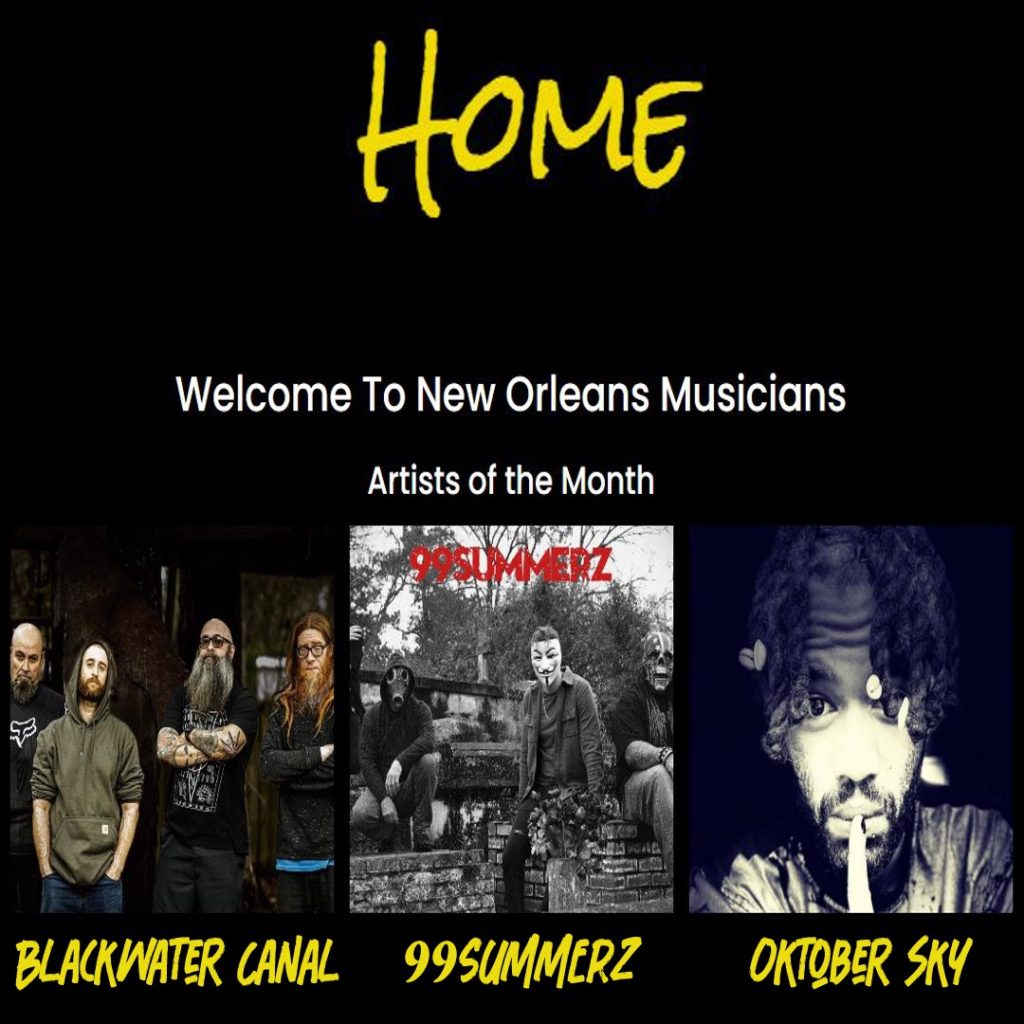
  • Artist of the Month – On the Home Page of the website at the very top, there’s a collection of three different band profiles. This is the Artist of the Month section. When you register, we monitor your streams and site participation giving you a chance at an Artist of the Month slot. It’s another way NOM encourages traffic to find your music. It features your profile image and leads users to your page on the site where people can hear your music and see your band’s vital information like label and management stats, etc. Oh, and the site also features a Music page where casual listeners can stream music from Louisiana by genre. So, when you register with NOM, any music you upload is automatically inserted there as well.
NOM’s store
  • 10% off everything in the store – When you register NOM gives all new members a one-time 10% off code as a little “thank you”. It can be used for everything in the store which includes backpacks and gig bags, as well as men’s and women’s clothing and accessories. New items are added to the store often. So be sure to have a look around a few times before pulling the trigger.
NOM’s innovative promotional strategies
  • Promotion – When you register with NOM, you instantly begin benefitting from this site’s aggressive promotional efforts. It’s got its hands in many different places all at once. And each one of the perks discussed places its members on multiple platforms in audio, video and written formats. It employs many promotional tactics specific to each of these, driving traffic to the site and to all the other places it can be found; which is where you could be found if you register. Upon request, any of the digital media created to represent our members is available to them for free. So, if you like that thumb artwork we made, it’s yours. Throw it on your next album cover!

     So basically, WHAT they do is WHY you should join. But there IS a catch. And please understand that this is probably the most important part of the whole article. NOM only accepts registrations from bands in Louisiana. This is huge! This is why it isn’t like Facebook or Reverbnation. By design, NOM has eliminated the distractive trolling you see on Facebook. It has eliminated hundreds of thousands of other bands that you contend with on sites like Reverbnation. Part of the core concept of Neworleansmusicians.com is that when musicians across our state come together under one umbrella, they become THE source for music in our state. Coupled with NOM’s growing network, this assembly of bands becomes leverage for each band on the site. You become part of a reputable brand and a trusted resource for music industry professionals. So, take a look for yourself. See how the site is structured to serve your band’s needs, because there are more features than what we’ve covered here. At absolutely zero cost to you, I think you’ll find this site a powerful networking tool for the band serious about its music business.

Author: David Trahan

Neworleansmusicians.com

Neworleansmusicians.com Podcast can be found on these platforms.

Categories
blog

How to Promote Your Music Independently in 2022

Article courtesy of Dittomusic.com. Please do your own research… Thanks! Admin

Independent artists have more opportunities than ever before to launch their own career without the backing of the majors or a big budget.

While we are seeing more and more unsigned artists breaking through off their own backs, many promising new artists out their simply don’t know where to start or how to maintain a successful promotional campaign and make money from music.


How to promote music in 2022

It should go without saying, but first and foremost, making great music needs to be your primary focus. You can follow all this advice to the letter, but if your track, EP or album isn’t well-written, tight instrumentally and professionally produced, you’ll fall at the first hurdle. 

Now that’s out of the way, let’s look at the best ways to promote your music independently in the modern music landscape.

You can watch our Unsigned Advice video or read on to learn more!https://www.youtube.com/embed/pum1Ks7yf2k


1. Sign up to artists services

Most of the biggest music streaming services have platforms built specifically for artists. So if you’re releasing music, signing up is a no-brainer.

These services will allow you to access an array of features and benefits within the platform, that are exclusively reserved for artists using and releasing music on the platform.

So for example, signing up to Spotify for Artists allows you to add a profile image, submit music to Spotify playlists (more info on that below!), edit your Spotify artist bio, view streaming analytics and access Spotify’s ‘Artist’s Pick’.

But it’s not just Spotify that caters to it’s artists needs. There’s also Apple Music for ArtistsAmazon Music for ArtistsDeezer for Creators and YouTube for Artists – so if you haven’t already, go sign up!

Resources

How to edit your artist profile on music platforms

How to get verified on Spotify

How to get verified on Apple Music

How to claim your Deezer artist profile


2. Build a website & mailing list

Creating a slick, professional website as a base for your online presence is vital, but perhaps even more important is building a large & dedicated mailing list.

Your website should obviously include links to your music, bios, images and tour dates, but make sure to also include a mailing list sign up form. Email marketing offers direct access to the inboxes of people most likely to engage with your music.

If a fan gives you their email address, it means they want to hear from you, and a message direct to their inbox about your latest release or upcoming tour is much more likely to reach them than a social post that can be restricted by a platform’s limited reach.

Resources

Email Marketing for Musicians: How To Build a Mailing List

The Best Free Band Website Creators

Why You Need To Use Email To Promote Music

5 Ways to Make a Band Website That Works


3. Develop an engaging social presence

The power of a good social media marketing strategy is no secret. Developing and maintaining a consistent, interesting and engaging presence across Instagram, Twitter, TikTok, Facebook and even less obvious platforms like Snapchat, is essential. Also, try and keep your profile handles consistent to make things easier for people searching for you online.

There’s an insurmountable amount of advice out there on how to manage your social channels, and things are constantly changing across every platform. Look through some of these helpful resources for more info on how to run and make the most of your social media presence.

Resources

How to Promote Music on Instagram

How to Go Viral on TikTok

15 TikTok Content Ideas for Musicians

10 Best Music Social Media Marketing Strategies


4. Get playlisted

You can’t afford to ignore streaming and playlisting. Playlists across Spotify, Apple Music, Deezer and other platforms reach hundreds of millions of listeners across the globe, racking up billions of streams. Getting your track into a popular playlist can help you rack up thousands of streams. That’s not only great awareness but also royalty earnings in your pocket.

While getting your music placed on curated playlists is great for awareness and credibility, being placed on algorithmic playlists like Discover Weekly can make a big difference to your stream count. So it’s worth persusing all possibilities.

Resources

Submit Your Music for the Ditto Music Playlists

How To Get Your Music On Spotify Playlists

How to Get Your Music On Discover Weekly & Release Radar

How to Submit Music for Official Spotify Playlists


5. Get press & blog coverage

If your music gets featured by music publications, whether that’s mainstream mags or niche blogs and webzines, those placements can help build hype and give you the credentials to take your music career up a level.

Hiring a professional PR executive to handle your campaign is generally the best way to get great coverage. But this isn’t always affordable or possible for a new artist with a limited budget. 

Do-it-yourself PR is an option for artists without a big enough budget. But it’s important to approach bloggers and journalists in the right way. Firstly, you’ll need to create an electronic press release. This should contain all the essential info about you & your music. The resources below offer advice for musicians who want to take PR into their own hands.

Resources

Music Blogs That Want Your Music

How to Write a Music Press Release

How to Create an Electronic Press Kit

5 Important Rules When You Submit To Music Blogs


6. Music videos

An exciting, interesting and original music video has the potential to go viral online, even if the track isn’t a hit.

Don’t be afraid to think outside the box when it comes to creating a video for your latest release. Think about the kind of videos from acts like OK GO and Childish Gambino that have blown up thanks to online traction. They’ve had something unique and intriguing about them, whether that was a deeper underlying message or a quirky theme.

You might want to develop a standard music video or live performance-based visuals – which is perfectly fine. But investing thought, time and effort into your videos has the potential reap huge rewards.

Resources

How to promote your music on YouTube

How to Commission a Music Video Director

How to Make a Music Video on a Budget

How to Get Your Music Video on Vevo


7. Surround yourself with a strong team

You might prefer the lone-wolf approach to promoting your music, but there can be huge benefits to surrounding yourself with a great team of like-minded people. If you have a team of well-connected individuals who are passionate about your music all working in your interest, it stands to reason that your chances of success will increase.

If you can put together a team of friends who’ll help you free of charge, or for a cut of eventual earnings – great! But sometimes, you’ll need to acquire the services of professionals to help give you the edge in the competitive music market. Whether that’s a PR person, a radio plugger or promoter/booker – there’s nothing wrong with accepting help.

It’s also a good idea to get yourself a great manager. Again, make sure they’re passionate about your music and believe in you as an artist. A manager who’ll go above and beyond for you is worth their weight in gold.

Resources

A Guide to Music Management

Tips for Successful Music Collaboration


8. Know your audience & focus on your niche

Where and to whom you market your music can make all the difference. Thriving music subcultures exist in all corners of the world, some huge and sprawling, some small and dedicated. Finding, knowing and exploiting your musical niche is key to your promotional campaign.

It might sound obvious (and it should be) but if you’re a metal band, play metal venues, join a metal community and win metal fans. If you’re a rapper, find rap venues, join rap communities and win rap fans. And so on.

But niches aren’t always defined by genre. If your music has more widespread appeal, start locally. People generally want to see an artist from their area succeed. Take advantage of this mentality and grow your fanbase close to home to before expanding nationally or even globally.


Utilising the different artists services features will allow you maximise your in-platform marketing and unlock new potential for engagement with your music from your fans and listeners!


9. Play live often & make an impact

Obviously this is a bit more difficult in the post-Covid-19 era, but gigs and tours offer an invaluable way to connect with fans. Get booked at nearby venues, play awesome sets for local music fans and you’ll quickly develop a strong, new fan base. But remember, you have to make them remember you, so be memorable.

Once you’ve built up a local following, you can head out on the road, taking on new music scenes city by city or even country by country. If this sounds too easy & simplified – that’s because it is. Touring and playing gigs night after night is hard work, but if you’ve got a killer live show, the rewards will speak for themselves.

Resources

Apply to Play Festivals & Events

How to Plan a Tour For Your Band

8 Tips for Musicians Touring Aboard

How Much Should You Charge for a Gig?

Neworleansmusicians.com Podcast can be found on these platforms.


ditto-ad-3.jpg

If you need help launching your career or promoting your next release, our PR and social media experts can help. Find out more here.

Categories
blog

Rabadash Studios

North of Lake Pontchartrain off of Hwy 59 in Mandeville, Louisiana sits a fine example of acoustic perfection. And nestled within its walls lies both a rich history and a promising future for the world of music. I am talking about Rabadash Studios, home to Rabadash Records, owned by John Autin. But in order to properly acquaint you with these elements I must first take you back some fifty-three years to a building located at 52 W 8th Street in New York’s Greenwich Village that would come to be known as Electric Lady Studios.

Working for an architect firm by day and playing in a band by night, a man by the name of John Storyk decided to take a volunteer position as a carpenter converting a loft in SoHo to a bohemian theater of a club known as Cerebrum back in 1969. His work caught the eye of the one and only Jimi Hendrix who hired John to build a club just like it. But Hendrix would quickly pivot from building a club similar to Cerebrum, to building a recording studio. It would be the only artist-owned recording studio in existence at the time. And this became the famous Electric Lady Studios, cementing Storyk’s place in history as one of the greatest acousticians of our time.

Fast forward to the year 2005. Hurricane Katrina had hit the Gulf Coast and a guy by the name of Dave Fortman, former guitarist for Ugly Kid Joe, was in search of a new home for his own Balance Studios. Years before, and for years to come, Balance Studios produced and engineered for such groups as Down, Superjoint Ritual, Evanescence, Slipknot and Eyehategod to name a few. Fortman found his new headquarters in an empty 4,000 sq. ft. building in Mandeville, Louisiana. He enlisted the services of John Storyk to design his new studio whom by now with his firm, Walters-Storyk Design Group, had designed and built studios for such artists as Alecia Keys, Bob Marley, Jay-Z, and Whitney Houston. Construction began and as fate would have it, even the contractor hired to build this studio was himself a musician. Doesn’t this all feel so good already? 

As warm and fuzzy as this all may feel, Balance Studios would only reside there for a year or so. But this building would still play host to a different recording studio for nearly two decades. And THAT, if you’re still with me boys and girls, is the chronological spaghetti that leads us to the spicy meatball on our plate known as Rabadash Studios. The legacy continues to this day within that building, and the Chef du Jour is John Autin.

From the street one would never guess the precise architecture contained within its outer shell. For all intents and purposes, it looks like a plain warehouse. And prior to John being able to secure the building, it was actually slated to be gutted and used as storage space for a lighting company. But luckily, before this travesty could ensue, the building owner’s son Nick LaRocca, who was also a musician, walked through and recognized its original purpose and future potential. You might say the vibe from this building has resonated with musicians since day one. Because even the LaRoccas are a musical family that are very important historically in New Orleans. Nick was named for his father’s uncle, who recorded the very first jazz record with the original Dixie Land Jazz Band back in 1917.

Even just past its skin, this unassuming warehouse is made with nine insulative layers. Torrential downpours do not faze the acoustic integrity within. Every single piece of wood, every single piece of fabric, every piece of glass was placed just so by Storyk himself. The spacious live room is optimized sonically, providing an intimate setting ideal for tracking and overdubbing drums, horn sections, strings ensembles or vocalists. The wood floors and trim throughout are absolutely gorgeous. Large fabric panels and track lighting accentuate the area.

Through triple glass, the control room looks directly into this space and is flanked on either side by isolation booths. The monitoring system is custom designed by Dynaudio. Near fields, midfields, and large built-in natural wood faced monitors give arguably the best mixing environment in Louisiana. The back wall of this space ship is an architectural masterpiece where Storyk intended sound to be deposited, never to be heard from again. Twenty years ago, this concoction totaled over four million dollars. But as I stood there that day setting up for our interview, I couldn’t help but feel it was priceless.

Before the interview with John began, he was kind enough to give me a tour of the facility. Beyond the front door and past the foyer, there is a long open-area workspace. An antique organ caught my eye as John turned my attention to the full kitchen. The building sleeps six for out-of-town bands on a budget, and even has a full bath and shower upstairs. The second level housed a sound board, monitors, and screens dedicated to his newly launched Rabadash Radio. It is currently streaming online and you can find that link below along with a link to our interview footage.

In our interview, John outlined what he expected of artists interested in recording at his studio, as well as what they can expect from him. He stressed the importance of artistic freedom “almost to a fault” as he put it and touched on his methods for focusing on the artist’s strengths, allowing those elements to shine through in his mix. His decades of experience in the music business are further fortified by Platinum Record award winning engineer/ producer Marc Hewitt. Marc has been involved in the music business since 1981 and in his capacity as a sound engineer, producer, and musician has worked with such artists as Aaron Neville, Art Neville, Allen Toussaint, Fats Domino among many others.

John’s presence was a comfort. And combined with the spacious, relaxed atmosphere, I could see how an artist would feel free to create in this realm. From a business standpoint, recording here would be an intelligent move as well, both for the many years of experience John and his staff have, and the fact that Rabadash Records has been in business as a label for over forty years. I enjoyed my time at Rabadash Studios with John Autin. And I hope that the musicians out there reading this will consider recording their next project there.

John Autin Interview on our Youtube

John Autin Interview on our Podcast

Rabadash Studios website

Rabadash Records website

Neworleansmusicians.com Podcast can be found on these platforms.

Categories
blog

Maximum sound with minimum dimensions! – Review Hughes and Kettner StompMan

When the Hughes & Kettner company introduced the Spirit Tone Generator a few years ago together with their BS 200 series, a worldwide murmur went through the scene. Never before it has been possible to get so close to the sound of a vacuum tube with a transistor amplifier. Due to the patented, purely analogue circuit, the amplifier managed to bridge the gap between the light, inexpensive but also poorly-sounding transistor amplifiers to the top league of all-tube amplifiers in terms of sound, which unfortunately also have a high transport weight and, due to their components, have a significantly higher price .

It was immediately clear to me that this part would be a box office hit, but even I didn’t expect the immense success of this amplifier series. Other products such as the Nano Heads or the AmpMan followed and, with the help of the Spirit Tone Generator, were able to deliver a significantly higher quality sound than what the retail price would suggest. But Hughes & Kettner wouldn’t be Hughes & Kettner if they weren’t constantly striving to expand and improve their portfolio, which is why the latest addition to the Spirit Tone Generator family is called StompMan and again comes with a number of very well thought-out and extremely practical ones Features would come up.

The structure of the Hughes & Kettner StompMan

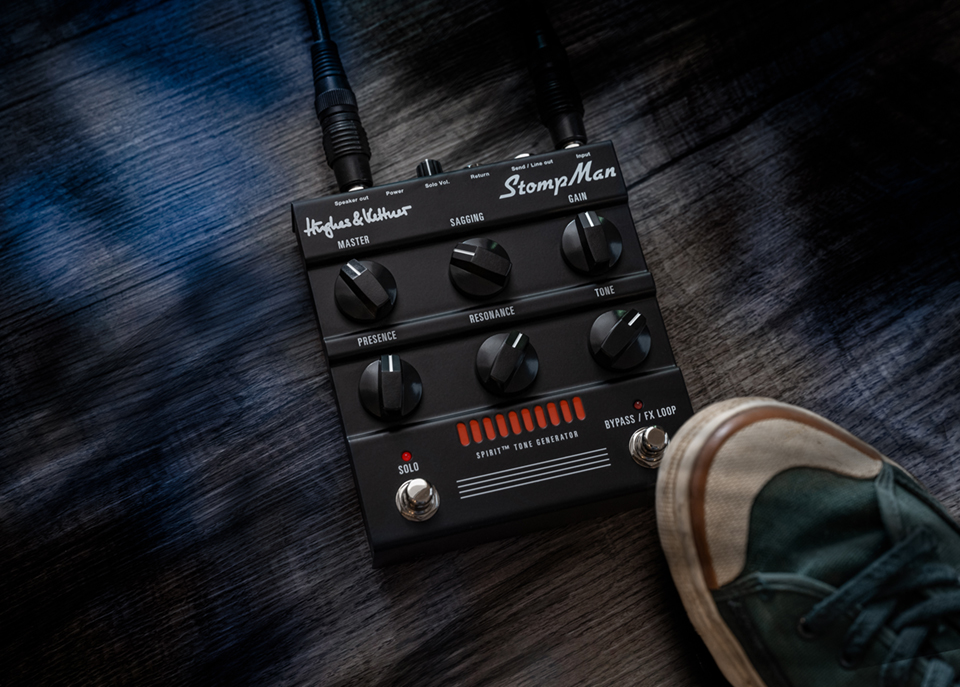
The experienced reader will probably be able to guess for which application the Hughes&Kettner StompMan was designed after just a quick look at the layout of the amplifier in combination with its name. The dimensions of just (W x D x H): 132 mm x 52 mm x 153 mm and the weight of 650 g suggest that the amp was designed for floorboard use. In order to be able to operate the amp, on the other hand, the included power supply unit must be used, since the performance characteristics of 24 V and 2.5 A cannot be supplied by any multi-voltage power supply unit that is normally used in floorboard operation. But the whole thing shouldn’t be a real problem, since the power supply was designed to be relatively flat and narrow and should therefore fit under most floorboards beyond the Nano / Mini series with 2 cable ties or the like. The power supply works worldwide due to its voltage processing of 100 – 240 volts.

The concept of the amplifier, designed as a single channel, is based on the AmpMan, which is characterized in terms of tone control by dispensing with a three-band tone control in favor of a tone controller. In addition to the master volume and the gain controller, the Hughes&Kettner StompMan offers three controllers from the power amp area, which are divided into the areas of resonance, presence and sagging. The sagging controller in particular is a unique selling point, as it emulates the saturation behavior of a tube power amp and can play to its strengths, especially in the crunch area.

The amp delivers 25 watts into 8 ohms, which is more than enough for a regular club gig. Since it is a transistor output stage, the power output varies depending on the impedance of the box, i.e. the amp offers almost 12.5 watts at 16 ohms, but 50 watts at 4 ohms. The Hughes&Kettner StompMan offers 2 footswitches, a solo switch with which the output level can be increased by up to +6 dB (adjustable via a potentiometer on the front) and a bypass switch whose function can be combined on the front with a mini switch FX-Loop toggle switch and we will go into its exact function in a moment.

The design of the amp The Hughes & Kettner StompMan, with its single-channel orientation in the stand-alone function, is based on the “more-or-less-clean” and distorted sounds of the 60s and early 70s, which can be found as a house number in the JMP and JCM area, or to put it another way, Clean is done with the volume control of the guitar and lead / high gain with an overdrive / distortion pedal connected in front of it. The gain range was designed to be rather moderate and focuses more on the power amplifier work, which can be varied very well with the sagging controller even at low volumes. If bypass is activated, gain and tone are taken out of the signal path, but presence, resonance and sagging are still available and deliver finely controllable tube power amp sound. So far everything is fine, but that alone would not necessarily be a strong argument for the amp, so we now come to the application examples of the amp!

The application examples of the Hughes&Kettner StompMan

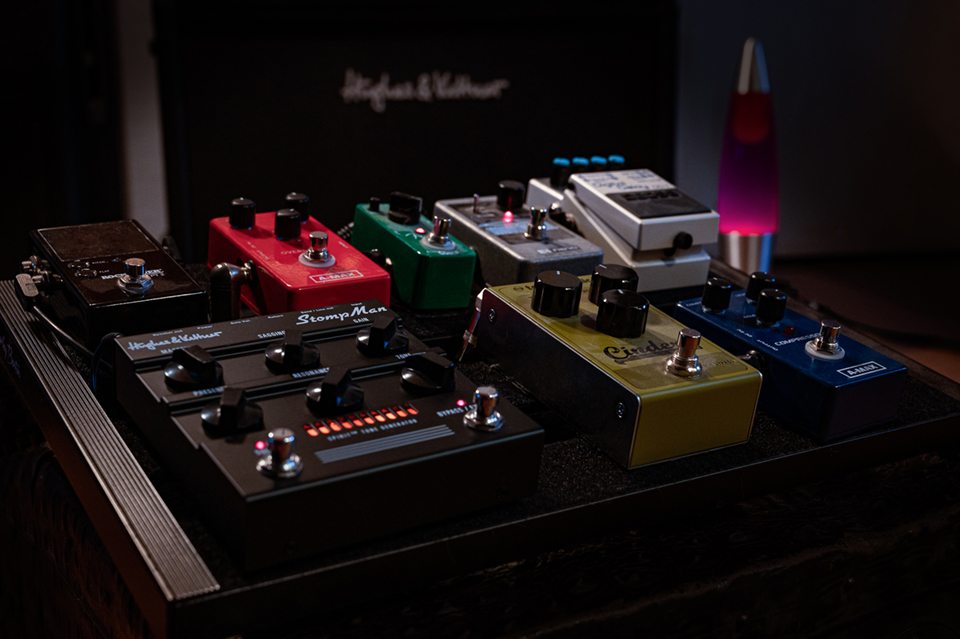
Unlike guitarists who need a modeller as an “all-in-one” solution, a typical pedal board player mostly wants a modular solution where they can express their individuality using their personal pedals. He may also want to connect additional preamps and, depending on the area of ​​application, use separate speaker emulations for direct to FOH or in-ear applications and may also use external noise gates. Here the StompMan can help with a comparatively simple but ingenious setup:

1.) As a full-fledged single-channel amp

Use with booster, fuzz, overdrive, chorus, flanger etc. in front of the input, and reverb or delay effects in the loop is the main application of the Hughes&Kettner StompMan. Here the StompMan is used like a classic single-channel amp including pre- and power-amp sound parameters with a guitar box, with the convenience of a switchable FX loop and a clever solo function to relieve the FOH .

2) As a power amp (bypassing the internal preamp)

Thanks to the integrated bypass, the user does not need to “abuse” the FX return to bypass the internal preamp so that external preamps can be boosted. Bypass removes gain and tone from the signal path, the power amp sound parameters presence, resonance and sagging as well as the FX loop can still be used. To adjust the input level of the StompMan to the output level of the connected preamp, the StompMan offers a trim pot on the underside.

3) Recording via FX Send/Line and Software Cab-Sims

Whether with or without ballasts or preamps, the StompMan output labeled “FX Send / Line” picks up the signal directly in front of the master, so it already contains presence, resonance and sagging. Ideal for going into the line input of the DAW and using software cab sims and effects.

4) In Ear / Direct to FOH / FRFR

Appropriate hardware cab sims can be used for direct to FOH or in-ear applications. Instead of going into the return of the StompMan, at the end of the signal chain you simply go into the input of the Cab Sim and from its output to the console. It is still possible to use the power amp of the StompMan: if you connect the output of the Cab Sim to the return of the StompMan, its power amp amplifies the full-range signal of the Cab Sim FRFR boxes can be operated at the speaker-out of the StompMan.

The Hughes&Kettner StompMan in practice

In the practical part, I concentrated on the stand-alone operation of the amp, since the sound effects of external pedals would change the sound of the amp too much. The first thing that strikes you once again is that the tone control actually makes 80 – 90% of all three-band settings superfluous. On the contrary, the risk of an incorrect setting is massively reduced. Left stop has the typical British mid boost, right stop has a typical scoop alignment, everything in between is infinitely adjustable.

As with the big example of the Hughes & Kettner StomMan (I guess it’s supposed to be a 2203), the tonal effectiveness is kept very moderate, i.e. even with long control paths the change in sound remains moderate. So you can z. B. like to set the Resonance control to the right stop without causing a lot of pumping, but that’s exactly what makes u. the sonic appeal. Once again you have to keep in mind that this is not an all-tube amp, because the analog circuitry in combination with the sagging control makes it really difficult to filter out the difference in sound. The amp is highly dynamic, hangs very well on the guitar’s volume control and offers the perfect basis for classic riffing in blues, rock and traditional hard rock.

For the American clean sound, the Hughes&Kettner StompMan also offers very variable options, for example I was very impressed by a clean gain setting with a strong sagging component. To hear the sagging effect in an A/B comparison, I recorded the same riff with and without sagging, the result speaks for itself. In conclusion, the StompMan can only be given top marks. The amp convinces with tiny dimensions with a very good sound, which is really, very close to the originals in the style of a 2203 or 2204, but has a significantly higher circuit flexibility, which again significantly increases the portability.

Hughes&Kettner StompMan – Clean

Hughes&Kettner StompMan – Crunch 1

Hughes&Kettner StompMan – Crunch 2

Hughes&Kettner StompMan – Humbucker No Sagging

Hughes&Kettner StompMan – Humbucker With Sagging

Conclusion

With the Hughes & Kettner StompMan, the German company has landed another big hit. The excellent-sounding amp impresses with a clever concept, which puts it in the front row of working musicians in terms of transportability and flexibility.

If you want to get the maximum sound out of your floorboard, you should definitely try the amp.

For further information about the amp, please check out THIS LINK and check your language at the upper right corner.

GET YOUR BEST PRICE AT MUSIKHAUS THOMANN OR AT AMAZON

Written by Axel Ritt for Neworleansmusicians.com

Neworleansmusicians.com Podcast can be found on these platforms.
Categories
blog

How I Got Over

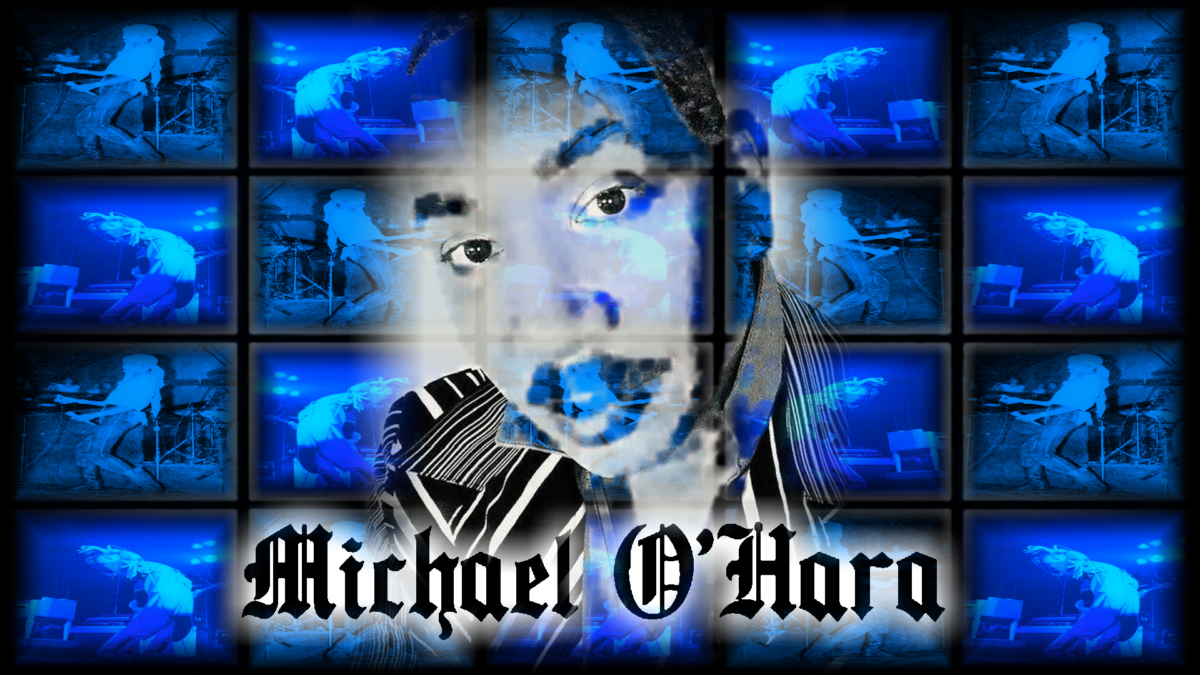
          “How I Got Over”, a gospel hymn published in 1951 by Clara Ward, was inspired by her experience with a group of black female church singers travelling to Atlanta in what was at the time a staunchly segregated Georgia. Threatened with death by racist white men, one lady played that of a woman possessed, sending the men fleeing in fear. In more ways than one this moment parallels the life of Michael O’Hara. From a well-behaved son of a Baptist minister, to a barbaric entertainer, then onto becoming an ordained minister himself, it was a long road filled with his own personal ups and downs. And just like Ms. Ward sang in the song, he was “falling and rising all those years.”

This story takes place from the headwaters of the Mississippi River on down to New Orleans and everywhere in between, where a funk rock band was known to haunt. By this time, what had previously been known as The Spoon River Band had morphed into something greater and more powerful than the sum of its parts. Afront this whirlwind was a man with a turban on his head and a banshee-like howl. The persona known to their fans as The Sheik would emerge from behind the keys, strutting across the stage like Mick Jagger and inciting the crowd into a frenzy. Together he and his band of merry cohorts would reciprocate with the crowd, aiding and abetting their energy. But night would soon turn to day. And before long they had packed up their things and moved on to the next town. To bear witness to such a larger-than-life character on stage, one would never be able to draw the connection between Michael O’Hara the front man for The Sheiks, and Michael O’Hara the child from St. Louis, Missouri.

          With two brothers and four sisters, he was raised in a large, closely knit Baptist family. His father, like many others in his family, an ordained minister. Though far from the singing dancing wild man on stage he would one day become, his interest in music was undeniable. When he was six years old, his parents bought a piano as a gift for all of the children. Michael recalls, “When they unwrapped that it was like meeting my best friend. Within two weeks, and I believe through the power of God, I had written my first composition”. He would grow up performing in a church that played host to hundreds of ministers, pastors, evangelists, saints, bishops, and missionaries. Being trained by Clara Ward and spending time with Mahalia Jackson were some of the experiences that enriched his life. But like Shakespeare pointed out, “All the world’s a stage, and all the men and women merely players; they have their exits and their entrances”. And so, like a player on this great stage, Michael set out to find his own way in life. He did so as the Soldier in this Shakespearian play, “Full of strange oaths and bearded like the pard, jealous in honor, sudden and quick in quarrel, seeking the bubble reputation.”

          For years Michael honed his chops playing on the circuit. At one point he and his brother, Leon O’Hara, joined The Spoon River Band founded by bassist Dave Torretta. He would continue playing in that band until fate stepped in on the night of March 5th, 1976. David Bowie was on the Diamond Dogs tour. And on this particular night, he was playing the Keil Auditorium on Market St. in St. Louis, Missouri. Donned with more glitter than Bowie himself, Michael and his girlfriend sat second row center. When the show went to intermission, a drummer by the name of Rob Sanders approached him. Michael recalls, “Rob came up to me and introduced himself. Somehow, he knew Spoon River was in a transitional phase with losses of members. He said he’d like to form a new band with me. From there, we were auditioning musicians over some months ‘till we found guitarist Leslie Martin Jr., who was added immediately. Nick (Ferber) came later, as he was playing bass in a band called Mama’s Pride at the time.” Wanting to distinguish himself from previous projects and also leave the name with its founder, Michael O’Hara and the Spoon River Band moniker were about to part ways.

          With a double entendre involving the Stokes and Sane blues duo The Beale Street Sheiks, and an at-the-time popular condom company Sheik, the band had found its new name… The Sheiks. True to form, both name sources were surely seasoned and well established, even back then. The blues duo cut records in the late 20’s, and the condom company had been in business since 1931. It was Rob Sanders who liked the idea of paying homage to an incredibly influential blues band. And it was Rob Sanders who birthed Michael O’Hara’s new look as The Sheik. Rob brought up the image of the 1920’s actor Rudolph Valentino and approached Michael with the concept. To hear Michael tell it, “After months of performing as The Sheiks having my huge afro falling into my face from perspiration, and me complaining vigorously, it was Rob who suggested I wear the scarves of The Sheik thus stopping the sweat from getting into my eyes, while giving me a striking image.” The likeness resonated with Michael’s spirit. And he would later spice things up with tight jeans, leather, and fancy jewelry. In more ways than one, this was the beginning of the end.

          As Mac Rebennack explained in his own biography, Under a Hoodoo Moon, He was never previously known as Dr. John. The real Dr. John was a medicine man, a Senegalese Prince that came to New Orleans from Haiti. With a call back to New Orleans’ Voodoo roots and all the eye candy one could conjure, Mac eventually took on this alternate identity. As fans we appreciate these features in their physical sense. And it goes along with what the artists feel the band embodies at the time. But before they realize it, the larger-than-life character on stage begins to inhabit and take over the artists’ psyche. Though being The Sheik helped propel the band and gave Michael a trademark appearance, the persona began to outpace the man. Michael admits, “I had gone so far beyond my home training and the things that were instilled in me as a child. I debauched myself, I was a cocaine addict. I used to drink upwards of sixteen shots of Jack Daniels Black plus Quaaludes, you know. I was a skunk. I really went so far down.” Smoking upwards of four packs of cigarettes a day, sleeping with everything in sight, and even living in a commune at one point, Michael had lost his way. The Sheik had taken over. On the outside, this real-life character had Michael opening for giants like The Rolling Stones, The Who, and The Police. It placed him in the spotlights of the Saenger Theater, the Whiskey a Go-Go, the Superdome, the Roxy, and the World’s Fair. But on the inside, it pilfered little bits of his soul along the way.

          With contacts brewing in Los Angeles, and the realization that his vices were slowly conspiring to kill him, Michael began to think about a complete change of scenery. He would nurture the possibility while on the road with The Sheiks by securing a contract as a staff writer with MCA/ Universal through his personal manager at the time, Stan Plesser. Torn between two worlds, Michael had arranged show dates for The Sheiks but he and the band weren’t seeing eye to eye. He made it known that he would stay with the band for the next year-and-a-half while they made their final decision. In the end it was just Michael and Christopher Geiger, one of his roadies from the band, driving across the desert to L.A. Michael travelled in tears as he turned off the ac in an attempt to sweat out all that colluded to end him. He had to think but was finding it hard to hear his thoughts over the sadness from which he was overcome. And in the back of his mind lived a pact he had made with God, “either save me or kill me.”

           Los Angeles held new hopes for Michael; money in the bank, a more civilized atmosphere in which to work, and the musings of becoming one of the elites he now shared the room with. Invited by MCA to a party with the likes of Robert DeNiro and Barbra Streisand, he recalls how his brand new skin tight leather outfit was received by his family, “And my late granny said, ‘Oh honey’. How you get in ‘em britches? You gotta powder up? I ‘spect I need to get my needle and thread because you about to bust out them britches.” Finding his own way through new surroundings, Michael was finding success despite home sickness and the absence of his band mates. Some of his achievements included songs picked up by Anita Baker, Patti LaBelle, Jody Watley, CeCe Peniston, and Donna Summer. Spike Lee even picked up one of his songs, Feels So Good, for his iconic movie Do the Right Thing. He would eventually leave Los Angeles settling in Fort Worth, Texas, securing his position closer to the Lord in the role of preacher. His church welcoming people of all Christian denominations. Until one day an old friend came calling.

Jimmy Anselmo had been after him for some time to come and perform at his venue, Jimmy’s Music Club. But Michael toiled with the idea and the impact it might have on his now clean and sober life. After much consideration he would eventually accept the invitation. Michael came out of show business retirement to perform a solo act at what was now the Willow, formerly Jimmy’s Music Club, on July 26, 2014 to a packed house. And he was featured in the Times Picayune as well as appearing on several news stations in the area. Being so well received that night was enthralling. Beneath the surface however, the crowd had grown older. The scene before him was no longer the youth-centric hotbed of his yester-year. Michael realized, “When I came out of retirement (for his show at Jimmy’s Music Club), the turnout was amazing. I thought, I’m back! But there’s also this. My fan base, which is considerable, is as old as I am or a little older. They have homes and cars and businesses and children and grand-children. And so, I quickly learned that. It took one night after my opening, which was jam packed. Then the next time I played, not so much.”

Deep down inside, Michael always knew his talents were a gift from God. He could never separate himself from such a strong conviction. As far as show business goes, Michael now opts for more intimate settings and can still be found singing and playing piano all over New Orleans. As for behind the scenes, his passion for writing and for the Lord has never changed. He is a twice published author, having written twenty novels. He also collaborated with acclaimed writer/ producer Robert White Johnson resulting in a Gospel Rock Opera based on the Book of Revelation as told through the eyes of John the Revelator. The production beckoned Michael to once again grace the big stage as the central character and was a huge success. It has been performed for the New York Theater Guild and at St. Louis’ prestigious Powell Symphony Hall, not to mention spending four years on Branson, MO theater stages. And when the pandemic put performances on pause, he seized the opportunity to drop a new album, Journey of a Thousand Dreams, on Rabadash Records where he also accepted the role of Vice President and Head of A&R.

From his early days to the present, I couldn’t help but draw a long-standing connection. At the age of six Michael’s first composition was Guess Who’s Coming to the End, based on his father’s sermon at the time on the Book of Revelation. And recently he collaborated to produce Isle of Dreams, a Gospel Rock Opera dealing with The Book of Revelation. Had it not been for what some might say was divine intervention at the apogee of his relationship with the Lord, his soul would not have made it back to the place where it belonged, sitting before God.

Author: David Trahan

For Neworleansmusicians.com

Neworleansmusicians.com Podcast can be found on these platforms.

Categories
blog

NFTs for Independent Artists

Head scratcher or game changer?

While preparing for a radio interview for a program aimed at independent musicians, I was forewarned that the host would likely ask me about Non-Fungible Tokens (NFTs).  NFTs are supposed to be the next big thing for independent musicians like me, but I had been avoiding the subject, since it’s highly technical and drowning in jargon like “blockchain,” “smart contracts,” “distributed ledgers,” and “bonding curves.”  Even the name “Non-Fungible Token” is off-putting.  Why should musicians even care to learn about it?  All I ever wanted to do was to write songs and perform them at a few gigs!

Anyway, not wanting to seem like a Luddite, I decided to school myself about NFTs.  After some study, I concluded that an NFT serves the same function as a portable flash drive on which can be stored files like digital art, mp3s, video game items, documents, and other digital goods or links.  Assuming that any of those stored digital files are rare or unique, the flash drive itself could become valuable. 
But if NFTs are simply like flash drives, why do we need them?  The answer is that NFTs are created using blockchain technology – like cryptocurrency – that provides a failsafe way to prove ownership of a particular digital asset and assure it cannot be altered.  In contrast, the contents of a flash drive can be easily altered, and absolute ownership by any one person would be fairly difficult to prove.  By imbedding that same information on an immutable blockchain, proof of ownership and identity of the contents are secure. 

To see the implications, let’s say that NFTs existed back in 1952 and the Topps Candy Company minted a Micky Mantle rookie year baseball trading card not on cardboard but using an NFT.  Would it today be seen as a valid collectible worth $5.2 million, just like the cardboard version?  Many NFT boosters would answer yes, and that’s what has helped set off the NFT gold rush we’ve seen in the past year. 

According to Chainalysis (a cryptocurrency research house), an estimated $41 billion was invested in 2021 to create new NFTs, and that amount is likely understated.  That’s billions with a capital B – an amount almost as large as the entire world market for art and antiques in 2021, and more than 3 times the music industry’s total 2021 revenues for streaming, CDs, vinyl, and digital and customized radio services, combined.

The vast majority of those NFT investments so far have been in digital art, rather than music.  But since music, like art, can be digitized, those eye-popping investments have grabbed the attention of many in the music industry.  Depending on who you listen to, NFTs are poised to revolutionize the industry by opening up a new revenue source for musicians that will reduce their reliance on stingy streaming companies, touring, and record label payouts.  On the flip side, others say NFTs are just a fad generated by the current over-the-top infatuation with cryptocurrency and will soon confirm P.T. Barnum’s observation that there’s a sucker born every minute. 

Some recent attention-grabbing NFTs include one by Twitter founder Jack Dorsey who just auctioned off an NFT that links to a jpeg of his very first Tweet for $2.9 million.  Another recent NFT sale that astonished even its creator (Mike Winkelmann, an artist also known as Beeple) was Christie’s auction of his NFT-linked jpeg art entitled “Everydays” for $69 million.  What did the purchasers get for those millions?  In the case of Dorsey’s Tweet, the purchaser received a certificate of authenticity signed by Dorsey’s @handle, but no copyright or commercial rights for the Tweet’s image were included.  In the case of Beeple’s $69 million jpeg, the purchaser also seemingly did not get much – just a link to the file and some vague language about display rights.  

Could these simple jpeg files actually be worth that much?  It’s common wisdom that the fair market value for any item is the price agreed to by a willing buyer and a willing seller. That’s an economic fact but examples like the above have left some people questioning whether NFT sales at such astronomical prices can form the basis for a sustainable economic model.  

If you were to buy the Mona Lisa, you would get a one-of-a-kind physical painting, with the original brushstrokes and pigments carefully applied by the great Leonardo DaVinci himself over 500 years ago.  With a digitized piece of art or music, you get something that can be duplicated exactly digit-for-digit and is likely already widely shared on the internet, and can be downloaded anytime by anyone simply by right-clicking the image and hitting Save As.   In essence, these NFT purchasers got bragging rights but not much exclusivity.  It should be noted that NFTs do not actually contain any digital files – rather they contain a link to files that are stored somewhere else, a setup that raises a host of access and security issues. 

Despite these questions, many recent NFT offerings have been remarkably successful and have naturally opened the floodgates to digital offerings by numerous other artists looking to cash in on the current craze – some excellent and some showing questionable talent – but most priced far higher than one might think considering that all you get is a link to file. 

In the music realm, one of the earliest NFTs was created by the Kings of Leon who sold tokens for $50 each that provided a download link for their latest album, artwork and access to a limited vinyl edition, along with entry in a lottery to win VIP concert seats and other perks. The band also sold high-roller level NFTs (so-called golden tickets) that included a lifetime pass for the band’s concerts, guaranteed front row tickets and VIP treatment on every tour, and other perks.  One of these “golden tickets” sold for about $160,000.  The ones that did not sell were destroyed but altogether the Kings reportedly raked in some $2 million for these offerings. 

Taking a slightly different approach, André Allen Anjos (also known as RAC) released 100 NFTs linked to a cassette tape of his latest album BOY.  Each token (known as $TAPE) could be redeemed for a physical copy of the tape.  Since the auction, those tokens have changed hands for as much as $4800.  Justin Blau also known as 3LAU auctioned for $11.6 million a collection of 33 NFTs that included tokens for vinyl records, unreleased music, special experiences and an opportunity for one token holder to collaborate with 3LAU on song creation.

Other recent random NFTs include Duran Duran auctioning 100 images taken from its AI-created video for the song Invisible;  Whitney Houston’s estate auctioned for $1 million a “never-before heard” demo track she recorded when she was 17 years old, along with a digital art video; Mick Jagger joined with Foo Fighter Dave Grohl to benefit a charity with an NFT auction of a new song coupled with 3D art by Oliver Latta (who goes by the name Extraweg); and Grimes made $5.8 million with some of her artwork NFTs that sold out in less than 20 minutes. 

Those transactions are fascinating but an even more intriguing idea is now evolving, which takes advantage of the NFT’s ability to execute “smart contracts,” which are simple if/then contracts imbedded in the token that run when certain preset criteria are met.  Using these, the creator of an NFT might automatically get a commission on subsequent resales.  In that same vein, multi-platinum recording artist, Pia Mia, auctioned an NFT collection in December that included not just her new song “Whole Thing” and artwork by Ben Ditto, but also 10% of the master royalty for that song.  3LAU recently gave tokens to 333 fans entitling them to 50% of the streaming rights to his latest song, “Worst Case.”  As of this writing, 3LAU’s royalty-bearing NFTs are trading in the $5000-7000 range giving them an aggregate value of over $2 million.  


Hand-in-glove with the explosive growth of NFTs, we’ve seen the emergence of numerous online marketplaces – such as Opensea, Rarible, and Nifty Gateway – where people can create, showcase, buy and sell their NFTs.  There are now dozens of such marketplaces with an aggregate annual trading volume in the tens of billions of dollars.  Meanwhile, new types of cryptocurrencies are being launched at the rate of one per day. 

For musicians, one conclusion that can be drawn from all this is that to be successful, an NFT must have some element of collectability, i.e., some scarcity, rarity, or baked-in benefit, that combines ownership with exclusivity.  We do not see successful music-only NFTs, i.e., those that link solely to stand-alone digital mp3 files, precisely because mp3s are not scarce.  Consider that the goal of every musician is to have their music become ubiquitous – broadcast on the radio, streamed on numerous playlists, danced to in clubs, downloaded, synched, listened to on CDs and anywhere else a song can be played.  It’ll be hard to convince potential NFT buyers that an mp3 file is rare or collectible when it’s available everywhere. 

Moreover, it wasn’t very long ago that the peer-to-peer file-sharing service Napster had 80 million registered users happily paying nothing to download music collections from other users, some of whom boldly proclaimed that music should be free.   It’s going to take a lot of work and chutzpa to convince many of the same people to now pay substantial sums of money for an mp3 simply because it’s linked to an NFT that’s bundled with some artwork or a t-shirt.  This may change if clever marketers can somehow tweak an mp3 to convey rarity such as by indelibly marking one as an “original file” or a “limited edition,” assuming that the marketplace will value such things.  But at the moment one mp3 pretty much looks like another – unless of course it’s bundled with a bunch of other unique goodies or the promise of royalties.

A second conclusion is that average working musicians should not think that by minting an NFT it will suddenly start raining money.  The headline-making NFTs yielding big bucks for their creators are pretty much the province of very successful multi-platinum Grammy winning artists, with hundreds of thousands of followers and very high profiles.  These are not the common folk of the music world.  Sure, lower-level artists can and will issue NFTs but stripped of all the technobabble, these more likely resemble GoFundMe campaigns, where fans support their favorite local artist by swapping dollars for t-shirts and memorabilia, except those benefits are linked to an NFT instead of a fulfillment house – basically old wine in a new bottle.    

This leads me to a third and perhaps less obvious takeaway, that many NFTs are being snapped up not by fans or supporters of a particular artist, but by investors and speculators.  In a review of the overall NFT market, Chainalysis found that just 9 per cent of NFT owners held 80% of the market’s value, and many of those engage in flipping to turn quick profits.  Cooper Turley, the Editor of DeFi Rate, observed with respect to RAC’s cassette $TAPE NFT, “Trading at $100 just 2 hours after its release, the $20 entry price was quickly purchased in heaps by speculators, with many buying upwards of 5-10 $TAPE at a time. This was the first signal that there was no intention for the vast majority of early buyers to redeem the product.  In fact, roughly 50 of the 100 total tokens were scooped up in the first minute of the offering going live.”

Finally, most of the artists who are pioneering the use of NFTs are young, hip and tech-savvy, which is also true of their fans.  Given that demographic, it’s no surprise that genres like pop, EDM, dubstep, house, electro-pop, hip-hop are disproportionately overrepresented in the most successful NFT drops.   Conversely, more traditional genres – blues, classic rock and country, for example – have not been on the cutting edge of the NFT boom.  This has implications for old school artists who appeal to an older less tech-savvy demographic who may be more skeptical of NFTs and unwilling to tackle the technicalities of purchasing them.

Looking ahead, if we want to peer further down the NFT rabbit hole, we may see a future where many of us are supposed to be sitting around in virtual reality headsets, hanging out in virtual nightclubs, and using crypto to buy and sell NFT-based assets including virtual real estate where we display our NFT art and listen to our NFT music.  That may sound like something out of the Matrix but for some it’s already here.  In one online virtual world known as Sandbox, Snoop Dogg is building a virtual replica of his luxurious California home where fans can come and hang out, and someone else just paid $450,000 for some virtual land in Snoop’s vicinity. 

The Sandbox will be even more crowded in the future due to companies like Adidas that purchased 144 parcels as a platform from which to market digital and physical wearables.  Meanwhile Warner Music is planning a virtual music theme park where its artists can “hang out” and mix with fans, to be accompanied by a sale by Sandbox of adjacent parcels for music fans.   Elsewhere, a virtual real estate developer recently put up $2.5 million to purchase a parcel in Decentraland, another virtual world.  The digital asset manager company Grayscale estimates that the entire virtual real estate market may be worth more than a trillion dollars and I personally think that’s what this whole game is about – NFTs are a gateway drug that will hook people into a plethora of virtual realms that generally come under the heading of the metaverse. 

It’s obvious that NFTs have been successful and profitable for some big-name entertainers in the recent past.  It also seems obvious – to me anyway – that the market for NFTs is experiencing irrational exuberance and driven by speculation, with some folks paying tens of millions of dollars for digital files that can be had for nothing, through simple expedient of “right click and SAVE AS.”  It also may soon be saturated. 

So, what happened to my radio interview?  It turns out that my conversation with the host pretty much focused on live music, studio recording and songwriting, so we never got to the subject of NFTs, and that’s pretty much the story for most of the musicians I know who also have not gravitated to the subject.  In fact, there’s probably more interest in exploiting the 70-year old technology of vinyl than there is in embracing NFTs which appear to offer very little value for money to purchasers and performers alike – except for wealthy speculators and Grammy winners. 

About the author

Jon Spear is an independent musician and retired public policy analyst with a law degree from American University.  (He is also an alumni of Bruce Houghton’s Berklee College course of music technology). 

Neworleansmusicians.com Podcast can be found on these platforms.