Categories
blog

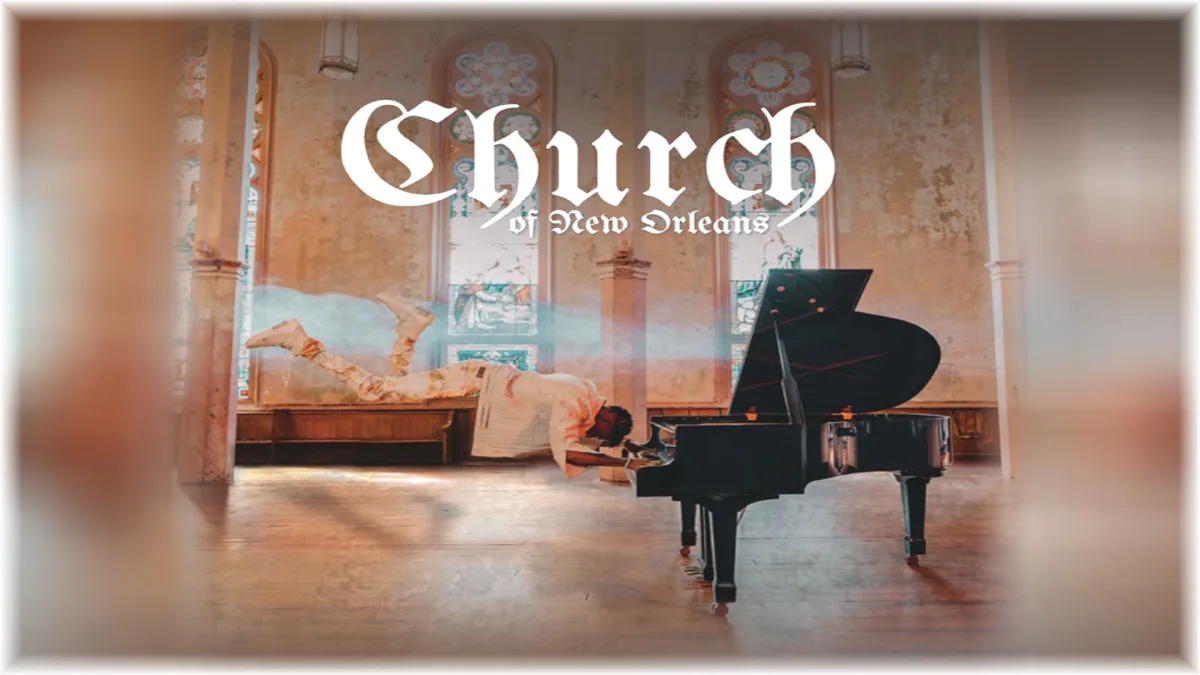
Album Review: Church of New Orleans

Today’s hymn and choir is brought to you by Kyle Roussel, a composer and multi-instrumentalist who plays with the cultural staple and beloved institution known as the Preservation Hall Jazz Band. Thank you for joining me on this journey. I cannot help but reminisce on my Sunday morning experiences of getting a Bloody Mary and attending mass in Treme’ or the notorious Saint Louis Cathedral in Jackson Square. Kyle Roussel’s new album, Church of New Orleans, reminds me of this. And now please rise…

Our service today begins with the song “Daylight” (remix feat. Jamison Ross), a bright and angelic blend of gospel, R&B, harmony, and an infectious joie de vivre. I am immediately reminded of my first Jazzfest Experience as a young, curious soul venturing into magical musical grounds. Wandering into a sea of music amongst the serene landscape, I reached the gospel tent, a calliope of audio bliss. This smaller but impactful stage held the true spirit of unity and creative celebration. Coming full-circle, it captures everything I love about the city: its culture, spiritualism, diversity, creativity, resilience, and the mantra to celebrate not for what we have but for what we have not. “Daylight” is that jam, that song in the morning that you never knew you needed until its big band sound grabs you from the depths and propels you into a spiritual euphoria. I can’t help but get so many great vibes from this song, ranging from Motown soul, Treme’ funk, gospel serenade, and a warm Fertile Crescent shout of faith and progression. 

The appeal of Kyle Roussel’s masterpiece, Church of New Orleans, is that it continues to evolve and inspire. As we reach the second song from the album entitled “Don’t Wait” (featuring the hometown trombone extraordinaire Mr. Glen David Andrews), we hear a second line style funky beat accompanied by a tuba and a reed organ. The two are backed by upbeat percussion and follow together with short stabs as Kyle delivers the word.

Our service continues with the song “I Can Do Anything”, featuring the legendary singer Aaron Neville with an adorable cameo toward the end. Kyle’s experience and creativity as a composer shine effortlessly on this beautiful track that embodies and celebrates what I love about New Orleans. This track is exemplary of that sound with its own cultural gumbo of soul.

And now ladies and gentlemen, join hands for the melodies of Mr. Kyle Roussel and the Preservation Hall Jazz Band, as the jazz swings an instrumental beauty entitled “Pickles”. A sweeping piano piece played by Kyle presents itself as a mix of Chopin, Jelly Roll Morton, and Stevie Wonder in a cosmic masterpiece all his own. A delightful piano boogie whisks me away with funky rhythmic beats and soul that could only be conjured in a special cloud painted by pure imagination. I suddenly feel my anxiety dissolve into a blue sky above Bayou St. John, as Mr. Roussel’s hypnotizing piano illuminates this gospel. A star-studded, reimagined composition treads waters into heavenly, uncharted melody. 

We break into a jazzy gospel organ sermon for the next song, “Changes”, which features the beautiful stylings of John Boutte. The lyrics strike me to my core as the chorus triumphantly sings “Everybody wants to change the world, but nobody wants to change themselves”. It is as beautiful as it is haunting, a reminder of how far we think we have come as people while so far behind in our unity. 

“Sankofa” brings the album back to the mix of lush Caribbean and indigenous New Orleans Congo Square rhythms. Kyle once again provides us with an audible historic timeline of musical influences, spicing up the song. It’s a celebration of culture and R&B, reminiscent of a Skull & Bone Gang vibe. Adding to the rich layered musicianship is a strong harmony vocal session bellowing like a riverboat matinee’. 

The following track is titled “Close to Me”. A tribal groove sets us into the mood right off the get-go, followed by sweeping keyboard harmonies. Some of the production reminds me of old school Stevie Wonder and Hall & Oates. This composition delivers a silky bass line and mesmerizing vocals by Zigaboo Modeliste and Quiana Lynell, respectively, and will leave you in a blissful trance. This album is a much-needed breath of fresh air in every creative sense. 

Next up is “When I Feel Your Energy Moving Me”. The vocals really stand out in this one. Complementing the lyrical style is a symphonic crescendo and Sade feel. 

“Nothing is Impossible” features Tracci Lee and an undeniable dance swagger in a collective of heavenly arrangements. The message is that nothing is impossible if you believe. This chorus hits hard as a wake-up call to seize the day, love all, and be in the moment.

“African Gumbo” does not stop short at packing a fine collective of musical brilliance simmered into a well-cultivated Roux. This is a generational work of art many decades in the making, featuring work of the legendary George Porter Jr. & Charlie Gabriel of New Orleans royalty. 

The final song in our service is titled “True”. I will say this, this album has me in the pew alone, but also with so much love in my heart that I do not feel an absence in my spirit. Instead, I feel a drive to continue to be a good soul while I am in a waking life. Times are hard but when I hear this organ ring out and Miss Irma Thomas singing that angelic praise, I feel a little more blessed. I don’t have much, but I feel rich in the wealth of music that Kyle Roussel and Miss Irma Thomas provide. This should be the soundtrack to the lives of myself and everyone.

Church of New Orleans is a wonderful journey no matter what your musical tastes seek beyond the surface. The beauty of this album is its ability to capture the wide array of musical influences that New Orleans has embodied over time. Sometimes people might say to me, “You don’t sound like you’re from New Orleans”. I always smile and point them to albums like these.  Because I then reply, “New Orleans does not sound like me, it sounds like this”. Of the many themes contained within this album, two stand out, our local history of New Orleans’ global musical influences, and a worldwide celebration of joy and harmony. Both feel so prevalent in his work. At times, the album delivers a strong brass and rhythm section that gets to the boogie without wasting a beat. It is a prime example of polished song crafting that both gets you dancing in the street on a Saturday night and dancing in church the next morning on Sunday. Lord knows I’ve stumbled into mass half hungover, feeling it, and joining into the congregation of my sadness regaled. It is a prayer sent and received that we never knew existed, a dance and soul that forever changes our hearts. The Church of New Orleans is that album that ignites the candle, making sense of mysticism and unity with every note played, every word sung, every moment spent. This photo of a moment, this tip of the hourglass, Church of New Orleans confirms a magnum opus for Mr. Kyle Roussel. I wish both him and all of you a blessed day. Go in peace. 

Author: Ryan McKern

Editor: David Trahan

Neworleansmusicians.com

Elevate your health and well-being. Shop Realmushrooms.com and support this site! Here’s 20% off just for our readers. 

https://shop.realmushrooms.com?ref=1494

Donate to this site:

https://www.paypal.com/donate/?hosted_button_id=83ZWJWHNRAYNU

Categories
blog

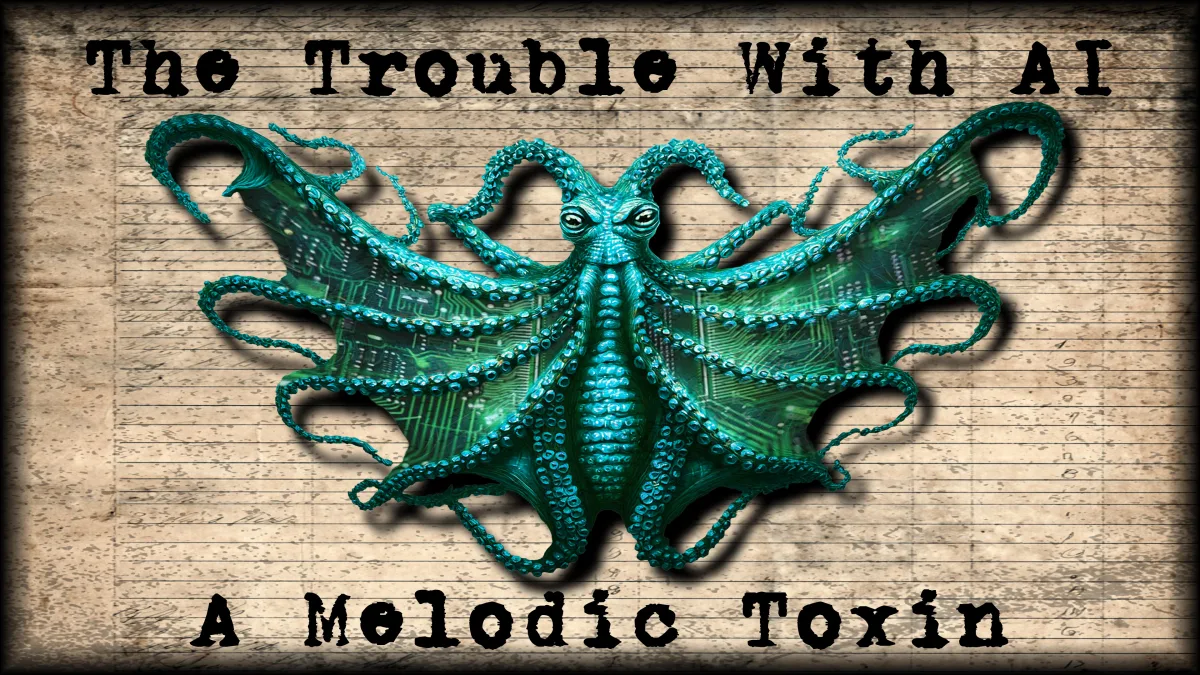
The Trouble With AI: A Melodic Contaminate

Looming on the horizon has been a simulation of human intelligence that can outsmart, outpace, and outwork every one of us. Without the general population’s ability or willingness to understand and harness such technology, the necessity of a human presence will diminish. This is the popular fear. But what of the arts? What happens when Artificial Intelligence is allowed to meddle in a means of conveyance driven by human emotion? Well, we humans get awfully emotional about that. The nay-sayers claim that the loss of integrity is shameful and the larceny of authenticity is criminal. Regardless, in our lifetime we have witnessed the last moments of knowing something is real. And the inability to decipher or create something real that contends with AI will cause an inevitable shift in the market.

Data entry, customer support, and quality inspection… these are the benign casualties that were welcomed in the early days of AI. And to be fair, its presence created jobs like AI trainers, prompt engineers, machine learning engineers, AI ethicists, and data scientists. This phenom is not the first of its kind. Divisive sentiment was no stranger during the birth of the PC or during the digital imaging explosion. Computers eliminated the necessity for filing clerks, Typists, bookkeepers and draftsmen while creating occupations such as software developers, IT support specialists, system administrators, and cybersecurity professionals. Digital imaging did much the same with the elimination of physical elements and the introduction of jobs like digital photographers, photo editors, and imaging software developers. Ahh, but beyond lowering costs and improving resolution, digital imaging fronted a furtive fallacy, editing. It marked the intrusion of technology into the creative arts. As Marvin Gaye once said, “People say, believe half of what you see, son, and none of what you hear”. So, if we haven’t believed images since the early 90’s, where do you think AI’s presence in music will take us?

Overall, AI seemingly touts several advantages. It can reduce time, effort, and skill, inspire new direction, and contribute interesting representations. It can also standardize practices while removing centralized control. But if you go back and re-read those “advantages” through the eyes of the creative, all but the last fail to appeal. In fact, they degrade the very principles on which the creative arts stand. The disingenuous nature of art not born of the human mind forces a societal disconnect. Technology outpaces our comprehension and ability exponentially. In doing so, it furthers itself from the human psyche and the emotions that drive artistic expression. Music, in particular, reserves its impact in the ability of the listener to feel connected to the artist. If the intelligence of which we speak is artificial, then so are these connections. While AI may skyrocket an artists’ visibility and/ or image, it will not positively affect their impact for these reasons. It will erode trust.

You may ask what my thoughts are on all of this. And I will begin my answer by asking several questions. What are we doing? What effect will this have on empathy, creativity of humankind, the ability of the market to serve human interests; the way we think, what we think about, how we feel, or how we relate? If we cannot trust the source, and the source is not one of us, does it truly hold significance in the world of art? I believe that refusing something based on principle is not always a pragmatic approach. It is often the opposite. And I am guilty of this. I believe within the battle of altruists versus a paradigm shift, fate seldom sides with the former. Perhaps authenticity will become the underground. I believe arguing against AI on the basis of job elimination, overall, is a moot point. That paradigm shift will occur, and in its wake a slew of new jobs will be created. Besides, too many of us are guilty of ego identification. We identify with our jobs, our possessions, and our nationalities which are merely temporary aspects of the broader self and distinct from true awareness. But, and this is a big but, when it comes to the arts, the argument moves to the forefront.

Who are the bad actors in all of this? For the principles of greater good, I would say it’s anyone who distributes AI content to an unknowing public. As it stands now, there are no standards or laws I know of that mandate labeling AI content as such. And therein lies the true issue. Artificial under the guise of genuine is deception. There are federal and state statues that protect consumers like the Federal Trade Commission Act Section 5: Unfair or Deceptive Acts or Practices. This prohibits misleading business conduct and is enforced by agencies like the FTC and State Attorneys General. There are also intellectual property rights that combat counterfeits. These laws, along with the FTCA, allow for both government enforcement and private lawsuits (including class actions) against fraudulent or deceptive practices. But so much of these materials are archaic and left to interpretation. These should be expanded upon to include AI specifically, and implement consequences similar to that of the original Copyright Law and subsequent amendments compiled in Title 17. This includes penalties ranging from significant financial damages in civil cases to criminal charges (fines, imprisonment) for willful infringement for commercial gain.

Current laws pertaining to AI only protect the artists and their works, not the consumer, and are still in their infancy. Herein lies the mind-blowing conundrum. In order for copyright law to include language that protects the consumer from AI music, AI music would then have to be recognized by copyright law. And in order for that to happen, AI music would then have to be able to be copywritten. Under the Copyright Office Guidance,the U.S. Copyright Office has stated that works created entirely by AI without human involvement are not eligible for copyright. Only addressing works created entirely by AI, in my eyes, is deliberately turning a blind eye to the current soundscape. If they allowed it to be copywritten and included questions that identified what portions of the music were AI, then a special copyright could be placed on the work. In doing so, the work would be identifiable by the public and distributing platforms as AI music. With what is currently in place, we can’t make an informed decision. If we could, grass roots efforts and overall preferences might turn the tide. Protecting the people and allowing us to decide inherently protects the artist. So, I feel as though this should be provided for both in the FTCA and the Copyright Law.

If only there were a way to distinguish between AI music and human music, we could all decide for ourselves reasonably and without further context. Four days ago (Jan 13, 2026), Bandcamp introduced a ban on AI music. The platform proclaimed, “We believe that the human connection found through music is a vital part of our society and culture, and that music is much more than a product to be consumed. It’s the result of a human cultural dialog stretching back before the written word”. But their means of enforcement depend upon user flagging and a nonspecific team review. While this may seem a false sense of hope, it can be interpreted as a groundbreaking social message. Perhaps what follows will be the turning of AI on itself in the creation of tools that seek out its presence in published music. I believe we should agree upon an inaudible frequency and make its attachment a mandated feature in every AI audio generator. This would circumvent any dishonest copyright applicants that willfully answered my proposed copyright application questions falsely. With or without the help of our government, we could accomplish so much if we would all come together. I’ll leave you with a final question. If the mission of music is to promote unity and bring about a true awareness of self, what better resonator of this sentiment can there be than a human?

Author: David Trahan

Neworleansmusicians.com

Elevate your health and well-being. Shop Realmushrooms.com and support this site! Here’s 20% off just for our readers. 

https://shop.realmushrooms.com?ref=1494

Donate to this site:

https://www.paypal.com/donate/?hosted_button_id=83ZWJWHNRAYNU

Categories
blog

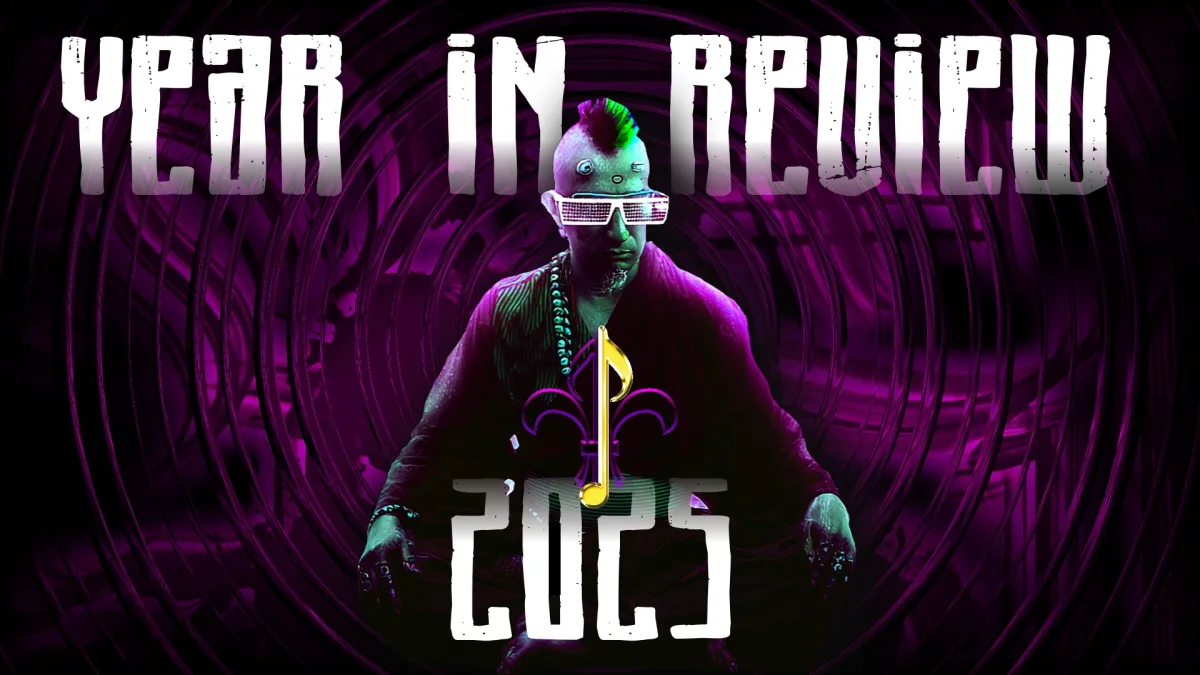
2025 Year in Review

Yearly reviews began as a standard I set to benefit myself, the fans, and the musicians that are members of Neworleansmusicians.com. Transparency is essential for letting people know what they can be a part of when joining my site. These reviews also serve as a healthy way to remind myself and let it be known to others what I have accomplished for my site and for musicians across Louisiana. Regardless of your chosen profession or hobby, taking personal inventory provides an invigorating look at your past and lends direction to your future. I highly recommend this practice to everyone. So, here is a look at year four in the world of Louisiana music on Neworleansmusicians.com.

Coverage of our music scene spanned across every podcast platform, six social accounts, my website, my blog, and my Youtube channel. Coverage included a new music label, a recording studio, a music magazine, a zydeco origin documentarian, a music television producer, several DJs, musicians of all instruments, many album releases, and complete tours. Genres stretched from funk to country to grindcore to hip hop and beyond.

Macro takeaways:

  • An infusion of a sense of unity through the honest depiction of life’s battles shared by all musicians, both on and off stage.
  • The repeated expression of desire for community and cohesion amongst Louisiana musicians.
  • The prevalence of an absence of knowledge within the realm of music business including the fear and uncertainty associated with it.
  • A simplified look at key turning points in musicians’ paths to success.
  • How crucial reflective thought really is and what we can learn from the hindsight of others. 

Micro takeaways:

  • Vocal and instrumental techniques
  • Recording studio preparedness and practices
  • Booking and marketing tips
  • Preserving your health and mental wellbeing
  • Overcoming drug and alcohol addiction
  • How to use live crowds as a resource
  • Specific pitfalls to avoid in business and personal lives

And the best part about all of this… these are all gems from Louisiana musicians and music business professionals.

Interviews:

NOM kicked off the year with radio DJ/producer/booking agent Anthony Daniels and ended it with vocalist Ghalia Volt. Also showcased were members of bands that have been in existence for decades and have toured the world many times over like vocalist Mike IX Williams of EYEHATEGOD and vocalist Jason Pilgrim of Flesh Parade. In other coverage, notable discussions included methods of experimental sound, drawing inspiration from tragedy, the demise of the rave scene, and navigating foreign countries while on tour.

Video:

I launched vertical format in the form of short videos and consistently averaged 80-120 shorts a month. I began posting on six social platforms every day. I also created an additional slot within my long-form videos. I’ve always featured a band in the intro to my videos and now I have a slot in the middle to feature more bands. This enabled me to feature 84 bands within 39 artist interview videos. Also, this year I was able to expand the variety of production to include things like behind the scenes, music videos, and a band mockumentary.

– Youtube Results:

334.5K Views (previous year 8.9K) UP 325.6K

3.7K Watch time (previous year 818.3) UP 2.8K

431 subscribers (previous year 127) UP 304

17.4K monthly audience (previous year 142) UP 17.2K 

Online Presence:

Some of Neworleansmusicians.com’s online accounts had lain dormant due to lack of a feasible way for me to post in so many locations. I spent some extra money this year on subscriptions to services that would consolidate and streamline this process. With more work and this creative and logistical edge, things not only kept moving, but they also improved! I maintained 16 genre-based playlists on 11 music streaming platforms, adding countless artists to these rosters. They contain mainly music from site members and a few artists I have interviewed.  Facebook was always a mainstay. But I also began posting content dailyto Youtube, LinkedIn, Twitter, and Instagram, including an expansion to TikTok. I was able to increase overall audiences across all social platforms. Unfortunately, LinkedIn does not serve these statistics. But my most notable strides were as follows:

Facebook: added 2,493 followers (1.2 mil views)

Youtube: added 431 subscribers (334.5K views)

Instagram: added 220 followers (52.5K views)

TikTok: added 328 followers (43.4K views)

Website:

Providing a networking website with user-generated content, video and audio streaming and all sorts of other bells and whistles has undoubtedly been my most expensive undertaking ever. But this is a passion project that, year after year, has unified so many artists with a place to converge and display their talents. And it is a place that truly rewards them for their efforts, asking nothing in return. Amid the on-site buzz and activities, I was able to add 29 new site members. With them they brought 62 songs, many of which I featured in my podcasts and videos. Honestly, there were too many music additions by existing site members for which to account. And so many of those were showcased on my podcasts and videos as well. This year undoubtedly set records in terms of new music content on Neworleansmusicians.com.

Podcast:

This year I made the decision to apply to the Audacy Podcast Platform and was accepted. Under their umbrella, Audacy has enabled me to broaden my audience and gain sponsorships. Due to the migration, annual statistics for the podcast could not be collected. But I did implement a new podcast tracking system that can finally span all platforms accurately. I look forward to discovering what a year looks like in terms of listenership for 2026. I produced and published 24 episodes, interviewing 20 artists in our scene. Some of these interviews were so interesting to me personally that I had to create part two! And I have to say this. After sitting with these musicians and hearing their life stories, I possess a love and admiration for these people that I cannot describe. I’ve stayed in touch with many of them and have always made myself available for their subsequent calls or requests.

E-commerce:

In 2025 I completely redesigned the look of NOM’s e-commerce store. I also introduced 20 new original clothing designs that can be found only on my site. Frankly, I’m jealous because I can’t afford to own them all! I added sizing charts to many, if not all, products. I also consolidated the manufacturing list to include as many domestic labels as possible, shortening shipping times and lowering retail prices. Methods of payment now include 8 credit card companies, Shop Pay, Paypal, and seven different cryptocurrencies. I am excited to offer clothing designs reflective of Louisiana’s music scene and offer them inexpensively.

Because of Neworleansmusicians.com, the thoughts and voices of Louisiana’s musicians were delivered to over 1.6 million people across the world. The reach of their albums, shows, and life experiences were amplified exponentially. Musicians were connected with opportunities, and the strength of our community was emboldened. This came at zero cost to our musicians, listeners, readers, and viewers. It is what the Neworleansmusicians.com logo stands for; community, strength, and freedom. If I were to point to a specific brand identity it would be this. I appreciate you taking the time to celebrate 2025 with me and usher in the new year.

Author: David Trahan

Neworleansmusicians.com

NOM on Youtube: https://www.youtube.com/@neworleansmusicians

NOM Podcast: https://pod.link/1617150338

Donate to this organization:

https://www.paypal.com/donate/?hosted_button_id=83ZWJWHNRAYNU

You can also support Neworleansmusicians.com by shopping with our sponsor, Realmushrooms.com. Here’s 20% off just for you. 

https://shop.realmushrooms.com?ref=1494

Categories
blog

Favorite Music Podcasts

If you ever find yourself wanting to listen to podcasts about music, here’s your list! Listening to podcasts while you work, exercise or drive can be a way to feed your brain throughout the course of your day. There are so many podcasts out there from which to choose. Personally, I’ve been obsessed with music ever since I can remember. And I really enjoy learning about the lives of musicians, how music is made, what music scenes are like in other parts of the world, and music history throughout the ages. This list contains a bit of all those things and includes music from all genres. I recommend using the links to follow the shows now so that they pop up in your streaming library. The next time the mood strikes, their latest episodes will be a click away.

Music Marketing Manifesto:

Music Marketing Manifesto is a leading resource for today’s DIY musicians, hosted by John Oszajca. John is a Music Marketing Expert, a Former Major Label Recording Artist, and one of the pioneers of Direct To Fan Marketing in the Music Industry.

Apple: https://podcasts.apple.com/us/podcast/ai-workflows-integrating-ai-into-your-music-marketing/id483256618?i=1000631198051

Spotify: https://open.spotify.com/show/2FMi4GsgHzvO9mVojglQnJ?si=f811f4420ee442ea

Broken Record:

Music and storytelling meet on Broken Record, where artists across genres and generations sit down to explore the joy, chaos, and vulnerability of creating-and what it means to devote a life to music. From legendary icons to groundbreaking new voices, each episode captures artists in conversation sharing the inspirations and experiences that shape their craft.

Apple: https://podcasts.apple.com/us/podcast/broken-record-with-rick-rubin-malcolm-gladwell-bruce/id1311004083

Spotify: https://open.spotify.com/show/6UsuhRMTD9O71DznRP8540?si=36a75864d3174849

DIY Musician:

Making music and building a career is more accessible to musicians than ever before, but how do you actually get your music in the ears of real music fans? The DIY Musician Podcast features interviews with promoters, lawyers, publishers, bookers, and artists of all styles and backgrounds to bring you the all the latest in music promotion and marketing.

Apple: https://podcasts.apple.com/us/podcast/diy-musician-podcast/id253809240

Spotify: https://open.spotify.com/show/007rafxtDguQUkIhzKCW7m?si=87e834fc0bda4cf2

Fresh Era:

A guided audio journey into the lives and careers of hip hop’s pioneers, documenting what it was like on their way to the top. The podcast is a detailed chronicle that cements the legacies of the legends while answering questions fans have had for decades.

Apple: https://podcasts.apple.com/us/podcast/fresh-era/id1560521011

Spotify: https://open.spotify.com/show/17OEBipGtx9Uj6e386Oqpq?si=be2a4e8cf3474d46

Neworleansmusicians.com Podcast:

Join us as we take a look behind the scenes with the independent musicians of New Orleans and surrounding areas in Louisiana. Learn about upcoming projects before they drop. Experience the rich heritage of iconic venues and get first had accounts of exclusive events. Musicians are remarkable people. Get to know them, their struggles, and the inspiration for their art. Neworleansmusicians.com is dedicated to uplifting the artists and providing them with the tools necessary to elevate their craft. We shine a spotlight on them, as well as highlight the music scene and educate everyone with our interviews, album reviews, and music scene news.

Apple: https://podcasts.apple.com/us/podcast/neworleansmusicians-com-podcast/id1617150338

Spotify: https://open.spotify.com/show/6PB9BrQJeNHQ60LN74fblW?si=77dc602c0f564f46

No Dogs in Space:

No Dogs In Space is a music history podcast featuring Marcus Parks and Carolina Hidalgo of the Last Podcast Network. Season 1 – Punk Season 2 – Alternative Season 3 – Experimental Rock & Pop

Apple: https://podcasts.apple.com/us/podcast/no-dogs-in-space/id1495604041

Spotify: https://open.spotify.com/show/7pg4bQx8OsDIiDFZ7XtKy0?si=bf6e68b745ad4319

Tetragrammaton with Rick Rubin:

In-depth interviews that may blow your mind.

Apple: https://podcasts.apple.com/us/podcast/tetragrammaton-with-rick-rubin/id1671669052

Spotify: https://open.spotify.com/show/6ZVBi4NU0OmUT8fPomahis?si=ffa0579a0e0c4f7a

Musicians Mentor:

Travis Marc hosts conversations with working musicians, producers, songwriters and composers covering topics not commonly spoken about within the music business-including networking, band break ups, touring nightmares, songwriting splits and loads of other, ‘overcoming the struggle’ type stories from the creatives perspective. The goal of this podcast is simple – to help musicians increase their overall sense of self worth, both mentally and financially within the music industry.

Apple: https://podcasts.apple.com/us/podcast/the-musicians-mentor/id1648499364

Spotify: https://open.spotify.com/show/68E9Zwcw07GuE1t1Bapr9E?si=1d3e76e9b87b44ab

The Questlove Show:

The Questlove Show builds on the award-winning Questlove Supreme podcast, bringing listeners into intimate, one-on-one conversations with peers, influences, and friends. Hosted by Ahmir “Questlove” Thompson, each episode uncovers the unexpected – from morning rituals and hidden talents to the art and experiences that shaped a guest’s journey. Sometimes playful, sometimes profound, always curious, QLS offers rare insight into leaders in music, film, television, comedy, literature, mental health, and beyond. It’s a fresh, unpredictable spin from a trusted source – a place where randomness is encouraged, tangents are welcomed, and conversations are anything but ordinary.

Apple: https://podcasts.apple.com/us/podcast/the-questlove-show/id1485250501

Spotify: https://open.spotify.com/show/6X0ThBWpiPUplNxoaa7SMx?si=959cd7ba64a3450e

Local Riffs:

The podcast where we talk about our/your local scene, musically and artistically! Interviews and music from what’s hot and what’s not. Tune in and join us for LOCAL RIFFS!!! ENJOY!!!

Apple: https://podcasts.apple.com/us/podcast/local-riffs/id1690219887

Spotify: https://open.spotify.com/show/5pWigDXKupB4TVmNiw1VeO?si=d6da6885e73e4766

One Song:

On each episode of ONE SONG, friends Diallo Riddle (Emmy-nominated star and creator of HBO Max’s ‘South Side’ and IF’s ‘Sherman’s Showcase”) and Blake “LUXURY” Robin (Music Producer & TikTok creator) will hilariously break down ONE SONG from the pop music canon that you know – or need to know – but have never heard quite like this.

Apple: https://podcasts.apple.com/us/podcast/one-song/id1696154359

Spotify: https://open.spotify.com/show/5HHEFjbW196ymwEuDa2BAx?si=0ae953ec1f8b42f7

Author: David Trahan

Neworleansmusicians.com

Categories
blog

Jason Patrick X -Introspection

A Powerful, Multi-Genre Journey Through Life, Loss, and Liberation
Releasing Halloween 2025Baton Rouge’s own Jason Patrick X is set to drop his debut full-length album, Introspection, on Halloween 2025 — a bold, emotional, and sonically diverse project that captures the raw essence of Generation X rock while fearlessly stepping into new territory.
Across 12 gripping tracksIntrospection explores the highs and lows of human experience — from heavy blues heartbreak to stadium-sized rock anthems, from dark EDM pulses to haunting piano ballads. It’s more than just a rock record — it’s the story of a life examined, a soul laid bare, and a musician refusing to be confined.
The album features fan-favorite singles including “Let’s Go,” “Time,” “Awake,” and “Shades of Blue,” as well as brand-new standouts.
Blending the grit of Alice in Chains, the anthemic punch of Foo Fighters, and the modern edge of Nickelback, Jason Patrick X channels wisdom, honesty, and defiance in equal measure. With Introspection, he invites listeners into a deeply personal yet universally relatable journey — one that proves rock music is alive, evolving, and still capable of shaking the soul.
Introspection will be available on all major streaming platforms October 31, 2025.
For interviews, promo requests, or media coverage, contact:Jason Harris+1 225-773-5438jason@jasonpatrickx.com

Spotify: https://open.spotify.com/artist/4zSYTuN0zPaOUTen9miOeMWebsite: www.jasonpatrickx.comIG: https://www.instagram.com/jasonpatrikharris/FB: https://www.facebook.com/jpatrickx/YouTube: https://www.youtube.com/@jpatrickxTikTok: https://www.tiktok.com/@jasonpatrickx

Press Release via the artist:

Jason Patrick X

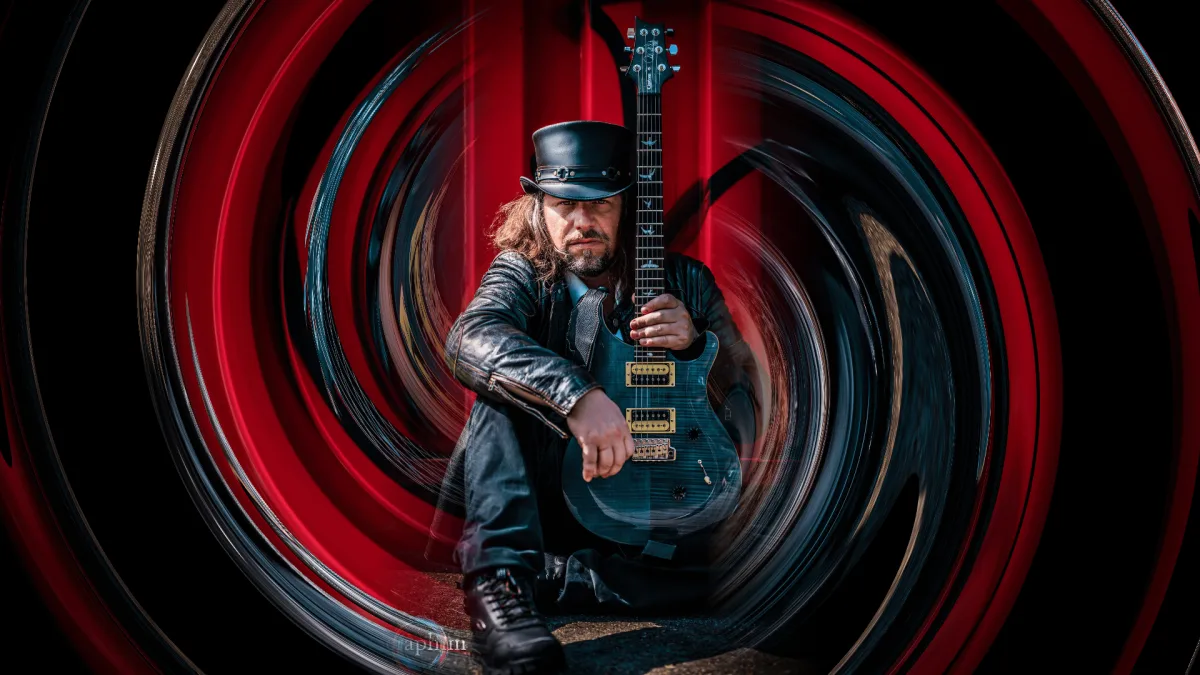
Photo courtesy of Seraphim

Editor: David Trahan

Neworleansmusicians.com

Categories
blog

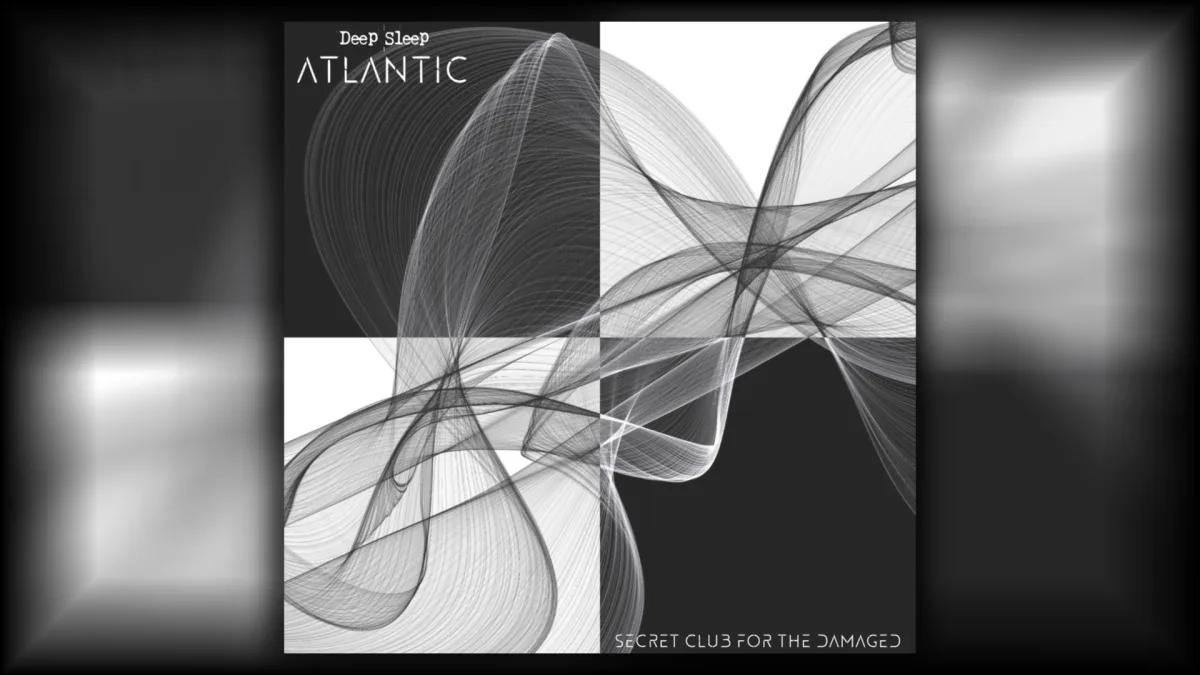
“Breakdown” and More – A Soundscape Analysis

Deep Sleep Atlantic

Celebrating the band’s October 2025 release:

‘Breakdown’ – premiered on 10/29/25, which is the new single from the band Deep Sleep Atlantic, album Secret Club For The Damaged.

“Breakdown” starts with octave tremolo musical hypnosis! This sound is reminiscent of Sonic Youth and Weezer, with haunting synths and laid-back, synchronized drum melancholic beats. A frantic female voice over the phone can be heard on the bridge, and the chorus is a hook that will stay with the shoegaze fans for a long time. This all offers a new spin on the layered complexity of something found in a Radiohead or Teamsleep album; haunting and ambient.

The video is a stylistic sprawl of art and lyricism, on a canvas that Deep Sleep Atlantic has painted and branded as their very own, carving and sculpting paths amid the current state of South-based duos. 

Listening with a curious poise, the next song I discover on their socials is the track “Don’t Like You”, which also features a slick music video showcasing performance and unbridled rock. I’d venture to say it’s a rainy side of anguish in the form of a palatable audio structure.

“Bottom of the Sea” brings us back to the rhythmic side of Deep Sleep Atlantic, with a large chorus of harmonies and ethereal synths. Minor chords and tragedy are steeped like a poetic brew of fuzzy tea and dancing percussion. It gets into your skin to drain the solemn ghosts of the 1990s and will into a vibe of forward momentum.

Not a lot is known about DSA, the duo can undoubtedly layer a thick album that resonates the replay value in songwriting, a method sometimes lost at sea in the oceans of one minute pop song trends of modern day. While songs like “From My Side” showcase the range of bleak to focus, I am flooded with visuals not only of the excellent music video, but with a mental picture show of the chorus, almost hitting that sorrow and angst of melody found in early Soul Asylum or Dandy Warhols live show anthems.

“Blue” is a track that again subverts expectations in the best way possible, the soul is infectious in the groove and lyrics, this band knows how to make a hook. The song even surprises you with a noir-type of sax solo that is in par with a page out of the book of Green Thoughts.

“Hole” is a song I am just now finding online, and it nails that dreamy guitar with noir bass notes. Almost a trippy electro vibe, it is something heard perhaps to the liking of Massive Attack. Released two years ago as of the date that I am writing this interview, this song and all I have heard from DSA thus far is very well produced, well performed, and executed in a way that connects you intimately to the band’s vision, while also allowing their songs to reach a broader horizon.

Whether this new album will continue in these directions or veer to the forks in the road will be discovered by the listener. I for one will enjoy the strange and seductive dance into which Deep Sleep Atlantic dives deeply. Their word through and through could be “possibilities”. That’s at least one word that sticks with me in reference to Deep Sleep Atlantic; a refreshing sense of untethered creativity. This band is for the audio environments, while timeless and unique in a charming lost light.

Deep Sleep Atlantic Members: Daniel Perez and Travis Marc

Music Video for “Breakdown”: https://youtu.be/VbZdGsjAQp8?si=bwFu5kc2hfFHyeT8

Bandcamp: “Secret Club For The Damaged” Deepsleepatlantic.bandcamp.com/album/secret-club-for-the-damaged

Guitarist & singer Travis Marc full interview: https://youtu.be/JHQ_c1lqy2o

Follow the band on Instagram, TikTok, Spotify & YouTube for their current discography and video catalog.

Author: Ryan McKern

Editor: David Trahan

Neworleansmusicians.com

Categories
blog

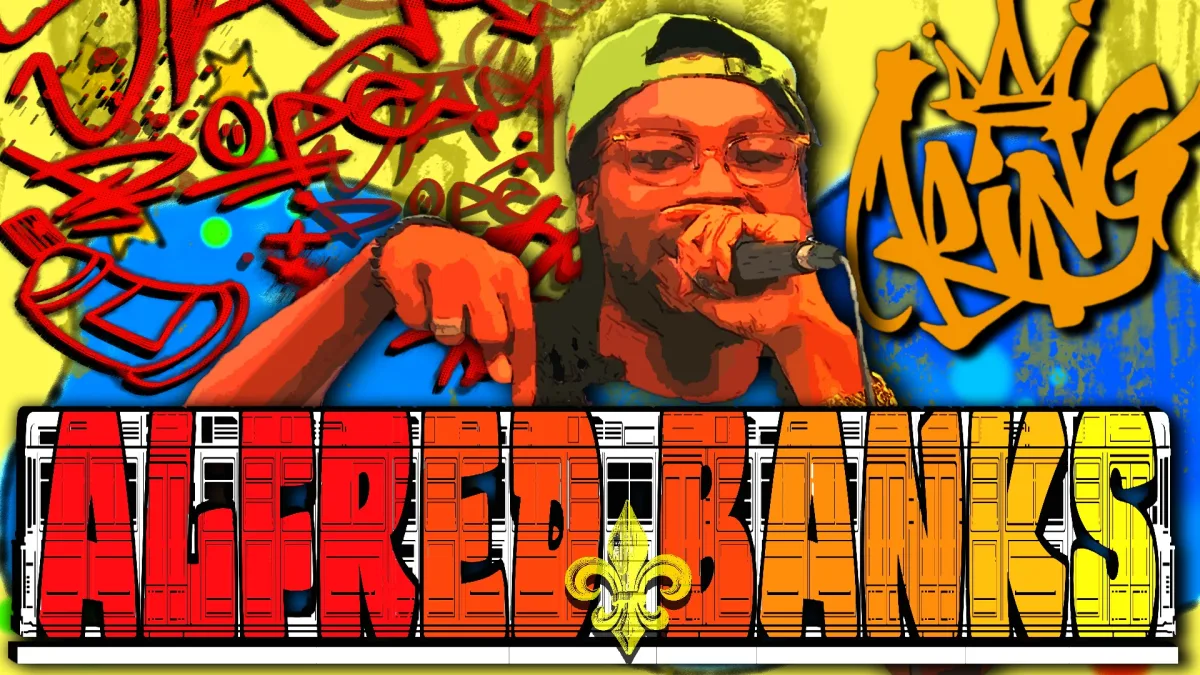
Alfred Banks

The folds of oak leave no room for compromise. The tree, along with every fiber of its being, is a physical manifestation of intention. It grows with strength reaching down to its core and provides for those around it. For the amount of time it took to become all that it is, you’d never know the challenges it faced. Nor would you fathom its path was ever in doubt. From the time he was a small child, Alfred Banks was intent on being an orator. His words cleared paths fraught with challenges of their own. The youngest of three, he derived inspiration from both the passions and pitfalls of his older siblings. Scarface’s album, The Diary, brings him back to times spent riding around in his brother James’ big blue Lincoln. This is where his introduction to freestyling occurred. And efforts into perfecting his penmanship harken memories of his oldest brother, Orlandis. The one-on-one moments spent with people he looked up to are ones he will forever cherish. From both, he experienced introductions to rappers like Tupac Shakur and Busta Rhymes. Inside the house, their mother played the gospel music of artists like John P Kee and Hezekiah Walker. These influences were the seeds from which Alfred’s career would grow.

With both brothers striking out on their own, a young Alfred would become an only child for ten years. Under the watchful eye of his mother, he was not permitted to run the streets at will. He spent the bulk of his time inside, in his own mind, playing out the possibilities a life in entertainment might hold. Memorizing James Brown moves or dressing up like Will Smith and Martin Laurence in Bad Boys would be the activities that filled his days. As time went on, he could see himself alongside Redman in the I’ll Be That video. He envisioned an existence keeping lyrical pace with Busta Rhymes in the Gimme Some More video. And it was easy to image his place in Jay-Z’s Hard Knock Life video. Watching Mtv and BET, emulating, writing; he was the star of the show in his mind.

At some point his oldest brother Orlandis briefly returned from the Marines. Alfred recalls one of few family reunions he experienced as a child on the lakefront of Lake Pontchartrain. “This had to be like, 2000. He had a Mazda 626, a green one. I remember that. And he had this big ass binder of CDs, back when that was the thing to have. And I remember him playing instrumentals in the car, those single CDs that they used to have, the record, the censored version, and the instrumental. So, he had a bunch of those and he would just put the CD in and just play instrumentals. We’re on the lake and I remember I’m nine years old. James is freestyling, Orlandis is rapping, and I’m freestyling. And everybody is just so impressed with me because I’m rapping at nine years old.” Alfred also associated this craft with a certain degree of respect. He’d recognized this on an outing with Orlandis to a recording studio once. He observed the resulting camaraderie and rappers’ abilities to move crowds as a politician or pastor might possess. Though the next few years would see him experimenting with basketball and wrestling, lyricism would never leave his mind. He was good at it. He didn’t care much for all the rules of basketball. And he tried his hand in two backyard wrestling matches, knocking himself out. He longed to impress his brothers and rapping held the key.

At fourteen, his focus was final. He heard Food & Liquor by Lupe Fiasco and he knew he was going to be a rapper. With no way to make beats of his own, consulting his brother Orlandis gave him the idea to draw from the CDs in his house. A metamorphosis began to occur here in that, where once he was writing rhymes to impress his family, now he was writing rhymes to battle the rappers on these CDs. The question of IF had vanished and an imaginative boy was becoming more sure and more serious, measuring himself up to the likes of Marshal Mathers.

Like many with a small stature, Alfred was teased a lot in school. Moving several times meant new schools and seemingly more foes than friends. These developing verbal skills would enable him to shoot back at schoolyard taunts. At some point Alfred remembers feeling, “different”. He recalls trying to explain this to his mother. He was unaware of the existence of conditions like bipolar or depression at that time. He was unsure why he sometimes felt like he wanted to die. His mother would do her part to get him help. But with him, as in the past, his pen would surely escort him through these times. Through this, another facet of his lyrical style would develop, emotional vulnerability. This is one I believe to be the most valuable, one that elevated his repertoire and made him salient. Because the industry, let alone his atmosphere, was wholly intolerant of such a characteristic in MCs. The court of public popularity spared little reprieve for conscious rap, a style of lyricism denoted by introspective thought. The emotional and intellectual content sought to reveal another dimension of an MC’s ethos outside of what had become a redundant discussion of material wealth, violence, and machismo. MCs like Common, Black Thought, and Talib Kweli enjoyed some commercial success. Conscious collectives like the Lyricist Lounge were inching up the bottom of Billboard. But these instances were anomalies back then.

For Alfred to choose a path less travelled was a brave step in my opinion, and an unlikely one. We develop socially in the presence of others. Judgement is abundant, weighing heavily on youth. The two musical factions seldom comingled. One lyrical style had become the media darling. Still, he chose the other. And I suspect it was because it mattered that much to him. His deep respect for the art implored him to fill his notebooks with matters that hit close to home. Delving into his catalog, fans will find bits of his personal trials scattered throughout. One example was preceded by an eight-to-ten-year span where he did not hear from his oldest brother Orlandis. He later found out it was due to schizophrenia, which ultimately resulted in Orlandis’ death. Alfred’s album, Beautiful, released in 2017, was a concept album conceived on the car ride leaving that funeral where he develops schizophrenia and experiences the illness firsthand. Fights at school, alcoholism and altercations at home, and relationships plagued by turmoil all were revisited with his pen. He wasn’t sure how to put the experiences into words. So, he wrote about the feelings emerging from those experiences.

Personal revelations like these on record nurture humanity and champion the importance of discussing the traumatic experience over a braggart’s tale. In this, Alfred has created value through connections to his fans. Over time, he’s seen them drive from states away to attend his concerts, bringing gifts and stories of how his works have affected them. In our talks, he expressed his unwavering appreciation for these moments. He was also careful to point out the distinction between real life interactions like these and vanity metrics on streaming and social media. But he can’t help but acknowledge the hindrance delivered to him by a less-prevalent sect of rap music in a town with no clear organization or stronghold on the industry. Alfred has been in active pursuit of his rap career for fifteen years. During that time, he’s toured from the west coast to Europe, he’s charted on iTunes and Billboard. His songs have been featured in movies and television shows. He was even nominated for a Grammy. He’s ghostwritten for some of the most legendary artists in New Orleans. He’s shared stages and received praises from big names in the industry. But still the efforts extended have often times fallen short of the financial reward.

He’s lived through the highs and lows that come with being an entertainer. As Alfred explained, “I had to grind tooth and nail to make the name that I have. Lots of shows in New Orleans being disappointed where it’s like, fifteen people show up. You’ve been promoting for a month and a half, two months, and then like thirty people come out. But then the next day you perform at Voodoo Fest, opening for Kendrick Lamar.” He explained further, “You’ll be big one moment and then be reminded how big you aren’t literally the next day. Like, performing at Bayou Boogaloo and then the next day clocking in at my day job; all these different struggles that I’ve had to go through. Or, having to run in a room and having to out-rap everybody in a room. In every room I’m in, I’m having to prove myself. Every space I’m in I have to show everyone ‘cause I’m always the least known person in every room I’m in.”

The fickle nature of success can be just as fickle as the spectators that gather to see what he brings. Recently, he’s experienced a refreshing response from his alliance with twice Grammy nominated musician Albert Allenback, currently of Tank and the Bangas, in a project known as SaxKixAve. To the equation, Albert presents as a multi-instrumentalist both inspiring and challenging Alfred. The two have gone viral several times over and have made appearances at The New Orleans Jazz and Heritage Festival, the French Quarter Festival, and in a Popeyes commercial. The lyrical style of Alfred’s solo career was more embodied by heavy, personal content. For putting all those all those hardships to paper, he didn’t catch the gleam of commercial success for the first eight years, about the time he was named the face of Volkswagen in their Polo/Beats by Dre Commercial Campaign. And it was just two years ago was when he felt like he had finally created a name for himself. In contrast, SaxKixAve comes along and within three years is performing in Aspen, Colorado at the X-Games. And lighthearted songs, like a recent one about hashbrowns is rapidly enjoying great success. Does that bother him? Alfred offers this resolve, “Here’s the deal. With SaxKixAve, after we went viral man, we’ve been doing shows across the U.S. People are coming out, dude. Like, people are buying tickets to see us. They’ve never seen us before. They’ve only seen us on the internet. And we don’t even have a hit record or nothing. We have songs, two songs specifically, that have kinda done well. But we don’t have a hit. And, so like, these people are taking a chance. And what we’re finding is, they like the deeper stuff more than Hashbrowns.”

In retrospect, the lyrical levity and dry-humored oddity of their videos on social media has simply been what’s sparked initial interest. While the musicality and verbal depth is what cemented their appeal in the minds of the public. At no time, though, has Alfred bowed to the communal fixation on nonsensical antics. For him, this is a point of pride. And rightfully so. We’ve all rolled our eyes at the extent to which people are willing to go to get those likes and shares. Aside from being ridiculous, content like this is not born out of the genuine creative value of an artist. It is the result of efforts spent pandering to the faceless consensus. Alfred Banks exists devoid of vanity or falsehood. And, by all means should he be held as a wellspring of creative dignity. His spirit is the very embodiment of the independent New Orleans musician.  

Author: David Trahan

Neworleansmusicians.com

Alfred Banks: https://www.underdogcentral.com/

SaxKixAve: https://www.saxkixave.com/

Categories
blog

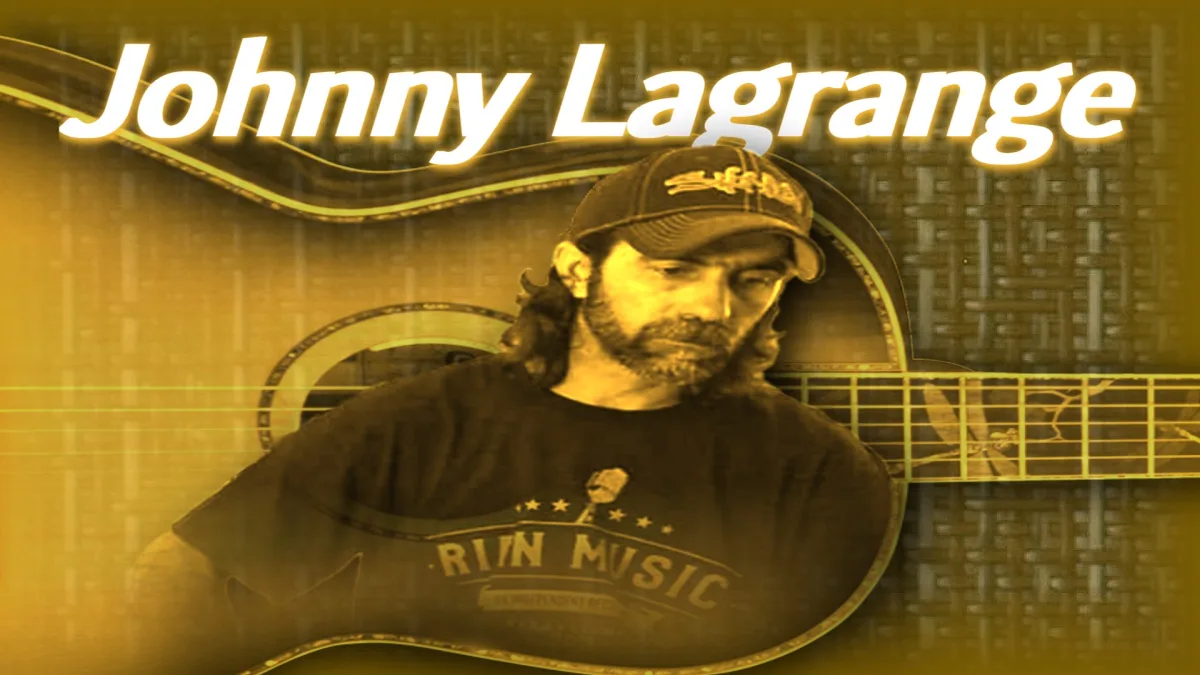
Johnny Lagrange

If you head up the Mississippi River from New Orleans roughly forty miles, you’ll find yourself in Garyville, Louisiana. Here, the soundscape swirling in the waters is what makes them muddy. French influences of La-La and Zydeco meld with traditional country and other roots music. Like many, guitarist Johnny Lagrange holds fast to his origins in these genres. As a child, his first experience was seeing live music at a fair with his older cousins. Where chatter amongst the crowd was spoken in French, and Charles Sonier played the fiddle on stage.

At home were two older sisters and an older brother with tastes of their own to fill his ears. He gravitated toward his sisters’ pop music of the day like Madonna and Tears For Fears more so than the rap music to which his brother listened. Radio delivered his appreciation for musicianship with artists like Buddy Guy, Eric Clapton, and Stevie Ray Vaughn. A six-year-old boy would many times attempt to play these tunes on his little plastic guitar. Though he stood worlds away from creating the music he heard, he loved giving rise to sound. His foundation was already filled with many elements. As Johnny put it, “But then, you get your first blue jean jacket. And you get turned on to Testament and Iron Maiden. These guitarists are amazing!” The flood gates were instantly breached. Any membrane that disjoined traditional genres from the new style of rock had been permeated by the likes of Steve Vai and Yngwie Malmsteen.

Suddenly, the divergent interests of his original footing and heavy metal ruled radically different. Though they seemed to occupy equal parts in his mind at the time, it was the guitar that swayed him. Heavy metal, and thrash music for that matter, explored the possibilities of sound with guitar. Johnny grew fond of doing the same. As we spoke about this time in his life, I asked about his first “real” guitar. He smiled and pointed to one that sat on a stand behind me. He was fourteen years old when it came into his life. It would become his muse for the next few years and lead him to form a band called Seveth. Being underage, his band mates would sneak him in the back door of a bar out in Laplace just so he could perform, exiting the same way he came. Covers of Poison, Whitesnake, and Warrant, and a few of his own originals escorted him into maturity. But in all honesty, he was just a kid having fun. His interests would waver at times and hot rods did steal him away briefly.

Until one night when a friend directed him toward an open mic session at a local bar. Arriving with no set material or plan in place, he simply got up on stage alone and played every scale, every chord, and every shredder piece he knew. He will admit the performance was less than impactful. Being an unknown, the house band didn’t want to back him up. But it did grab the attention of their drummer. The two would go on to form the band Headrush. Johnny, in his twenties by this time, had picked up a drug habit along the way. And this became the fire that fueled a songwriting frenzy between them. In three months’ time, they wrote approximately ten hours-worth of originals. This pace and his lifestyle were both unsustainable though. In time, the consequences began to overshadow the benefits. He became a full-blown alcoholic and drug addict. No one wanted to play with him, and his life became consumed by his vices. He set down the guitar to get his life back in order and checked himself into a rehab facility.

During his path to sobriety, his wife brought him an acoustic guitar once owner by her father. For the longest time, he hadn’t even laid eyes on a guitar. He did still have a Peavy, somewhere, in a closet with no amp. But sobriety created a void, as it does in many, when a life in pursuit of intoxication no longer existed. The arrival of many introspective thoughts and questions filled him with a desire to express himself. The acoustic guitar was preceded by countless pages in a notebook of these questions, of lyrics in their most rudimentary form. Whether he realized it or not, he had been charged with finding himself on paper, in isolation. A time in his life where he felt as though he possessed direction or meaning of any sort had left him long ago. Things began to come together for him as he lifted those thoughts from paper and put them to melody using that that acoustic. The Bald Dog Project was born and a memento from his inner turmoil became known as the Begging for Change album. Johnny recalls, “Probably 95% of all Bald Dog Project songs are personal. All of the lyrics on the first two albums, that one (Begging for Change) and the (following) one with the full band… every one of those lyrics are poems, just pissed off and my healing so to speak, that I was just writing down. And then I took it and formatted it into songs. So, a lot of it is some real personal shit. When I was in rehab, that’s when I was healing, making amends to myself.”

During the early stages of Headrush, before the band had a name, his suggestion was that they call the band Bald Dog. But the other members objected. They resolved to put names in a hat. Guess which name was picked? Bald Dog! Yet they still protested, and the name Bald Dog was thrown out. Now that it was just him, that name would finally come to be. Johnny laughed as he explained, “Ain’t nobody but me. So, I have no fucking arguments. I’m naming this mother fucker Bald Dog! And just to piss them off, it’s going to be The Bald Dog Project. It’s like, how you gonna have a project with just one guy?”

The appeal of The Bald Dog Project lied within a unique sound facilitated by a deficit. Johnny couldn’t sing in a tone that was appropriate for acoustic music. It always came out with a definitively heavy metal tone. The mood set by his lyrics dealt with heavy emotions. And he had always been a fan of the metal genre. A friend by the name of John Walden, hearing the merit in this combination, gave words of encouragement. Walden, a drummer and bassist, invited Johnny to come open for his band at a gig. Alone again and having not been on stage in over ten years, a nervous Johnny took the offer. He recalls it as a terrible performance. But Walden still felt as though Johnny had something. He reassured him, and recommended he gather a drummer, a bassist, and a second guitarist. Johnny moved quickly, reaching out to Tommy Cox (Konstricted, Nothing Sacred) to join with an acoustic and he agreed. The two, joined by bassist Glenn “Chookie” Grady, began playing shows without a drummer.  Finding their sound and gaining momentum, John Walden soon joined in on drums.

I interviewed Kirk Windstein once and he explained his own version of what he considered to be heavy. As Kirk clarified, “To me heavy is emotion. To me one of the heaviest Black Sabbath songs is Solitude. It’s just a two chord with a flute. Sonically, it’s not heavy at all. It’s a clean guitar, and you know, a flute. To me, heavy is not just volume, distortion, whatever. It’s emotion.” Explorations and reparations to make oneself whole again were the founding sentiments of The Bald Dog Project. In my opinion this would near top the list of weighted thoughts. Deeper into this vein, Johnny has begun pursuing a second concept by the name Blackwall Symphony. The songs currently being recorded enlist heavy metal components and fuse them with orchestral pieces. Choir, violins, horns and flutes all accentuate distorted, thrashing electric guitars. He said they have eight of the planned twelve songs down. And when they’re all complete, he will reveal them in a live performance. I look forward to feeling my pulse quicken as this spectacle thickens into a rich audio experience orchestrated by Louisiana’s own, Johnny Lagrange!

Author: David Trahan

Neworleansmusicians.com

Categories
blog

Sean Riley

Often times musicians have a way of letting emotion be the divining rod. And the good ones manage this at no expense to their goals. Sean Riley wasn’t always like this. Many miles and many crowds have since subdued the fifteen-year-old in him that was a bit on the shy side. Back then, he kept playing and practice to himself, emerging occasionally to strum a few chords of Smoke on the Water or Layla for friends. Words of encouragement, coupled with desires to be like what he heard, are what kept him going.

He knew what the end result was supposed to sound like. Saratoga Performing Arts Center was located in his hometown, and he’d seen acts like The Allman Brothers, The Grateful Dead, and Steely Dan. He also listened to Roy Orbison, Beach Boys, and Waylon Jennings when his parents played those records. And he knew where the sound came from. His aunt gifted him an old Stella parlor guitar when he was a child. He would often marvel at it where it hung on the wall in the living room. Connecting the dots between those stage shows and this, until now, wall art meant pulling it down and seeing how it felt. Sean recalls, “I didn’t know how to tune it. We didn’t have those tuners you plug in back then. It was tuned to a piano. And I didn’t have anything. So, I had to learn from… I bought one of those what looks like an old harmonica that’s got a little tube. You blow the E and I would tune it. That’s when I got my first lesson. I was like, I gotta learn how to tune the damn thing. But when I first picked it up, I just loved the feel of it.”

I found that, throughout our discussion, he would speak frequently about taking lessons. Although he did take formal lessons for a short period of time, there were a myriad of things that he referred to generically as lessons. This experience was one. And you’ll hear about more later. I specify this because within him, as should be any aspiring musician out there, lived the drive to master the art. Existing in this mindset means that lessons come from all areas in life. This perspective inevitably leads one to greatness. His dedication did not go unnoticed. After spending countless hours with that Stella, his father agreed to buy him an electric guitar. Formal lessons were a condition of this gift.

From a wall amongst many, this self-described late bloomer grabbed a ‘73 SG at an old guitar shop because he liked the way the thing looked. But the esthetics began to shift focus within him and it may not have been noticeable at first. As many children do, he listened to most genres back then. From punk to hip hop, a blues/rock spoke to him louder that the rest. Wherever this voice came from, it was naked and undecorated. He didn’t want to be famous. He didn’t want to be rich. He wanted to play that guitar on stage. And he wanted to do it right. So, whenever the voice spoke, he listened.

The rudiments were found in a few places; tab books, instructional DVD’s, and “The Guitar Grimoire: A Compendium of Formulas for Guitar Scales and Modes”. What he learned would be put to the test whenever a friend could come over and play along. He laughed when he remembered how amateur they all were but maintains he will never forget that initial feeling. Loosely associated jam bands would form and dissipate. Whenever he encountered those with less drive or interest, he would simply revert to playing in his room.  As he got older, he was able to get more of those lessons going to local pubs to see shows. Watching the guitarists pick things out and hearing how it sounded taught him a lot. College became a good place for meeting musicians and getting more of these lessons too. He explained a time at college when he played for someone that he felt was better than him. The guy said, “you’re good, but you’d be better if you learned theory”. That one statement impacted him, compelling him to seek formal lessons once again.

From here, advancement took him from playing in a basement with roommates to bars and frat parties. He teamed up with guys from the college jazz band, playing what the Allman Brothers covered.  Elmore James and Junior Wells became his expression of a strong love of the blues. Lessons still came from local pubs. He would see a band playing and think to himself, man we can do that. But the lack of ambition from other members always seemed to stifle growth. Taking a semester break and travelling to Europe would definitively end the college band days. It would be the genesis for him to strike out on his own in new surroundings.From there, he returned for a work study program in New York City. It was there that he would remain for the next fifteen years.

It was the early 2000’s and the Black Keys had just come out. Sean played anywhere and everywhere, bringing with him that stripped down blues rock style that he loved. His background in graphic design gave him something to fall back on during leaner times. A bottleneck in music commerce had become noticeable. Rates were on the rise and some of the larger venues were closing down in Manhattan. But across the river in Williamsburg, things were booming. So, he would take the L Train to a patch of small, underground places and DIY house shows that garnered a good crowd and sometimes hosted small label reps. He would play rhythm guitar in funk bands, sound off in indie rock bands, and cater to the booking agents that loved the blues. This was the mix of the day. And there was a decent folk music following at places like Jalopy Theater in Red Hook, a southwest Brooklyn town with a diverse, laid-back community.

So, how did Sean come to live all the way down in New Orleans? The Jazz Fest sold him on the place. He travelled down for the event once or twice before and was captivated by the music, the food, and the night life. One too many cold nights up north were enough for he and his wife to make the move ten years ago. He’s certain his career has benefitted from this and cites the city as inspiration for his writing. He began by busking on Royal Street and, after meeting a few people, was able to get a gig on Frenchman Street. He sees the main contrast between New York City and New Orleans being the communal aspect. Things seemed clicky up north. He’s had to remain versatile while here, playing from uptown to the Bywater and playing with many different people. His band, Sean Riley and the Water, was actually named for this. The water represents the constant flow of players passing through the band.

He does have a couple of musicians with whom he plays often, bassist Dean Zucchero and drummer Mike Barras. Sean explained, “Those guys I’ve been playing with a lot throughout the years. So, I would road test the songs with them. That was one tight unit that I felt comfortable with.” And when it came time to record his new album, Stone Cold Hands, he played with those guys and invited a slew of Louisiana locals to contribute. This ten-track body of work has charted in many places, including Billboard, and features Bruce “Sunpie” Barnes, Waylon Thibodeau, Phil Breen, Tiffany Pollack, Megan Harris Brunious and Whitney Alouisious. It is his sophomore effort, released on Dean Zucchero’s label Pugnaceous Records and recorded at RiverShack Studios, and is preceded by one 7 song EP, Biting Through, released in late 2019 under name Old Riley and the Water.

Author: David Trahan

Neworleansmusicians.com

Seanrileyandthewater.com

@Seanrileymusic on IG

Categories
blog

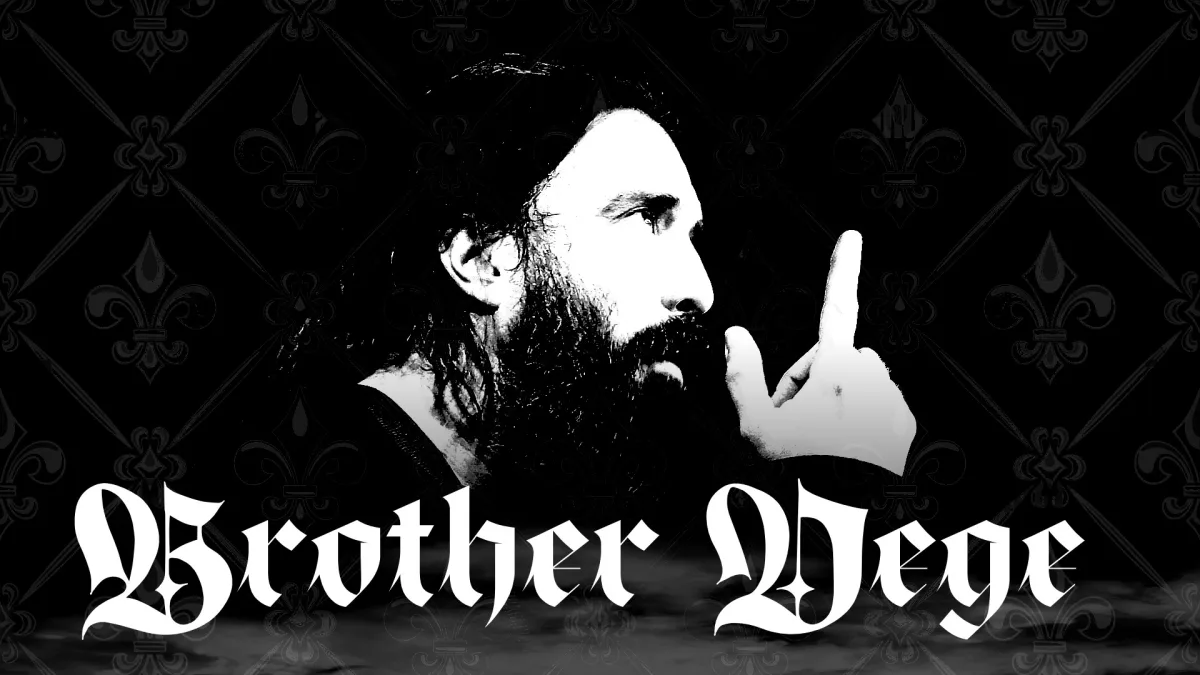
Tribute: Review of Brother Dege’s “Aurora”

In Lafayette during the late 90’s and early 2000’s, the alt-rock scene was bubbling. It had somehow cross-pollinated with the skater community, lending support to local band Santeria who were the bees bringing the buzz. The moody, melodic five-piece used Lafayette as a launchpad, going on to trapse the continental U.S. One member would spread this creative wave further into movies, television, and authorship. Dege Legg was a multi-instrumentalist, author, artist, pedagogue, and observer of raw life that reported his findings through emotional serenades, verses, and visual artistry. His impact was deeply felt by many across multiple generations; myself included. The likes of which will never be seen again.

I first saw Brother Dege in Baton Rouge in 2008. His creativity resonated with me, then and now. And his kindness and depth would help me out of the gutter many a time. To have been able to call him a friend is something that blessed me more than anyone will ever know. So, it is bittersweet that I review his new and final album. Light the fire and gather around, journey with me into the wilderness of souls and audio landscapes that is “Aurora”.

“Like the delta slide guitar stinging like a scorpion tail, the roar of the cicadas over a bayou dream. Like a cab ride out of purgatory, a psychedelic philosophy of hitchhikers’ dreams.”

We cross this bridge together, with Aurora’s opening self-titled song. With a warm, reverb-soaked slide guitar, Dege conjures up images of Louisiana swamps and deserted highways. Tribal, crisp serenity envelopes the listener in time, as syncopated strums are positioned around the resonating slide. They gradually increase their presence, and the full band joins lulling us all away to the next musical destination.

I first heard track two, “Where the Black Flowers Grow”, on Brother Dege’s WWOZ live-in-studio performance late last year. I found it to be a melancholy and beautifully sorrow-ridden song of joy and heartbreak. I got to talk with Dege about the manifestation of this song, and was really impressed how much was involved. The chorus has a powerful hook that delivers a sonic punch of chord progression, picking, and building, leading you from the darkness into the clearing of self-exploration.

“Climbing Ivy (Sleep Beside You)” is the third track on Aurora. Immediately, we are given a wild west feeling accompanied by a southern groove-styled percussion and a rich, smooth grand piano. Dege is in full swing here, showcasing his storyteller vibe with a line like “sleep beside you till the morning takes our tears away”. Journeyman vocals and open-tuning chord progression pair beautifully in this. 

The next song is titled “A Man Needs a Mommy”. Dege Legg always had this uncanny ability to show his Acadiana roots and love for music of all genres, all the while with a tint of darkness among the softness of touch. I can’t help but wonder if this song drew from his own experiences growing up, or perhaps from his experiences as a father. One thing that is present here is the fight to pick up when you’re down.

More than halfway through the journey of Aurora, we stoke the fire and raise our glasses. Because the next song, “Turn of the Screw”, kicks the tempo up and diverts the mood with a southern Cajun-rock ensemble of working-class lyrics. Motivational messages front as listeners are harkened to the sound of a south Louisiana fiddle.

“Ouroboros” gives us a hauntingly beautiful Celtic-influenced fiddle melody, followed by the Brother Dege Brethren full band sound. A crunchy electric guitar protrudes with distortion. Cymbals swoon to-and-fro. The soundscape organizes into a brief declaration of primitive, rustic rhythm and ends almost too soon. Dege always told me Dublin was like New Orleans in many ways and I can picture the Irish countryside when listening to this song. An ode to mourning, this one is an instrumental composition that had me wanting it to last forever.

The seventh song on Aurora is the Americana ballad “The Devil You Know”. A lap steel guitar twangs initially in this song. A piano soon accompanies as Brother Dege’s sandy voice walks us through his intentions and fears. And suddenly, I am transported    from the shores of Ireland to a smokey honkytonk in Tennessee. The bridge is commanded by a beautiful phrasing of piano while the band lines the free space.

“Losers Blues” is that rock and swag sound that can only be cultivated from the deep south, celebrated in true blues fashion. It isn’t about what we have, but what we do not. He speaks of the rat race and the loss of a loser, and how he couldn’t make it stop.

We come to our final track, appropriately titled, “The Longing”. A classic Dege resonator slide song structured with a catchy Lennon, McCartney and Tom York influenced piano progression. As I am listening to this song, I am flooded with emotion, chills, memories, tears, joy, and questions. But that is what we experience when someone is taken from us too soon. Rather than convolute this beautiful song with my own emotions, I choose to acknowledge what it means to me. It is a final goodbye. I will just quote a few of his lyrics for “The Longing”, direct from Dege himself. “I might not belong here, here, anywhere, caught in the way. I am so lost in the longing, such a sad, little day. All the time you’re away for so long.”

This review is in a lot of ways my version of A Love Song for Bobby Long, for it is a swan song letter to my friend. Writing this was an incredibly painful and long process. For doing so meant I finally had to say goodbye to Dege, my musical brother in life and incredible friend. For weeks, I was selfishly not ready to let go. But within this process I found myself excited to share this album experience. Much like David Bowie and Jim Morrison’s final albums, you just have to really think inside and say, what a fucking brilliant note to go out on! All of these songs have Brother Dege’s personal flavor. But they also leave pages open to apply to anyone’s struggles, hopes, dreams, and losses. We can make these songs our own. Much like the perspectives many great painters, the art is for your lens. I hope this review encourages you to seek out Dege’s discography and multi-media catalog. He always loved the folk tradition of passing on songs and stories. There is no doubt in my mind he will be celebrated throughout history. You can find out more about Brother Dege’s life and works at https://brotherdege.net/home.

Author: Ryan M. McKern

Editor: David Trahan

Neworleansmusicians.com