A major characteristic of what makes a good song great is its ability, at its crux, to blur genre lines and push the surrounding boundaries. Some of the greatest bands to ever grace the stages of this earth have gathered members from differing musical backgrounds. For example, John Lennon was a fan of 50’s rock and roll while McCartney leaned more toward pop and jazz. The fact that none of them had formal music education furthers the notion that schools of thought that reside within stringent genre guidelines might create missed opportunities.
Perhaps, at one time, radio held a seat in the control room of genre-defining. Sharing this space with labels, it was one of the only outspoken ones in society as to what was rock or what was funk. Nomenclature was characteristic of a station’s identity. But certain nuances were dulled in the process. Consequently, genres like hip hop and zydeco were inexplicably relegated to the R&B stations, robbing them of their own true identities. Cable radio followed suit, with station names that lent themselves to specific genres. But streaming has decentralized this organization and quelled the echo considerably. And with ever-changing, curated playlists, new voices have emerged. And I’m all for it. When establishments are challenged, growth occurs. But how do you accurately title your own playlists? And should some of those songs dwell in a playlist unto their own?
In my own personal journey through decades of music, I have seen the birth of genres; some as sub-genres and others as combinations of previously existing ones. I remember when rap and hip hop became separate. Because in my generation, gangster rap started as a faction or offshoot from hip hop. It seemed a declaration of independence of everyone else from the East. Its subject matter along with its cadences and time signatures bolstered its autonomy. As time progressed, the importance of bar heaviness gave way to more hooks and less content, birthing newer sub-genres. The original two ancestors would thus reside as separate playlists for me.
My playlist titled “Olski Punk” began my foray into punk music exploration. Realizing that punk music started some fifty years ago as a prototype of mid-seventies rock and roll, I felt it needed its own place in my streaming existence. In kind, my playlist “Newski Punk” was formed for this style of music occurring post 80’s. And then there was thrash. While the two might be first cousins, let’s face it, one is not the other. So, for now, “Newski Punk” has evolved into “Punk and Thrash”. And I’m sure the two will spawn an additional playlist lovechild as my delving tunnels further.
The struggle to classify has become serious. I couldn’t just have a Rock and Roll playlist because, duh… blasphemy. In my lifetime, I witnessed the birth of alternative rock. This genre moved mountains and so moved me to create separate playlists there. My “Classic Rock” playlist houses rock of interest from the late sixties to mid-seventies. I will use this moment in the article to make it known that I do NOT have a disco playlist. If you do, more power to you but we are not cut from the same cloth.
There existed a window of time in my life when my penchant for exploratory sound was at its height. Admittedly, this may or may not have coincided with my alleged penchant for illicit substances. The birth of the drum and bass genre fueled this, in-part, bringing me to places unknown. Downtempo tracks for the subsequent descent also meandered in this vein. And so “Drum and Bass” and “Spaced” will always be dear playlists of mine. I’ve entertained the possibility of a “Jungle” playlist stemming from the “Drum and Bass” playlist. But for now, both scratch times when I get that itch.
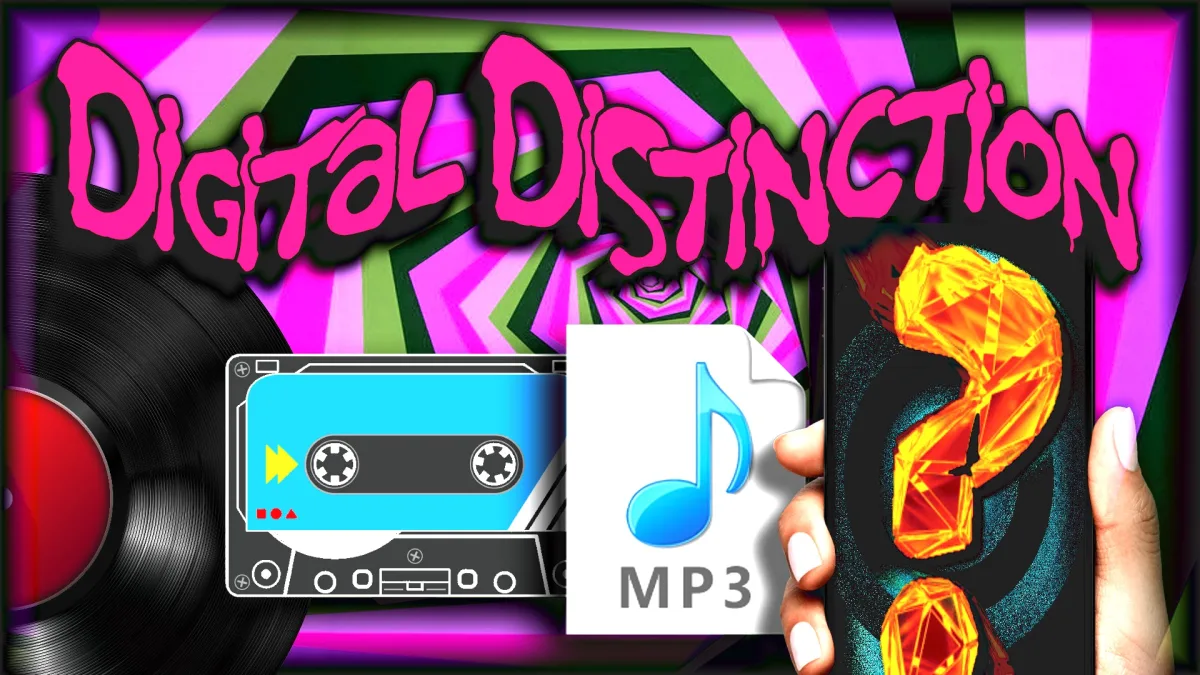
I still encounter songs that beg the question, “in which genre do I fit?” And I think streaming is where that classic question has resurfaced. Prior to streaming, we didn’t have playlists. Before Mp3’s, music wasn’t even necessarily filed. Albums, cassettes, and CD’s may have been relegated to their own sections. But our personal collections were physical products available as a whole and at a glance. They didn’t seem to be well defined. In the past few years, we have seen a transformation in the way streaming forms its own partitions. Playlists do still exist under genre titles. But more frequent are the ones titled by mood or activity. In a word, I would have to describe this as repugnant.
This, to me, is an advancement toward stripping music of its individuality. Not to mention, it robs the artist of their presence, repossessing them as just one of our moods. “That’s a great workout song” is no different than calling something elevator music. “That’s a great song to ride in an elevator to” sounds ridiculous. Undoubtedly, this is a glimpse into the lack of value streaming has placed on the individualism upon which music is built. I may be taking things a bit too far here. But I just don’t want to see music be drowned out; not by commerce, not by practicality, not by our “hectic lives”. Music is a place of refuge. It is food for the soul. And it is sacred.
Author: David Trahan